
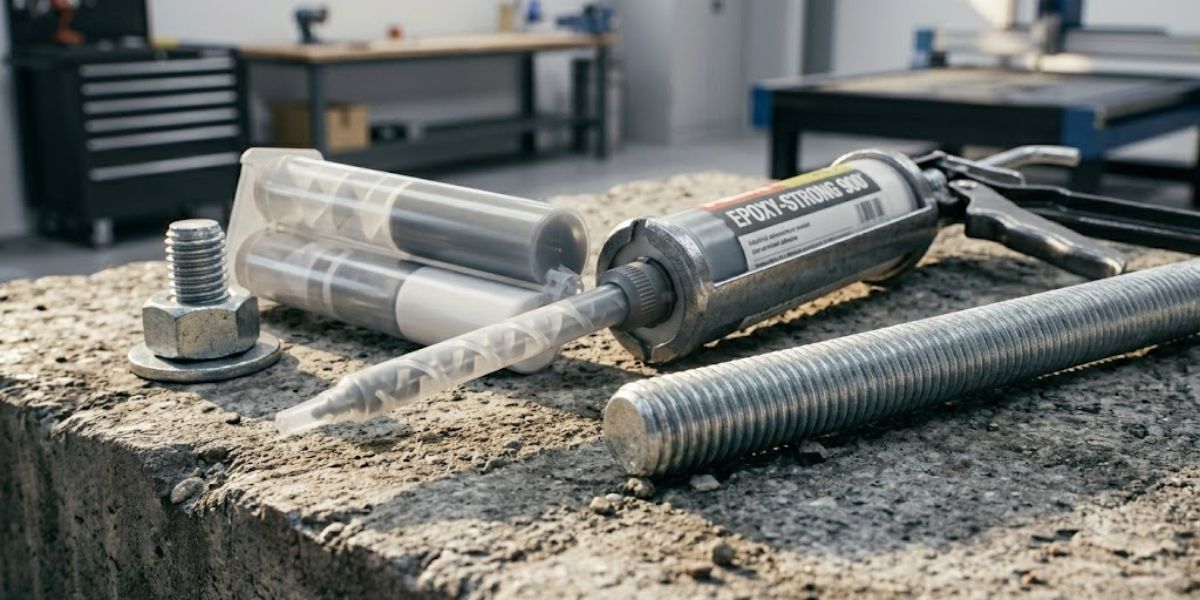
Choosing between epoxy anchoring systems and mechanical anchors is not a brand preference or a habit from the last job. It is a performance decision that affects capacity, inspection outcomes, installation speed, and liability. If you buy anchors for commercial concrete, retrofit, or seismic work, this is the line that separates engineered performance from field-speed fastening.
Chemical vs Mechanical: The Decision Framework That Drives Anchor Selection
You choose anchors based on five things: load path, substrate condition, code demand, installation control, and schedule. Epoxy belongs on the engineered side of that decision. Mechanical anchors belong on the production side.
That distinction matters because chemical anchors develop capacity through bond, while mechanical anchors develop capacity through expansion, undercutting, or thread engagement. Bonded systems reduce expansion stress and give you more flexibility with embedment, edge distance, and spacing. Mechanical systems give you immediate holding power with less dependence on curing and adhesive handling.
Why This Comparison Matters on Commercial Jobs
On large commercial work, anchor selection drives more than material cost. It affects drilling time, inspection timing, torque verification, cure delays, and rework exposure. One bad assumption at bid stage turns into a stalled inspection or a failed pull test on site.
This is even more serious in retrofits and structural upgrades, where existing concrete condition is rarely perfect and the anchor is carrying real structural demand. If your fastening plan is not aligned with the substrate and the approved design, your schedule pays for it.
Where Epoxy Anchoring Systems Fit in the Market
Epoxy leads the chemical anchor category because it is built for high bond performance and long service life. Market data places epoxy at roughly 45% share of the chemical anchors segment, which tracks with what you already see in structural concrete, seismic strengthening, and post-installed rebar specifications. When engineers need high-strength bonded anchorage with approval documentation, epoxy stays at the front of the conversation.
What Epoxy Anchoring Systems Actually Deliver
Epoxy anchoring systems are injectable adhesive anchors used with threaded rod, reinforcing bar, and embedded steel into concrete or masonry. You drill the hole, clean it to spec, inject the adhesive, insert the element, and allow the system to cure before loading.
The payoff is bond strength, low expansion stress, and design flexibility. That is why epoxy regularly outperforms expansion anchors in load-critical work and constrained layouts.
High Bond Strength and Load Transfer
Epoxy is the right tool when sustained tension and heavy loads drive the design. Because the load transfers through adhesive bond rather than expansion force, you can work closer to edges and tighter spacing without creating the same breakout pressure you get from wedge-style systems.
This is also why epoxy is common where embedment depth needs to be tuned to the design rather than forced into a fixed mechanical geometry.
Durability in Harsh Service Conditions
In parking decks, wastewater plants, coastal structures, and industrial facilities, anchor performance is not just about day-one pull values. It is about long-term survival in moisture, chemical exposure, and temperature swings. Epoxy systems are widely specified because of chemical resistance to solvents, acids, and alkalis, which supports longer service life in aggressive environments.
Code-Driven Structural Applications
Structural bonded anchors live and die by approvals, not sales claims. You should expect compliance support tied to IBC, ACI 355.2, ICC-ES reports, and seismic listings where required. In seismic and high-strength applications, building codes are a major reason epoxy remains specified.
If your project involves approved structural fastening requirements, those documents need to be in hand before material hits the slab.
When Mechanical Anchors Are the Better Call
https://www.youtube.com/watch?v=E8FP_scNNzM
Mechanical anchors win when speed, immediate loading, and field tolerance matter more than maximum bonded performance. That is not a compromise. That is the correct selection for a large share of commercial work.
Fast Production and Immediate Capacity
Wedge anchors, sleeve anchors, and concrete screws shine when crews need install-and-go production. There is no cure delay, no adhesive dispensing, and no waiting for temperature-adjusted strength gain. For repetitive attachments and turnover-driven schedules, that matters more than theoretical peak bond strength.
This is exactly why cost-controlled buyers keep high-volume wedge anchor sourcing in the same procurement plan as adhesive systems.
Better Tolerance for Field Variability
Mechanical anchors are more forgiving when hole cleanliness, ambient temperature, cartridge conditioning, or installer consistency are not tightly controlled. Epoxy has higher upside, but it also has more ways to fail in the field.
The comparison gets sharper in cold weather. Research on winter curing showed epoxy developing slower early-age capacity than vinyl ester under 12 to 18°C conditions, which means cure assumptions must be resin-specific, not generic.
Simpler QA on Repetitive Installations
For hangers, supports, rails, and noncritical attachments, mechanical anchors simplify quality control. You verify hole depth, anchor placement, and torque. That is cleaner than managing brushing, blowing, purge waste, adhesive volume, and cure windows on hundreds of repetitive holes.
When You Should Deploy Epoxy Anchoring Systems
Buy epoxy when structural performance is non-negotiable and your crew can control the installation process. That is the right rule.
High-Load Structural Connections
Use epoxy for baseplates, steel columns, equipment anchorage, reinforcing dowels, and post-installed rebar where load demand justifies the added installation discipline. Epoxy gives you higher bond performance and more embedment flexibility than standard expansion hardware.
Retrofit, Seismic, and Rehabilitation Work
Retrofitting existing concrete is where epoxy earns its place. You can strengthen or extend structural capacity without introducing expansion stress into aging or limited-edge substrates. That is why retrofit demand keeps pushing bonded anchors into rehabilitation and seismic work.
If masonry is involved, your drilling method and anchor geometry matter just as much as resin choice, especially in brick and block anchoring conditions.
Cracked Concrete, Close Edges, and Tight Spacing
When anchors sit near edges, beside existing reinforcing, or inside crowded baseplate patterns, epoxy gives you a clear advantage. Expansion anchors create stress where you have no room for it. Bonded anchors do not.
Corrosive, Wet, and Demanding Environments
Industrial plants, marine exposure, and wet service conditions justify epoxy when long-term durability outranks installation speed. The higher labor discipline pays back in service life.
The Real Risk: Epoxy Performance Depends on Installation Quality
Spec sheets do not install anchors. Crews do. Epoxy capacity only exists if the hole is prepared, filled, and cured exactly as required.
Hole Cleaning Is Non-Negotiable
Poor cleaning destroys bond. One field study reported 45% reduction in performance from dirty holes. Brushing and blowing sequences are inspection items, not suggestions.
Your hole preparation is only as good as your tooling. That is why bit selection for high-PSI concrete directly affects anchor reliability.
Adhesive Volume, Embedment, and Mixing Errors
Underfilled holes, bad nozzle purging, and incorrect embedment depth destroy capacity fast. The same study found a 74% reduction from insufficient adhesive volume. That is not a small miss. That is a failed installation.
Cure Time and Temperature Control
Cure time is where schedule pressure causes expensive mistakes. Epoxy generally cures slower than mechanical anchors by a wide margin, and cold conditions slow it further. Long-term creep also has to be respected under sustained load, especially in elevated service temperatures. If the cure table says wait, you wait. Mechanical anchors carry the opposite advantage here: immediate capacity and no bond creep concern from uncured adhesive.
Key Buying Factors Before You Specify or Order
Before you buy in volume, confirm substrate, loads, environment, crew capability, and documentation. That is how you avoid buying the wrong anchor at the right price.
Substrate Type and Condition
Normal-weight concrete, cracked concrete, CMU, hollow block, and aged substrates do not behave the same. The base material decides the anchor category before price enters the conversation.
Load Requirements and Design Approval
Tension, shear, seismic demand, and sustained loading determine the correct system. If the design is structural, tie your purchase to the approved basis of design and the required commercial fastening documentation.
Installation Environment and Crew Capability
Overhead work, weather exposure, hole access, and installer training all matter. The best epoxy on paper fails if your crew cannot maintain prep and cure discipline across the job. CEP’s dual inventory of epoxy anchoring systems and mechanical fasteners gives you both paths, so you can match the anchor to actual site control instead of forcing one system into every condition.
Inspection, Documentation, and Code Compliance
Evaluation reports, instructions, batch tracking, and closeout documentation need to be ready before submittal review. On commercial work, procurement is part of compliance, not just supply.
Common Selection Mistakes That Cost Time and Capacity
The most common failures are not product defects. They are selection mistakes.
Choosing Mechanical Anchors for Load-Critical Retrofits
Do not default to expansion anchors in structural retrofit work where edge distance is tight and breakout risk is real. That shortcut creates rework.
Choosing Epoxy for Speed-Driven Installations
Do not buy epoxy for a schedule that demands immediate loading and uncontrolled field conditions. That is using a structural solution in a production problem.
Treating All Adhesive Anchors as Equal
Epoxy, vinyl ester, and hybrid systems are not interchangeable. Cure behavior, temperature restrictions, approvals, and long-term creep resistance differ. Buy to the approved performance data, not the cartridge label.
Best Anchor Choice by Use Case
Anchor selection gets simpler once you separate performance-driven work from speed-driven work.
Choose Epoxy Anchoring Systems When Performance Is Non-Negotiable
Use epoxy for structural loads, seismic upgrades, post-installed rebar, close-edge layouts, harsh environments, and engineered retrofits. If failure is unacceptable, epoxy belongs on the short list.
Choose Mechanical Anchors When Speed and Simplicity Win
Use mechanical anchors for repetitive attachments, immediate loading, and less controlled field conditions. If production pace and straightforward QA control the job, mechanical anchors are the better buy.
What to Confirm With Your Supplier Before Buying in Bulk
Confirm resin type, approvals, shelf life, dispensing tools, cleaning accessories, lead time, and lot availability. Also confirm the supplier can support both bonded and mechanical systems at volume. That keeps your crews moving and your submittals aligned with the job, which is exactly where CEP adds value through deep inventory, specialty sourcing, and fast fulfillment across commercial fastening categories, including related site supply planning for large projects.
Frequently Asked Questions
Are epoxy anchoring systems stronger than mechanical anchors?
For high-load structural applications, yes. Epoxy generally delivers higher bond-based performance, lower expansion stress, and better flexibility in edge distance and spacing. Mechanical anchors still win on installation speed and immediate loading.
When should you avoid epoxy anchoring systems?
Avoid epoxy when the schedule requires immediate capacity, hole cleaning cannot be controlled, ambient temperature delays curing, or installer discipline is inconsistent. In those conditions, mechanical anchors are the better fit.
Do epoxy anchors require special inspection steps?
Yes. Hole cleaning, adhesive mixing, fill volume, embedment depth, and cure time all need to follow the manufacturer’s instructions exactly. These steps are inspection-sensitive on commercial and structural work.
How do cure times compare between epoxy and mechanical anchors?
Mechanical anchors are ready immediately after installation and torque. Epoxy anchors require curing before loading, and cure time increases in cold conditions. That difference alone can decide the correct system on fast-track projects.
Are all adhesive anchors the same as epoxy anchors?
No. Epoxy, vinyl ester, and hybrid adhesives have different approvals, cure rates, temperature behavior, and sustained-load performance. You should never substitute one resin family for another without checking the design and evaluation data.
