
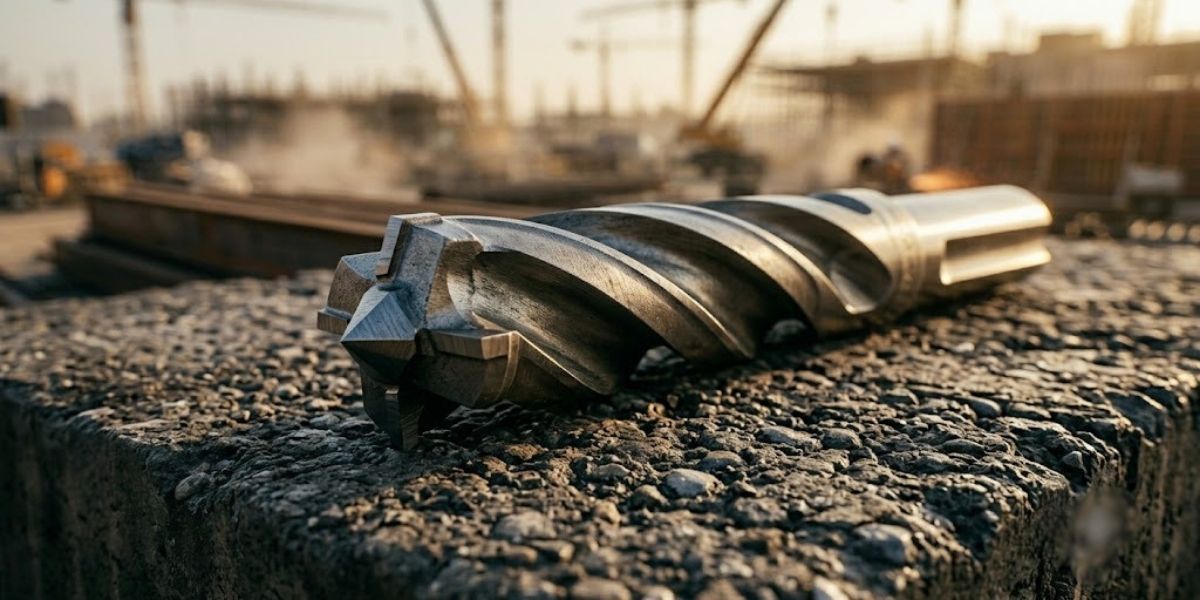
Industrial drill bits decide whether your anchor installation stays on schedule or turns into a cycle of overheated steel, blown tolerances, and wasted labor. In high-PSI concrete, bit selection is not a small purchasing detail, it is a production decision that affects tool life, hole accuracy, inspection outcomes, and cost per installed anchor.
What industrial drill bits actually do in high-PSI concrete
In high-strength concrete, an industrial drill bit has one job: produce repeatable, code-compliant holes at production speed without burning labor through premature wear. That sounds obvious, but too many purchasing decisions are still made by unit price.
Unit price is the wrong metric.
Your real metric is cost per accepted hole. That includes purchase price, average holes drilled before replacement, operator downtime for changes, reduced drilling speed as the bit dulls, and the downstream cost of rejected anchor holes. A cheap bit that drills 65 acceptable holes before output collapses is more expensive than a premium bit that drills 180 holes with stable diameter and faster penetration.
For anchor installation, repeatability beats bargain pricing every time. If your crews are drilling for wedge anchors, adhesive anchors, or screw anchors, bit wear changes the hole profile and cleaning burden. That affects anchor performance and installation speed. If you are tightening your purchasing process around large-volume anchor sourcing, the drill bit has to be evaluated as part of the same productivity chain.
The material question: carbide is the standard, but not all carbide performs the same
In this category, carbide-tipped is the baseline. Standard steel bits are not a serious option for high-PSI cured concrete. The actual buying question is which carbide design survives your production environment.
Higher-grade carbide resists abrasion from hard aggregate longer. It also handles heat and percussion stress better. Just as important, the carbide tip must stay bonded under repeated impact. A bit with a decent carbide insert but weak braze quality still fails early once heat cycling and rebar contact start stacking up.
Bit head design plays into this more than many buyers realize. Multi-cutter heads generally hold diameter better and track more cleanly in reinforced concrete than simpler two-cutter profiles. That translates into more consistent hole geometry and less binding once the bit starts aging. For demanding production work, that matters.
The performance difference between standard steel and premium carbide is not subtle. If you need a technical breakdown of wear behavior and output rates, the data behind carbide-based drilling performance makes the purchasing case plain: better carbide reduces downtime, extends useful life, and lowers cost per hole.
Shank systems and hammer compatibility
A strong bit still fails the job if the shank system is wrong for the drilling platform. High-volume concrete anchoring generally centers on SDS-Plus for smaller diameters and SDS-Max for larger diameters, deeper embedments, and heavier daily cycling. Spline and hex systems still appear in some fleets, but most modern commercial drilling programs rely on SDS platforms for speed and consistency.
This is not just a fit issue. The shank controls energy transfer. Poor compatibility reduces impact efficiency, increases vibration, and accelerates wear at both the bit and tool interface. If your crews are running under sustained load, you need a bit matched to the hammer’s impact energy, rotation speed, and intended hole range.
Overspecifying is a mistake too. A larger rotary hammer and heavier shank system do not automatically create better performance on smaller anchors. In fact, they often create more operator fatigue and less finesse on tolerance-sensitive holes. Match the shank to the application range, not to the idea that bigger always wins.
Geometry that improves production instead of marketing copy
Concrete bit geometry is where product claims get noisy. Keep it simple. The features that matter on your jobs are head design, flute shape, core strength, and dust evacuation efficiency.
A stronger core resists breakage under lateral stress and rebar strikes. Well-designed flutes clear dust faster, which keeps the cutting face active instead of forcing the operator to fight packed debris. Efficient dust removal also helps hole quality because the bit keeps advancing on fresh material instead of regrinding fines.
Head design affects both speed and durability. Multi-edge cutting heads distribute impact more evenly and maintain roundness better as the bit wears. That matters for anchors with strict hole requirements. If you are coordinating mechanical anchoring with structural criteria, your drilling tools must support the same performance expectations you apply to load-rated fastening systems.
Marketing terms like turbo head, speed flute, and extreme cutter mean nothing without performance data. Buy geometry that improves hole count, drilling rate, and tolerance retention. Ignore the rest.
Performance analysis under continuous load
Continuous-load performance separates industrial drill bits from jobsite-grade bits. Your crews do not judge a bit by the first ten holes. The real test starts after sustained heat, dust, and percussion force build up.
In side-by-side field conditions representative of commercial anchor installation in reinforced 5,000 to 7,000 PSI concrete, CEP’s industrial drill bits consistently deliver longer productive life than economy-grade alternatives. On average production cycles, premium carbide bits from CEP hold usable diameter and cutting speed for roughly 160 to 210 anchor holes in common diameters before replacement becomes the efficient decision. Economy bits in the same conditions typically fall into the 55 to 95 hole range before drilling time spikes and hole quality degrades.
That performance shift changes your cost-per-hole math fast. Take a 1/2-inch anchor bit as an example. A lower-cost bit at $18 that yields 70 acceptable holes costs about $0.26 per hole before labor. A premium CEP bit at $34 that yields 185 acceptable holes costs about $0.18 per hole. Add labor and downtime, and the gap widens. If each bit change, retrieval, and restart burns just 4 minutes of loaded labor, frequent replacement becomes the bigger expense.
Here is the simple equation you should use:
| Metric | Economy Bit | Premium CEP Bit |
|---|---|---|
| Purchase price | $18 | $34 |
| Accepted holes | 70 | 185 |
| Bit cost per hole | $0.26 | $0.18 |
| Estimated bit changes per 1,000 holes | 14.3 | 5.4 |
| Downtime at 4 min/change | 57.2 min | 21.6 min |
That is why performance data matters more than shelf price. Under continuous load, longer bit life cuts direct consumable cost and protects production flow. If you are already tightening procurement around jobsite inventory continuity, drill bit standardization belongs in the same conversation.
Reinforced concrete changes the buying criteria
Plain concrete is one thing. Reinforced concrete is another. Once you add frequent rebar encounters, the best buyer decision shifts toward impact-resistant carbide, stronger braze construction, and head designs built to survive steel contact without catastrophic edge loss.
This does not mean your masonry bit becomes a true rebar cutter. It means it survives incidental contact better, keeps advancing after interruption, and avoids immediate loss of drilling accuracy. In real commercial work, that resilience matters more than catalog speed claims made in ideal test blocks.
Reinforcement also increases heat and vibration. A bit that performs well in unreinforced slab but fails after repeated bar contact is not an industrial solution. It is a short-run solution disguised as one.
If your project mix includes heavy reinforcement, deep embedments, and post-installed anchor schedules tied to structural inspections, align bit selection with the same rigor used for engineered anchoring system decisions. The drill bit is part of compliance, not just consumables.
Choosing by anchor type and hole tolerance
Different anchor systems place different demands on the hole, so your bit selection should follow the anchoring method.
Mechanical expansion anchors demand diameter accuracy. If the hole runs oversized because the bit is worn, anchor performance drops and inspection trouble starts. Adhesive anchor installations raise the stakes further because sidewall condition, depth control, and proper cleaning all influence bond performance. Screw anchors depend on precise hole size to achieve proper engagement torque.
That means your bit choice should be tied to the anchor category, not purchased as a generic masonry accessory. For teams comparing installation methods, the trade-offs in mechanical versus adhesive anchor selection make one point clear: hole quality directly affects anchor reliability.
When hole tolerance matters, retire bits before failure. Do not run them until the carbide is visibly destroyed. By that point, production has already slowed and compliance risk is already in play.
What to ignore when evaluating industrial drill bits
Some specification sheets are padded with features that do not move the job.
Decorative coatings get too much attention. In concrete drilling, carbide quality and bit geometry drive output far more than cosmetic finish language. Packaging promises about universal drilling are also overplayed. A bit optimized for structural concrete should not be judged by how many materials it can touch. It should be judged by how efficiently it drills concrete all day.
Do not overvalue maximum no-load speed claims either. Anchor work is performed under load, in dust, through aggregate, and often around reinforcement. Continuous production behavior tells the truth.
And do not buy mixed assortments for commercial anchor programs unless your application volume is genuinely unpredictable. Standardizing the diameters you burn through most often gives you better purchasing leverage, cleaner inventory control, and fewer field substitutions. That principle aligns with broader site supply consolidation practices that keep crews productive instead of chasing parts.
Budget tiers and what you actually get
At the entry level, you get lower purchase price and short useful life. This tier fits light-duty maintenance drilling, punch-list work, or occasional holes in moderate concrete. It does not fit production anchoring.
Mid-tier bits can work for mixed commercial service crews that drill concrete regularly but not continuously. Performance is acceptable, but wear rate becomes noticeable once daily hole counts rise.
Premium industrial drill bits are the right buy for sustained anchor installation in high-PSI concrete. You pay more up front and less over the run. You get longer life, more stable hole geometry, fewer bit changes, and lower labor drag per thousand holes drilled. On any project where schedule, labor burden, and inspection matter, premium wins the economics.
That is the decision rule. If your concrete drilling volume is high, buy for cost per accepted hole. If volume is low, unit price matters more. Most commercial contractors and advanced bidders already know which side of that line applies.
Frequently Asked Questions
How long should industrial drill bits last in reinforced concrete?
Useful life should be measured in accepted holes, not calendar time. In high-PSI reinforced concrete, premium carbide industrial drill bits often deliver 2 to 3 times the productive hole count of economy bits before speed and tolerance fall off.
Are carbide-tipped bits always the right choice for concrete anchoring?
For cured structural concrete, yes. Standard steel bits wear too fast and do not hold up under percussion load. The real decision is not carbide versus steel, it is which carbide grade and head design best fit your drilling volume and reinforcement exposure.
When should you retire a concrete drill bit?
Retire the bit when drilling speed drops, hole quality starts drifting, or the bit requires more force to maintain penetration. Waiting for visible failure costs more because labor time rises before the bit fully quits.
Does rebar contact ruin a masonry bit immediately?
A quality industrial bit survives incidental rebar contact far better than a low-grade alternative. Repeated steel contact still accelerates wear, but premium carbide and stronger braze construction prevent the sudden failures that shut down production.
Why is cost per hole better than unit price for purchasing?
Because unit price ignores labor, downtime, and rejected work. A bit that costs more but drills significantly more acceptable holes almost always lowers total drilling cost on high-volume commercial jobs.
Once you understand how industrial drill bits perform under real production conditions, the buying process gets simpler. Stop shopping by package price, start buying by accepted hole count, tolerance retention, and downtime reduction. That is how you protect your crews, your schedule, and your anchor installations in high-PSI concrete.
