
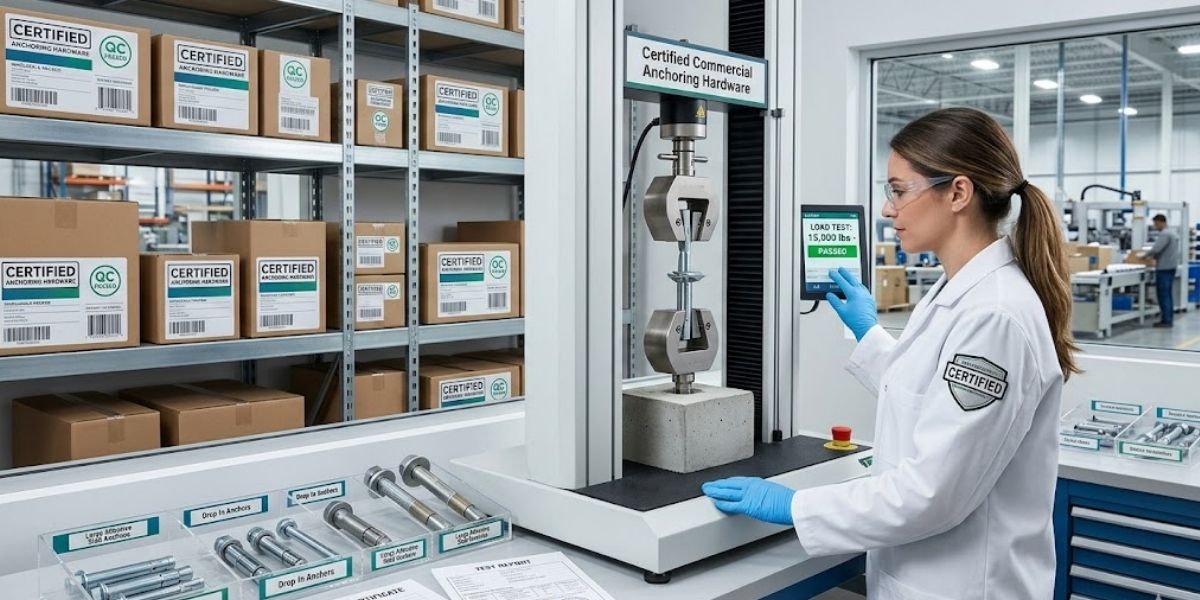
If you treat commercial anchoring hardware like a line-item commodity, you invite inspection failures, field substitutions, and liability that stay with the project long after turnover. The right procurement protocol turns anchor buying into risk control, and that is exactly how you protect load integrity, code compliance, and schedule performance on commercial work.
Why Procurement Protocols Matter for Commercial Anchoring Hardware
Commercial anchor packages fail for predictable reasons: incomplete application data, weak submittals, non-matching approvals, wrong accessories, and last-minute substitutions made to chase price. On a large commercial job, that failure does not stop at the anchor. It hits drilling operations, inspections, sequencing, and closeout.
That matters even more now because demand for anchoring systems keeps rising alongside retrofits, infrastructure upgrades, and high-load post-installed applications. The anchoring fasteners market continues to expand with commercial and public construction driving structural safety requirements, not just volume (anchoring fasteners market). Your procurement protocol has to reflect that reality.
Define the Application Before You Price the Package
The buying process starts with engineering inputs, not catalog pages. If you price anchors before confirming load case, substrate, embedment, exposure, and inspection requirements, your quote is already wrong.
Identify the Structural Load Case
Start with tension, shear, combined loading, vibration, fatigue, and seismic demand. Your procurement package has to match the engineered load path and the approved design values in the project documents. A raw pull-out claim from a sales sheet means nothing if the connection sees cracked concrete, edge loading, or dynamic equipment movement.
On suspended overhead supports, heavy equipment bases, curtain wall attachments, and safety-related connections, design assumptions drive everything. If the anchor is post-installed in a seismic zone, your purchasing decision must align with the engineer’s approved parameters, not a “similar” part number.
Match the Anchor to the Base Material
Concrete is not one substrate. Cracked concrete, uncracked concrete, lightweight concrete, masonry, hollow block, grout-filled CMU, steel, drywall-backed systems, rock, and specialty facades all change anchor behavior.
Substrate mismatch is one of the fastest ways to trigger field failure. A fastener that performs in sound concrete does not automatically belong in hollow block. A masonry anchor is not a substitute for a qualified concrete anchor. If your project includes multiple base materials, separate the package early and coordinate exact approvals with the drawings and specifications. That same discipline applies when reviewing anchor options for brick and block assemblies.
Account for Exposure and Service Conditions
Environment decides material selection. Interior dry spaces allow standard finishes in many applications. Exterior exposure, coastal salt, chemical washdown, wastewater plants, parking structures, and process facilities demand corrosion resistant anchors and tighter material control.
Chemical anchor selection follows the same logic. Epoxy leads the category because it delivers the highest load performance, hybrid systems win where cure time affects schedule, and vinyl ester earns attention in corrosion-heavy environments. The chemical anchor segment is growing fast, with epoxy anchors at 45.3% of product share in 2025 for exactly that reason. For more detailed trade-offs between resin systems and mechanical options, the breakdown on matching resin-based systems to the application is useful.
Certifications and Code Compliance You Must Verify
Sales language does not pass inspections. Documentation does.
Confirm ICC-ES, ETA, UL, and Manufacturer Technical Data
Verify the exact evaluation report, listing, and technical sheet for the exact product being purchased. Diameter, embedment, installation orientation, base material condition, rod grade, cure time, and temperature range all need to match. Family-level approvals are not enough if the approved design calls for a specific condition.
You also need installation instructions in the submittal package, because approved performance only exists when installation follows the tested method. If the anchor requires a specific brush, blowout process, adhesive dispenser, torque value, or setting tool, that accessory belongs in procurement.
Check ACI 318, IBC, and Seismic Requirements
Post-installed anchors on commercial work sit under strict code control. Your review has to include cracked concrete approval, seismic category requirements, spacing limits, edge distances, and any special inspection requirements tied to the anchor type. Industry demand is being pushed by stricter safety standards and ACI-referenced post-installed anchor requirements, which is exactly why code compliant anchors need documented proof.
If your job includes seismic design categories or retrofit work, treat seismic anchoring hardware as a separate control item. Coordinate engineering, installation procedure, and inspection scope together. That is the same discipline covered in seismic-rated anchor performance under real field conditions.
Verify Traceability and Batch Documentation
Lot traceability matters on public work, hospitals, schools, treatment plants, and any project with a serious closeout standard. Adhesive systems need shelf-life verification and expiration control. Stainless and specialty alloys need material documentation. Municipal and institutional bids often require retained batch records, country-of-origin declarations, and matching certification files.
For submittal packages in municipal bidding, your checklist should include product data sheets, evaluation reports, installation instructions, lot control records, adhesive expiration dates, material certifications, and any required special inspection forms. Sourcing through Construction & Electrical Products Inc. simplifies that process because your team gets direct access to certification documents, technical data, bulk product continuity, and the support needed to keep every approved item aligned with the bid package.
Compare the Main Types of Commercial Anchoring Hardware
Every anchor category has a place. The mistake is using one category as a default answer.
Mechanical Anchors
Mechanical anchors include wedge anchors, sleeve anchors, drop-ins, screw anchors, and heavy-duty expansion anchors. These systems are often chosen for installation speed and immediate loading in the right conditions. But speed only helps when hole diameter, base material, edge distance, torque, and embedment are correct.
Wedge anchors remain common on repetitive concrete work, especially where standardized embeds simplify field execution. If your project depends on high-volume concrete fastening, it pays to review cost control on repeated anchor purchases before issuing a blanket PO.
Adhesive and Chemical Anchor Systems
Chemical anchors give you flexibility in irregular substrates, retrofit work, rebar doweling, and high-load applications. Epoxy systems dominate high-load work, hybrid systems support faster cure and schedule-driven sequencing, and vinyl ester systems are a strong choice for corrosive service environments. The overall chemical anchor market is projected to climb from $2.887 billion in 2024 to $5.193 billion by 2035, which tracks directly with commercial demand and retrofit intensity.
Procurement control is tighter here because storage temperature, expiration date, hole cleaning, nozzle accessories, and cure windows all affect final performance.
Specialty and High-Corrosion Systems
Stainless steel anchors, hot-dip galvanized hardware, undercut anchors, and environment-specific industrial anchoring systems belong on coastal, marine, wastewater, and aggressive chemical sites. In those settings, finish selection is not cosmetic. It determines service life.
Zinc-plated hardware in a corrosive environment is a short-term decision with long-term consequences. Material upgrades belong in the budget from the start.
Procurement Criteria That Separate Approved Systems From Job-Site Problems
Experienced buyers do not stop at anchor type. You need system-level review.
Load Ratings, Embedment, and Spacing Limits
Published values must be checked against the real installation condition. Review reduction factors, minimum edge distance, spacing, base material thickness, and allowable loads under the exact approval. Raw strength claims are not procurement criteria.
The same discipline applies across adjacent fastener categories, especially on assemblies that interact with steel supports and structural connectors. That is why coordinated review with high-load fastening requirements across structural assemblies prevents bad assumptions before material ships.
Installation Controls and Required Tooling
Commercial anchoring hardware is only as good as the installation method. Confirm drilling method, bit tolerance, hole cleaning, adhesive dispensing tools, setting tools, torque wrenches, cure schedule, and installer qualification requirements before release.
Industrial drilling equipment belongs in the same conversation as anchor procurement because bit wear, hole quality, and drilling speed directly affect compliance and productivity. If your crews are drilling high-PSI concrete at scale, review bit selection for dense concrete drilling before standardizing tools across the project.
Availability, Lead Times, and Bulk Order Continuity
A technically approved anchor that arrives late is still a project problem. Bulk commercial work demands phased deliveries, approved alternates, domestic factory access, and supplier depth that can absorb schedule changes without spec drift. Construction suppliers lead the channel because technical support advantage matters when your order is tied to engineering approval and field execution.
Budgeting for Performance, Not Just Unit Cost
Low unit cost is meaningless if labor goes up, cure delays stack, or inspectors reject the install. You should budget around total installed cost, including tooling, training, installation speed, inspection success, and replacement risk.
When to Spend More on Premium Anchor Systems
Pay for premium systems on seismic work, suspended overhead loads, cracked concrete, heavy equipment anchorage, corrosive exposure, and structural connections with high consequence of failure. This is not overspecification. It is disciplined risk control.
Where Standardized Hardware Saves Money
Savings come from approved standardization, common diameters, repeated tooling, consolidated sourcing, and fewer field variables. On large commercial projects, standardization reduces training friction, purchasing errors, and overstock. It also supports cleaner inventory control alongside broader site material planning for commercial supply chains.
Common Procurement Failures That Trigger Rework and Liability
These mistakes keep showing up because teams rush the anchor package.
Buying on Generic Description Instead of Exact Approval
“Equivalent” is not a procurement standard. If report numbers, substrate approvals, embedment ranges, or installation parameters do not match, the item is not approved. That is how rejected submittals turn into stop-work conditions.
Ignoring Adhesive Shelf Life and Storage Requirements
Expired cartridges, overheated stock, missing nozzles, and poor cold-weather control destroy performance before installation starts. Chemical anchors demand inventory discipline.
Failing to Coordinate Hardware With Inspection and QA Requirements
If special inspection, pull testing, torque verification, installer records, or closeout documents are required, procurement has to support that from day one. You cannot build the QA trail after the anchors are in the wall.
Recommended Procurement Protocol by Project Type
Project type changes the buying workflow.
New Commercial Construction
Standardize anchor schedules early. Tie submittals to structural sheets, MEP supports, and repetitive assemblies. Plan bulk delivery by phase so crews are not opening mixed cartons to keep moving.
Seismic Retrofits and Structural Upgrades
Retrofit work demands exact cracked concrete approvals, seismic-rated post-installed anchors, and close control over drilling and installation sequence. Inspection intensity rises fast, and shortcuts get exposed faster.
Coastal, Marine, and Corrosive Environments
Coastal and waterfront work demands strict material control, galvanic awareness, vinyl ester or stainless selection where specified, and exact substrate matching. In marine applications, anchor selection is driven by loading direction and seabed conditions, and foundation choice can consume up to 26% of total project cost in floating systems. That is a strong reminder that environment-specific selection is procurement, not cleanup.
Supplier Selection Standards for High-Volume Commercial Buyers
Your supplier is part of the protocol. If that supplier cannot support approvals, accessories, volume, and documentation, the package is weak before it ships.
What to Require From Your Anchor Supplier
Require fast access to data sheets, evaluation reports, certification files, installation instructions, batch documentation, bulk inventory, specialty sourcing, and domestic factory support. CEP brings that structure to the table with broad inventory, access to thousands of additional items, and practical support built around commercial demand.
Why Technical Support Protects Schedule and Compliance
The right supplier helps validate submittals, source approved accessories, coordinate industrial drilling equipment, and prevent substitutions that break compliance. That support keeps crews moving and protects inspection outcomes.
Frequently Asked Questions
What documents should be included in a municipal anchor submittal package?
Include product data sheets, ICC-ES or equivalent evaluation reports, installation instructions, published load tables, material certifications where required, adhesive expiration documentation, and batch traceability records. If special inspection applies, include the inspection procedure and required installer documentation.
Are chemical anchors always better than mechanical anchors?
No. Chemical anchors excel in high-load, retrofit, irregular substrate, and corrosion-sensitive applications. Mechanical anchors are often faster on repetitive concrete work where the approved condition fits the product exactly.
What is the biggest procurement mistake with commercial anchoring hardware?
Buying by generic description instead of exact approval. If the ordered item does not match the approved report, substrate, embedment, and installation condition, your field crew inherits a compliance problem.
Why should drilling tools be reviewed with the anchor package?
Because hole quality affects anchor performance. Bit tolerance, drilling method, hole depth, and cleaning procedure all influence the final installation. Treat the anchor and the drilling process as one system.
When should stainless steel anchors be specified?
Specify stainless on coastal projects, waterfront structures, wastewater facilities, chemical plants, and any environment where corrosion is an active service condition. Standard plated finishes do not belong in aggressive exposure.
If you tighten your procurement protocol at the front end, anchor packages stop being a source of rework and start supporting schedule, inspections, and long-term performance. That is the difference between buying hardware and buying a system that holds up under real commercial conditions.
