
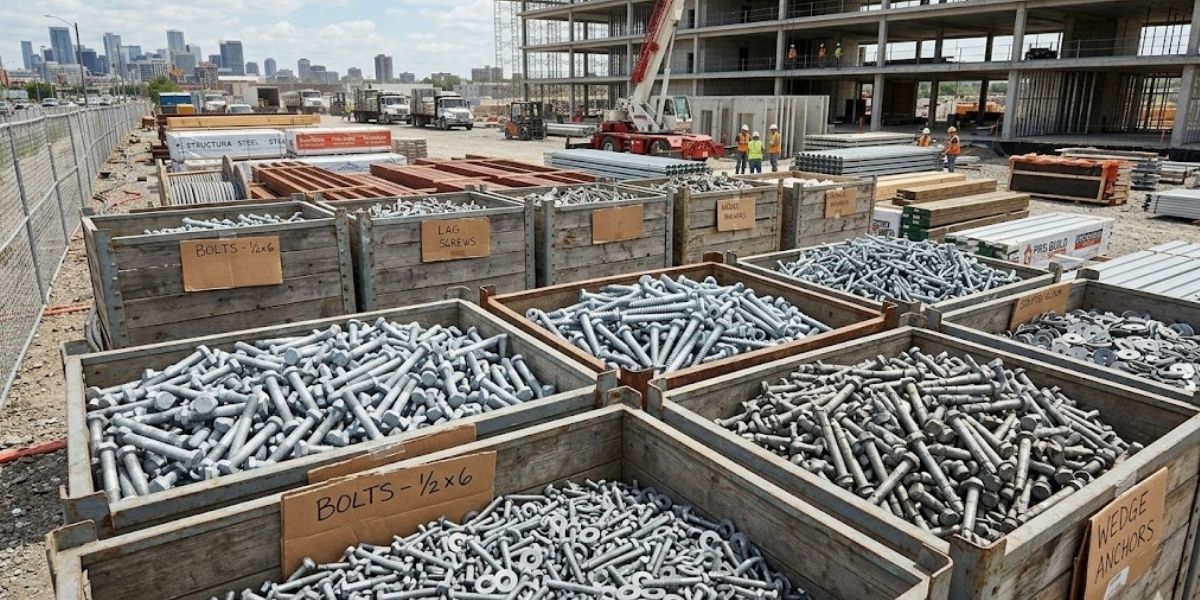
Running out of bulk construction fasteners does not look expensive on paper, but it wrecks schedules in the field. If you manage commercial builds, structural scopes, or bid packages, a subscription replenishment program gives you a controlled way to keep anchors, screws, rod accessories, and drilling consumables moving without tying up cash in piles of excess inventory.
Why Small Fastener Shortages Create Big Jobsite Delays
Fasteners sit in the lowest-cost line items and create some of the highest-friction delays. One missing wedge anchor, concrete screw, rod coupler, or approved washer assembly can stop layout, overhead support installation, steel tie-ins, rough-in sequencing, and inspection readiness. Crews do not wait productively for a box of anchors.
That risk is bigger than it used to be. Recent construction research shows 4 out of 5 contractors dealt with supply-related delays, and reactive ordering leaves your schedule exposed. In a market driven by infrastructure work, commercial development, and steady regional demand, fastener availability matters as much as unit price.
How Bulk Construction Fasteners Subscriptions Reduce Downtime
A subscription program is scheduled replenishment for high-use, code-sensitive consumables. Treat it as an inventory-control system, not a convenience feature. You set delivery intervals, usage thresholds, approved SKUs, backup quantities, and job allocation rules. The result is fewer stockouts, fewer emergency runs, and better crew continuity.
Price stability matters just as much as continuity. A strong CEP program locks in agreed pricing for defined terms, so market swings in steel, freight, or imported supply do not hit every reorder. That gives your purchasing team cleaner forecasting and keeps bid assumptions from getting chewed up halfway through a project.
The Difference Between Subscription Replenishment and One-Off Bulk Buying
One-off bulk buys solve volume for a moment. Subscription replenishment protects continuity for the life of the project. Instead of overloading a warehouse or stuffing a gang box with six months of hardware, you receive planned deliveries tied to real consumption.
That middle-ground approach works especially well when paired with better inventory controls for active jobs and warehouses. You keep material flowing without carrying dead stock.
Why This Model Fits Commercial Contractors and Project Bidders
Commercial contractors and advanced bidders need dependable supply assumptions before mobilization. A subscription gives estimating teams a predictable replenishment structure, stable pricing windows, and cleaner lead-time planning. Field teams get approved fastening systems on schedule, and procurement gets fewer surprises.
If your work includes high-volume anchoring packages, this model also supports enterprise anchor sourcing strategies that line up with actual installation rates instead of rough guesswork.
The True Cost of Running Out Versus the Cost of Carrying Too Much Inventory
Stockouts cost labor time, expedited freight, field purchasing time, and lost sequence control. Overbuying creates storage cost, shrinkage, insurance expense, capital lockup, and obsolescence. The right subscription sits between those two failures.
Research from FMI notes carrying costs can reach 20% of material cost, and that number climbs fast with project-specific hardware. You do not save money by owning too much material too early.
Downtime Costs That Never Show Up on the Unit Price
A superintendent pulled into emergency purchasing is not managing production. A missed inspection window pushes follow-on trades. A crew that changes installation flow because the correct anchor is missing introduces rework and quality risk. The cheapest fastener is the one on site, approved, and ready to install when the crew needs it.
Inventory Carrying Costs on Large Commercial Projects
Large commercial jobs burn cash when inventory sits untouched. Storage racks, locked containers, loss exposure, and redesign risk all add cost. Managed replenishment protects safety stock without turning your site into a warehouse. For broader planning, it helps to align subscriptions with sitewide material control practices.
What to Look for in a Bulk Fasteners Subscription Program
The right program starts with SKU depth and ends with execution discipline. You need standard anchors, specialty hardware, drilling accessories, domestic sourcing options, and consistent lead times. You also need reorder logic that matches field usage, not a generic monthly shipment.
Code Compliance, Certifications, and Approved Product Documentation
Every recurring shipment must match the approved submittal. That means ICC-ES reports, manufacturer load data, UL listings where required, coating details, and full traceability. If substitutions happen without approval, your subscription program becomes a liability.
This is where certified anchoring procurement standards and structural approval requirements matter. Replenishment only works when documentation stays locked to the spec.
Product Range for Anchoring, Mechanical Fastening, and Drilling Systems
A useful program covers more than screws and bolts. You need anchors, wedge anchors, concrete screws, threaded rod accessories, nuts, washers, strut hardware, and the drill bits that keep installation moving. If the supplier cannot support fastening and drilling together, your crews still face downtime.
Delivery Speed, Fill Rates, and Supply Chain Depth
Same-day shipping, consistent fill rates, domestic factory access, and controlled backorders separate real supply partners from order takers. Research shows North American demand remains strong, with the market reaching USD 22.29 billion in 2026. In that environment, availability wins jobs.
Pack Sizes, Jobsite Kitting, and Multi-Location Delivery
Case quantities, pallet loads, labeled kits, and split deliveries matter. You want product staged where work happens, warehouse, prefab shop, or active floor, without extra handling. Packaging is a labor decision disguised as a purchasing detail.
Which Fasteners Belong on Subscription and Which Do Not
Not every fastener should run on auto-replenishment. The right candidates are predictable, high-turn, repeatedly approved items used across phases or multiple jobs.
Best Candidates for Subscription Replenishment
Concrete anchors, common screws, nuts, bolts, washers, threaded rod hardware, strut fittings, and drilling accessories fit scheduled delivery well. If your crews consume them every week, automate them. High-volume installation items also pair well with drilling products selected for concrete production rates.
Items That Require Project-Specific Procurement
Seismic-rated anchors, engineered fastening assemblies, unusual coatings, uncommon diameters, and highly specialized hardware need manual control. Those purchases belong under tighter technical review, especially when load path or compliance is involved.
How to Set the Right Subscription Levels for Your Jobs
Build recurring delivery schedules from actual production, not guesswork. Start with crew count, average weekly usage, phase duration, supplier lead time, and a minimum safety stock. Then set reorder triggers and shipment frequency to match installation pace.
Use Historical Consumption and Phase-Based Forecasting
Foundation, structure, envelope, and MEP phases do not consume the same products at the same rate. Use past job data, takeoffs, and install rates to set your baseline. Then adjust by phase so your deliveries change when the work changes.
Build Safety Stock Without Overloading the Site
Safety stock should protect production for a short disruption window, not cover half the project. Keep enough approved material on hand to absorb normal demand swings, then let recurring deliveries do the rest.
Common Mistakes That Make Fastener Subscription Programs Fail
Subscription programs fail when purchasing, field storage, and usage tracking are disconnected. The model is simple. The discipline is not.
Choosing by Unit Price Instead of Reliability
A cheap line with weak fill rates and poor documentation costs more than a premium line delivered correctly. Reliability is the purchase.
Ignoring Spec Changes, Coatings, and Corrosion Requirements
If a revised submittal changes finish, material grade, or anchor approval, your replenishment settings must change immediately. That is especially true for coastal exposure, envelope systems, and corrosive environments.
Failing to Align Purchasing, Field Storage, and Usage Tracking
Unlabeled bins, mixed lots, and missing consumption data break the system fast. Good replenishment depends on clean field counts and disciplined stock rotation.
Best Subscription Setups by Commercial Use Case
The setup should match your work, not a generic template.
For Commercial General Contractors Managing Multiple Active Jobs
Use centralized purchasing with job-specific allocation and scheduled multi-site delivery. That keeps standard hardware moving across concurrent projects without duplicate overbuying.
For Structural and Concrete Teams Using High-Volume Anchoring Systems
Keep tight control over approved anchors, drilling accessories, and backup stock for critical-path work. If anchoring performance drives inspections, continuity matters more than penny savings.
For Estimators and Advanced Project Bidders
Use subscription pricing and replenishment assumptions to reduce contingency pressure and improve procurement planning before award. Stable supply terms make your bids sharper.
How to Evaluate a Supplier Before You Commit
A real subscription partner brings technical knowledge, inventory depth, sourcing flexibility, and field reliability. Construction & Electrical Products Inc. fits that standard with 45 years of supply experience, 10,000 plus stocked products, specialty sourcing, and domestic factory access built for commercial volume.
Questions to Ask Before Signing a Program
Ask about fill rates, emergency order handling, documentation support, pricing lock periods, domestic sourcing, specialty item support, and scaling during demand spikes. If those answers are vague, the program is weak.
What Strong Supplier Support Looks Like in the Field
You should expect fast answers, traceable shipments, approved substitutions only, consistent product quality, and delivery schedules that hold under pressure. That is what keeps crews working instead of waiting.
Frequently Asked Questions
How often should bulk construction fasteners ship on a subscription?
Set shipment frequency by usage rate and lead time. High-turn items often work best on weekly or biweekly delivery, while slower-moving stock fits monthly replenishment. The schedule should follow production, not the calendar alone.
Can subscription pricing really protect against market fluctuations?
Yes, if your supplier locks pricing for a defined term and ties replenishment to approved SKUs. That protects your budget from short-term swings in freight, raw material costs, and spot-buy pricing.
What documentation should come with recurring fastener orders?
You need the same documentation required for the original approval: manufacturer specs, load data, coating information, certifications, and lot traceability. Every replenishment shipment must match the approved submittal package.
Which items should stay out of automatic replenishment?
Keep engineered, seismic-rated, rare-diameter, unusual-coating, and project-specific fastening systems under manual review. Those items need tighter control because spec changes and approval requirements carry more risk.
How do you prevent overstock with a subscription program?
Use historical consumption, phase-based forecasting, minimum stock levels, and short replenishment cycles. That keeps enough inventory on hand to protect production without filling containers and shelves with slow-moving material.
A strong subscription program changes fasteners from a recurring headache into a controlled operating system. When pricing is stable, approvals are locked, and deliveries match your install pace, downtime stops being a purchasing problem and becomes one less thing slowing your job down.
