
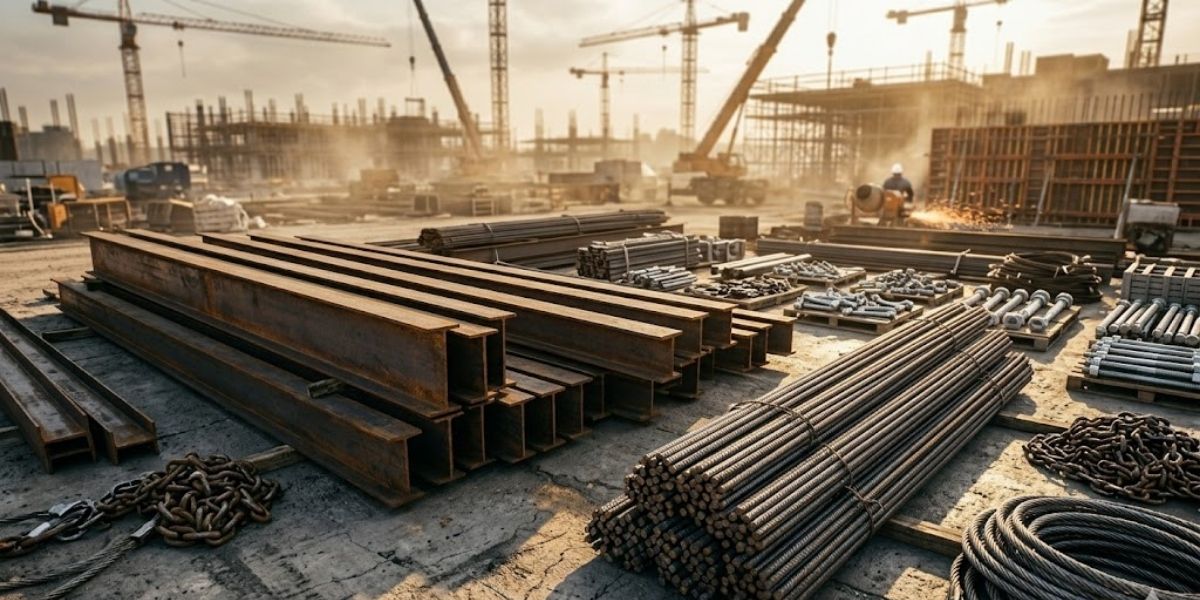
Industrial construction supplies do not fail on paper. They fail when 400 anchors are sitting in the wrong yard, epoxy has expired in a conex, or a rotary hammer vanished between a truck assignment and a concrete deck pour. The right inventory management system stops that kind of loss by giving you control over material, tools, and replenishment before schedule damage shows up in the field.
Why Inventory Management Systems Matter for Industrial Construction Supplies
An inventory management system for industrial construction is not just warehouse software. It is the operating layer that tracks anchors, fasteners, adhesives, blades, bits, PPE, core drills, meters, and assigned tools across warehouses, jobsites, trucks, laydown yards, and temporary staging areas. If your operation handles high-volume installs with inspection pressure and tight sequence dependencies, inventory control is a production issue, not an admin task.
That matters even more now because demand is rising across a huge and growing materials market. The global building materials sector reached USD 1.41 trillion in 2025, with industrial construction identified as the fastest-growing end-user segment. More work volume means more purchase orders, more locations, more transfers, and more chances for blind spots to turn into costly failures.
The Cost of Poor Inventory Visibility on Commercial Jobs
Poor visibility shows up fast on commercial jobs. A crew arrives ready to set embeds or install post-installed anchors, only to find the right diameter sleeves were issued to another site, the adhesive lot on hand is out of date, or the drill bits in stock are the wrong spec for high-PSI concrete. Then purchasing places a rush order for material already sitting somewhere else in your network.
Spreadsheets create lag. Manual counts create false confidence. Disconnected purchasing records break accountability because no one sees the full chain from purchase order to receiving to field issue to job-cost charge. The result is familiar: duplicate buys, missing tools, excess slow-moving stock, emergency freight, and schedule risk at the exact moment your install sequence tightens.
Why This Category Is Growing Fast
Inventory control is growing fast because industrial construction supply chains are getting harder to manage, not easier. The U.S. construction materials market is expanding, and the USD 1.2 trillion Infrastructure Investment and Jobs Act keeps pressure on sourcing, planning, and material readiness across transportation, utility, and facility work.
There is another reason. The U.S. supply base is fragmented, especially for bulky and regional materials, specialty fasteners, and code-driven components. Add sustainability documentation, manufacturer certifications, expiration control, and inspection records, and inventory management becomes a strategic requirement. If you cannot prove what you bought, where it went, and when it was used, your system is not doing the job.
What an Inventory Management System Must Do in Industrial Construction Environments
A serious system has one job: keep field operations supplied without losing cost control or traceability. That means live data, location control, receiving discipline, and replenishment logic tied to actual usage. If any of those pieces are missing, you are paying for software while still running inventory by memory and text message.
Real-Time Inventory Tracking Across Every Location
You need live quantity updates across every storage point, not a nightly sync and not a weekly reconciliation. Main warehouse, branch storage, tool crib, service truck, job trailer, off-site yard, and transfer staging all need to sit inside one current record. That single source of truth eliminates the delay between physical movement and system visibility.
This is especially important for logistics managers integrating vendor-managed inventory software. If a supplier is monitoring min/max levels or replenishing agreed SKUs, the platform must reflect field consumption and receiving activity in real time. CEP supports this model by interfacing with procurement platforms to simplify tracking of industrial construction supplies, so purchase data, receiving status, and replenishment activity stay aligned instead of living in separate systems.
Track Both Supplies and High-Value Equipment
Your system must handle consumables and serialized assets in the same workflow. Industrial jobs do not separate those realities. The same crew that burns through anchors, washers, and adhesive also signs out rotary hammers, core rigs, scanners, and testing tools. Managing one category in a warehouse app and the other in a tool log guarantees missing data and weak accountability.
That combined view becomes even more useful when you are tightening field performance around item selection. For example, tracking issue rates and replacement frequency helps you connect consumption patterns to actual drilling conditions, especially when reviewing bit performance in dense concrete.
Procurement, Receiving, and Replenishment Control
The best systems tie purchase orders directly to receipts, receipts to stock, stock to issues, and issues to jobs or cost codes. That sounds basic, but plenty of platforms still leave gaps between what was ordered, what arrived, and what was actually available for use. Those gaps create phantom inventory and false reorder signals.
Look for purchase order linkage, receiving verification by line item, vendor lead-time history, min/max controls, and automatic replenishment triggers based on usage trends. A modern platform should support multi-location planning with real-time inventory updates, automated reorder logic, and transfer workflows that do not require side spreadsheets to stay accurate.
Key Buying Criteria When Comparing Inventory Management Systems
Software demos tend to show polished dashboards and neat reports. Field performance is different. You need to judge the platform by speed, traceability, adoption under jobsite conditions, and how well it supports cost accountability.
Multi-Site and Mobile Usability
If warehouse staff can use the system but foremen avoid it, the rollout has already failed. Your teams need mobile scanning, quick issue and return workflows, transfer logging, and location updates that work in rough conditions. A platform that takes six screens to move a pallet from yard stock to a job trailer will be bypassed by lunch.
Usability also matters when inventory turnover is high and installs are repetitive. If your crews are drawing from anchor bins, fastener stock, drill accessories, and consumables daily, mobile workflows must be fast enough to support the pace of the job. That same discipline improves performance when you are standardizing site supply control across active jobs.
Traceability, Compliance, and Audit Readiness
Traceability is non-negotiable for code-compliant anchoring systems, adhesives, PPE, and regulated items. Your system should track lot numbers, serial numbers, expiration dates, certifications, and usage history without separate manual logs. If an inspector asks for adhesive batch records or installation support documentation, you need an immediate answer.
This is where field inventory connects directly to engineering compliance. Adhesive anchoring products need expiration control and batch visibility, and mechanical systems require clean documentation around specification and use. That becomes far easier when your workflows line up with compliance requirements for engineered anchor assemblies.
Integration With ERP, Accounting, and Purchasing
Inventory software that does not connect to purchasing and accounting forces double entry and invites errors. Quantities, costs, receipts, commitments, and job charges need to move across systems without manual rekeying. Otherwise, field inventory says one thing, accounting says another, and project cost reports arrive late and wrong.
For larger operations, ERP and procurement integration is where the real return shows up. Your estimating assumptions, open commitments, actual receipts, and consumed stock need one connected flow. If you are already tightening vendor strategy around specialty fasteners and bulk categories, it helps to align that inventory logic with consolidated sourcing practices.
Reporting, Forecasting, and Inventory Valuation
The reports that matter are not vanity dashboards. You need consumption by project, turns, stockout rates, dead stock, vendor performance, transfer history, landed cost, and forecasted demand against the project schedule. If the platform cannot show what your high-volume categories are doing over time, it cannot support purchasing decisions.
Inventory valuation matters just as much. Freight, duties, and handling charges need to land against actual material cost so your margin picture is accurate. On large industrial work, hidden carrying cost and emergency freight can erase profit faster than labor overrun.
Types of Inventory Systems Used for Industrial Construction Supplies
Not every system is built for industrial field conditions. Choosing the wrong category causes pain long before you outgrow it.
Basic Stock Control Software
Basic stock control systems work for a single warehouse with limited SKU counts and light transfer activity. If your inventory is simple and your issue points are few, these tools can handle on-hand quantities, purchase orders, and standard receipts.
The limitation is obvious on distributed construction work. Basic systems usually break down on jobsite transfers, employee accountability, mobile scanning, serialized tool control, and lot-level compliance tracking. For serious industrial supply operations, they run out of road quickly.
Construction-Focused Inventory Platforms
Construction-focused platforms are designed around jobsites, tool cribs, trucks, and mobile crews. That makes them a better fit when your inventory moves constantly and accountability needs to follow people and locations, not just bins on warehouse shelves.
These systems usually perform better on issues, returns, assigned assets, and multi-site visibility. They also fit real workflows around anchored installations, field drilling, and staged consumables, especially when usage rates shift between phases such as layout, drilling, setting, and inspection.
ERP-Driven Inventory Modules
ERP-based inventory makes sense when your operation is supply-intensive, multi-entity, or heavily dependent on finance integration. If you need enterprise purchasing controls, landed cost precision, formal approval chains, and deep project accounting, ERP-driven inventory earns its place.
The trade-off is implementation weight. ERP modules require cleaner data, stronger process discipline, and more training. If your field teams need simple mobile transactions but your enterprise system is slow and rigid, adoption suffers.
How to Match the Right System to Your Operation
The right system depends less on vendor marketing and more on how your inventory actually moves. Start with your operation, not the demo.
Evaluate Your Inventory Profile and Movement Patterns
Count your active SKUs, turnover rates, serialized assets, consumable categories, and site-to-site transfer frequency. Then map how often material moves between main stock, temporary storage, trucks, and active jobs. A contractor with 1,200 SKUs and heavy transfer activity needs a very different system than a warehouse with 250 stable line items.
Movement patterns should also reflect technical categories. Anchors, adhesives, bits, blades, and structural hardware all behave differently in storage and replenishment. If you manage high-volume anchoring inventory, you need controls that support both volume purchasing and spec accuracy, especially around enterprise anchor sourcing decisions.
Map Users, Permissions, and Approval Workflows
Your purchasing team, warehouse manager, superintendent, foremen, project manager, estimator, and finance team do not need the same access. The system should assign permissions by role and enforce approval chains for transfers, returns, stock adjustments, and reorder decisions.
That structure protects inventory accuracy. It also keeps field speed intact because crews can issue and return material quickly while financial and purchasing controls stay in the background where they belong.
Define Implementation Requirements Before You Buy
Implementation succeeds or fails on data discipline. Clean your item master, standardize units of measure, set barcode rules, verify vendor records, name locations consistently, and define migration timing before signing the contract. If you skip this work, the system inherits every naming error and duplicate SKU problem you already have.
Training matters too. Warehouse and field workflows need separate instruction because the pace, device use, and daily tasks are different. A clean rollout beats a fast rollout every time.
Budget, ROI, and Total Cost of Ownership
Subscription price is only one piece of cost. The bigger question is how much margin your current inventory chaos is already burning.
What Drives System Cost
System cost is driven by user count, number of locations, mobile access, barcode or RFID hardware, implementation support, reporting depth, and the number of integrations required. Multi-location operations with asset tracking and compliance documentation will pay more than a basic stock room setup, and that is appropriate because the control requirement is higher.
Do not ignore internal cost either. Item cleanup, process design, staff training, and change management take time. Budget for those pieces up front instead of pretending they are free.
Where the Return Shows Up Fast
Return shows up first in reduced rush orders, fewer emergency buyouts, less shrinkage, tighter replenishment, faster receiving, and better labor efficiency. It also shows up in lower excess stock because material is visible across locations before someone orders more.
There is another fast win: better job-cost control. When issues, returns, and transfers hit the right project quickly, your cost picture stays usable during the job instead of after closeout. That is where inventory turns from overhead into operational leverage.
Common Mistakes Buyers Make
Most failed inventory rollouts are not software failures. They are scope failures and process failures.
Buying for the Warehouse Instead of the Entire Supply Chain
If the system only works inside the warehouse, you are solving the smallest part of the problem. Industrial construction supplies move through trucks, jobsites, laydown yards, subcontractor handoffs, and temporary storage. Ignore those movements and your inventory record becomes fiction the moment material leaves the dock.
Ignoring Data Discipline and Process Standardization
Bad item names, duplicate SKUs, inconsistent units, weak receiving procedures, and loose transfer habits destroy inventory accuracy. Software does not fix disorder by itself. It scales disorder faster.
This is especially expensive on technical fastening categories where similar products have different approvals, coatings, load characteristics, or embedment requirements. If item data is sloppy, crews pull the wrong stock and procurement replaces material that was never truly missing.
Choosing Features Over Adoption
Fancy dashboards do not matter if the scanning is slow, the mobile app is clumsy, or support disappears after go-live. Your crews will route around the system and go back to phone calls, whiteboards, and text messages. Once that happens, accuracy collapses.
Adoption is the standard. If your field teams can complete a transaction in seconds and trust what the screen shows, the system works. If not, it does not.
Best Inventory Management System Features by Use Case
Your priorities should match the way your operation makes money and controls risk.
For General Contractors Running Multiple Commercial Jobs
Prioritize multi-location visibility, mobile issue and return workflows, transfer tracking, and integration with purchasing and job-cost systems. General contractors need material readiness across many active fronts, not just a warehouse count.
For Structural and Concrete Teams Managing Anchoring Systems
Prioritize lot traceability, expiration control for adhesives, batch documentation, and accurate replenishment for high-volume fastening inventory. You need inventory records that support installation quality as directly as they support purchasing. If your crews work across chemical and mechanical fastening methods, align inventory settings with actual anchor application differences.
For Industrial Buyers Managing Bulk Orders and Specialty Supply
Prioritize demand forecasting, vendor lead-time visibility, landed cost tracking, bulk receiving accuracy, and strong controls for specialty items sourced from domestic factories and niche suppliers. This is where procurement discipline and inventory discipline meet. CEP fits this model well because procurement platform integration simplifies tracking, receiving, and replenishment across industrial construction supplies without losing visibility on specialty and bulk categories.
Final Buying Checklist for Inventory Management Systems for Industrial Construction Supplies
Use a simple rule during demos: if the platform cannot track inventory live across all locations, connect with your purchasing and accounting flow, document lot and serial history, and work cleanly on a phone in the field, it is the wrong system.
Then verify the rest: receiving accuracy, transfer control, mobile scanning speed, expiration tracking, landed cost visibility, role-based permissions, implementation support, and room to scale as your project count and SKU count grow. Once you understand those requirements, software marketing gets a lot less convincing and your buying decision gets a lot more precise.
Frequently Asked Questions
What inventory items should be tracked in an industrial construction supply system?
Track both consumables and assigned assets. That includes anchors, fasteners, adhesives, bits, blades, PPE, testing devices, rotary hammers, core drills, meters, extension equipment, and specialty hardware. If an item affects schedule, cost, or compliance, it belongs in the system.
Why are spreadsheets not enough for industrial construction supplies?
Spreadsheets do not update in real time, do not enforce receiving and transfer workflows, and do not give clean accountability across warehouses, trucks, and jobsites. Once inventory moves frequently, spreadsheet control breaks down and stock records stop matching field reality.
How does lot and expiration tracking help on anchoring and adhesive products?
It protects quality and inspection readiness. You can verify what batch was received, where it was stored, when it was issued, and whether it was still within shelf life at installation. That record matters for code compliance, warranty protection, and internal quality control.
What is the biggest feature to prioritize for multi-job operations?
Multi-location real-time visibility. If your system cannot show current quantities by warehouse, truck, yard, and jobsite, every other feature becomes less useful because your base inventory record is already delayed.
How does vendor-managed inventory fit into this category?
Vendor-managed inventory works when system data is accurate and shared through connected procurement workflows. Your supplier monitors agreed stock levels, replenishment triggers, and receiving status while your team keeps issue and transfer activity current. That reduces manual follow-up and keeps supply moving without overbuying.
