
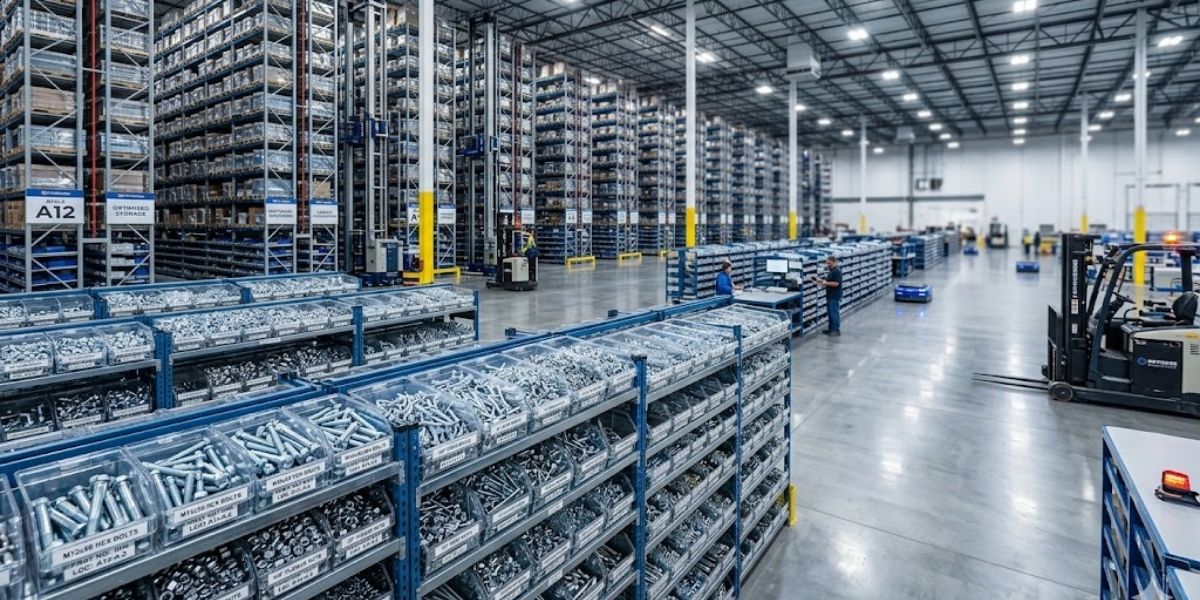
If you buy wholesale industrial fasteners across too many vendors, you pay for that decision twice: once on the invoice, and again in soft costs that never show up cleanly on a bid recap. Vendor consolidation fixes that by reducing procurement friction, tightening compliance control, and keeping crews supplied with the right anchoring and drilling systems without last-minute substitutions.
Why Vendor Consolidation Matters in Wholesale Industrial Fasteners
Vendor consolidation means shifting repetitive fastener spend from a scattered supplier base into a controlled, qualified group, ideally one primary source plus limited backups for risk categories. On large commercial work, that changes purchasing from reactive buying to managed supply.
Fasteners are everywhere in your project, but procurement teams often treat them as background noise. That is a mistake. These line items touch concrete, steel, framing, MEP supports, equipment mounting, safety hardware, and temporary works. When the source list is fragmented, every one of those scopes creates more quoting, more approvals, more deliveries, and more chances for a mismatch between submittal and field installation.
The Hidden Cost of a Fragmented Fastener Supply Chain
A fragmented supply chain creates duplicate SKUs under different brand names, uneven lead times, and invoice sprawl that burns office hours. If your team cuts 120 fastener POs across six vendors instead of 45 POs through one qualified source, administrative labor rises fast. At a conservative internal processing cost of $75 to $150 per PO after quoting, approvals, receiving, and AP handling, trimming 75 unnecessary transactions saves $5,625 to $11,250 before piece price enters the conversation.
The field cost is worse. Missing certs delay submittals. Inconsistent packaging confuses warehouse pulls. Partial shipments trigger emergency counter buys. Unapproved substitutions create inspection exposure. That is how a low-cost bolt turns into a high-cost problem.
Why Fasteners Are a Prime Category for Consolidation
Fasteners are ideal for consolidation because the category carries high SKU volume, recurring demand, and standardized specs across many common items. Bolts, nuts, washers, threaded rod, screws, and routine anchors repeat across project after project. Even in a market projected to reach USD 40.7 billion in the U.S. by 2034, the advantage still belongs to buyers that reduce complexity better than competitors.
The payoff is straightforward: fewer suppliers, cleaner approved lists, stronger accountability, and better schedule protection. That is exactly where a broad-line source such as Construction & Electrical Products Inc. fits, especially when your goal is to consolidate connected categories instead of buying fasteners, anchors, and drilling accessories from separate channels.
The Buying Criteria That Should Drive Your Consolidation Strategy
Unit price matters, but it does not lead the decision. Your consolidation plan should be built around compliance support, inventory depth, technical competence, and fulfillment discipline. If a supplier cannot hold specification integrity and ship reliably at project scale, lower pricing means nothing.
Code Compliance, Traceability, and Submittal Support
You need support for ASTM, SAE, DIN, ISO, ICC-ES, UL, and application-specific documentation wherever the scope requires it. Standardized procurement works because ISO, ASTM, and DIN reduce ordering errors, but only if your supplier can produce traceability, mill certs, test reports, coating data, and clear product documentation on demand.
That requirement gets stricter on code-sensitive anchors, structural connections, and specialty hardware. If your team regularly works through delegated design, deferred submittals, or inspection-heavy jurisdictions, document control is part of the product. The same discipline applies when reviewing certified anchoring requirements across concrete and structural packages.
Inventory Depth, Regional Availability, and Lead-Time Reliability
Consolidation only works when stock depth matches buying intent. A supplier that covers common items but stalls on surge demand simply shifts your risk to the schedule. You need deep local inventory, regional fulfillment options, same-day shipping capability on core lines, and domestic factory access for replenishment and specialty runs.
This matters even more because the U.S. still imports roughly 30% of standard fasteners. If your supplier lacks domestic or nearshore sourcing options, a port delay or allocation event can break your whole consolidation program.
Technical Application Support for Anchoring and Drilling Systems
Fastener buying on commercial work is never just about diameter and finish. You are matching load path, base material, embedment, edge distance, corrosion exposure, and installation method. If your bill of materials includes anchors, adhesive systems, and drilling accessories, technical support is mandatory.
That is why procurement decisions should stay tied to application engineering. If you are evaluating concrete attachment packages, your team needs the same discipline used in large-scale anchor sourcing and in selecting drill tooling for high-PSI concrete. One supplier that understands the system prevents compatibility mistakes.
Which Fastener Categories You Should Consolidate First
Start where spend is repetitive, specifications are stable, and field consumption is predictable. That delivers savings fastest and limits transition risk.
Standard High-Volume Commodity Fasteners
Hex bolts, nuts, washers, threaded rod, common screws, pins, and standard anchors should be the first wave. These are easy to rationalize because approved specs stay consistent across many commercial projects. Standardizing grade, finish, pack size, and approved alternates reduces duplicate items and simplifies quoting.
MRO and Job-Site Consumption Items
Routine replacement and consumption items often hide across too many vendors. This includes common shop hardware, maintenance fasteners, accessory anchors, blades, bits, and drill consumables. Pulling these into the same program reduces rush buying and cuts job trailer chaos. For ongoing replenishment, the logic is similar to reducing downtime through planned bulk supply.
Related Categories That Strengthen a Single-Source Program
Real consolidation gets stronger when it includes compatible anchors, adhesives, safety hardware, and drilling accessories. That is where CEP has a real advantage. With more than 10,000 products in stock and access to specialty sourcing, you can shrink vendor count across connected categories instead of solving one SKU family at a time.
Where You Should Not Force Full Consolidation
Good consolidation reduces complexity. Bad consolidation creates dependency in the wrong places.
Specialty, Engineered, and High-Performance Fasteners
Corrosion-resistant systems, seismic-rated anchors, engineered structural connections, high-strength alloys, and specialty coatings require exact sourcing and exact documentation. These are not commodity purchases, even when the hardware looks similar. Technical review stays in front of procurement.
If your application involves high load or seismic exposure, keep engineering alignment with the same rigor used for structural connection performance and seismic anchor review. A simplified vendor list never justifies specification drift.
Dual-Sourcing for Critical Risk Categories
Keep backup sources for long-lead, imported, approval-sensitive, or allocation-prone lines. Dual-sourcing in those categories is risk control. It protects schedule and maintains leverage if lead times stretch or documentation misses appear during submittal review.
How to Build a Vendor Consolidation Plan That Protects Cost and Schedule
A consolidation plan works only when estimating, purchasing, project management, warehouse operations, and field supervision use the same playbook.
Start With SKU Rationalization and Spend Analysis
Pull 12 to 24 months of purchasing history. Group duplicates by size, grade, finish, certification, and use case. Then eliminate unnecessary brand variation and define approved alternates. Your top 20 percent of SKUs usually drive most of the transaction volume.
Set Supplier Scorecards Before Awarding More Spend
Awarding more spend without scorecards is just creating dependency. Measure fill rate, on-time delivery, defect rate, quote turnaround, documentation accuracy, emergency response, and pricing stability. Use those metrics quarterly, not after the project goes sideways.
Integrate ERP, VMI, and Automated Replenishment
Digital procurement is where consolidation starts paying back at scale. Industrial distribution data shows that digital channels can reduce transaction costs dramatically, and API-based replenishment can improve fill rates by reducing manual ordering errors. If your supplier supports ERP connectivity, VMI, and replenishment rules, purchasing moves faster and stockouts drop. The same logic applies when building stronger control over industrial supply inventory systems.
Budget Control and Total Cost Savings Beyond Unit Price
The cleanest financial case for consolidation sits in soft-cost reduction. Fewer vendors mean fewer RFQs, fewer PO lines, fewer receiving exceptions, fewer invoices, and less freight fragmentation. On a multi-phase commercial build, that alone protects margin.
Where Consolidation Delivers Immediate Savings
Savings show up in admin labor, freight, inventory turns, and contract pricing leverage. If your team cuts vendor count from eight fastener suppliers to two, you reduce time spent on quote comparisons, account setup, expediting, and invoice disputes. A buyer handling 20 fewer exception events per month can recover dozens of labor hours that should have stayed focused on schedule-sensitive materials.
When the Lowest Fastener Price Costs You More
Cheap sourcing fails when submittals get rejected, certs go missing, coatings fail, or anchors arrive incompatible with specified drilling methods. Steel-intensive products also face 15 to 20% price swings within a quarter, so the lowest quote on bid day often turns into the least stable source during execution. Dependable supply protects profit better than bargain pricing.
Common Mistakes Contractors Make When Consolidating Fastener Vendors
Most failed consolidation programs break down because execution gets lazy after the strategy looks good on paper.
Treating All Fasteners as Commodities
Fasteners that look identical can differ in grade, coating, certification, and approved use. If purchasing treats every item as interchangeable, field risk rises immediately. That gets especially dangerous on wind, structural, and anchoring applications.
Consolidating Without Backup Stocking Strategy
Do not cut vendors before confirming stocking commitments, safety stock levels, and surge capacity. Mobilization phases and schedule compression expose weak inventory planning fast.
Ignoring Field-Level Standardization
If supers, foremen, and warehouse teams keep buying off-list items, consolidation fails. Approved product lists, controlled pack sizes, and branch-level discipline are not optional.
Best Vendor Consolidation Strategies by Use Case
Different roles need different control points.
For Commercial General Contractors Managing Multiple Trades
Consolidate common fasteners, anchors, and drilling accessories across concrete, steel, framing, and electrical scopes. Preserve specialty sourcing only where submittal or engineering demands it.
For Structural Engineers and Specifiers
Write tighter specs. Define approved equivalents, corrosion environment, and documentation requirements clearly. That reduces substitution risk and gives purchasing cleaner boundaries.
For Advanced Project Bidders and Procurement Teams
Standardize before bid. Prequalify suppliers, lock budget assumptions early, and identify imported or long-lead categories before award. Construction activity continues to drive fastener demand, so protected sourcing is now part of smart preconstruction.
What to Look for in a Wholesale Industrial Fasteners Partner
The right partner supports consolidation without creating blind spots.
Breadth of Inventory and Specialty Sourcing Access
You need deep stock in common items and fast access to specialty factory sourcing for project-specific requirements and bulk quantities. That breadth is what turns consolidation from a theory into an operating system. CEP’s broad catalog of wholesale industrial fasteners, anchors, drilling accessories, and related industrial products is built for exactly that supply chain role.
Proven Reliability, Technical Knowledge, and Fast Response
Your supplier should solve problems fast, understand code-sensitive applications, and support large-volume orders without bottlenecks. Speed matters, but accurate speed matters more.
Signs You Found a Supplier Built for Consolidation
You found the right source when inventory is deep, documentation is ready, sourcing options include domestic support, digital ordering is available, and technical answers come back fast. That is how you keep crews moving and protect schedule when purchasing pressure rises.
Frequently Asked Questions
How many fastener vendors should you keep after consolidation?
Keep one primary supplier for standard and repeat fastener categories, plus one or two qualified backups for specialty, imported, or approval-sensitive lines. That structure gives you control without exposing the project to single-source risk.
What savings should you expect from consolidating wholesale industrial fasteners?
The fastest savings usually come from soft costs, not unit price. Expect lower PO volume, fewer invoices, reduced freight fragmentation, less expediting labor, and tighter inventory control. On active commercial programs, those savings often outperform small piece-price reductions.
Should you consolidate anchors and drilling accessories with fasteners?
Yes, when the supplier has technical depth and compatible product coverage. Consolidating connected categories improves system compatibility, simplifies replenishment, and reduces field purchasing errors.
When should you avoid moving a fastener category to one supplier?
Avoid full consolidation when the item is engineered, highly specialized, corrosion-sensitive, seismic-rated, long-lead, or approval-sensitive. Those categories need technical review and often need backup sourcing.
What documents should a fastener supplier provide on commercial projects?
Expect product data sheets, code reports where applicable, mill certs, test reports, coating information, traceability records, and submittal support. If those documents are slow or incomplete, the supplier is not built for commercial project execution.
If you want consolidation to work, stop treating fasteners like miscellaneous spend. Treat them like a controlled system. Once you do that, cost drops, compliance gets tighter, and your supply chain starts supporting the schedule instead of fighting it.
