
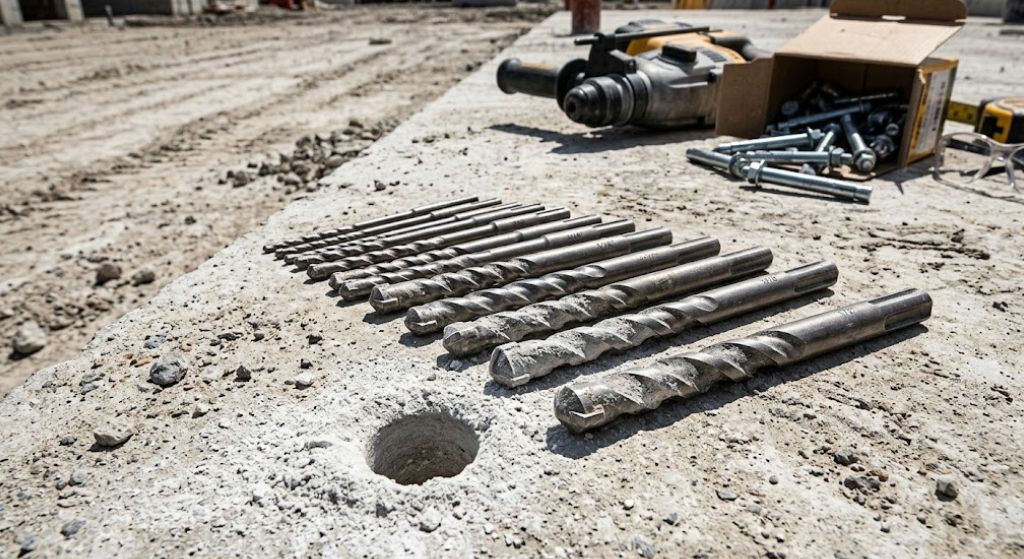
Choosing the right drill bits for concrete anchors is not a small procurement detail. It controls hole size, hole quality, installation speed, and whether the anchor actually holds when the load goes on. For commercial work, that means fewer callbacks, fewer failed inspections, and less time wasted fixing sloppy holes.
Drill Bits for Concrete Anchors: What You Need to Get Right Before You Start
The first mistake crews make is treating concrete drilling like generic hole-making. It is not. Once you start setting anchors, the bit becomes part of the fastening system, and the hole it creates has to match the anchor spec exactly if you want the rated performance.
On a jobsite, that means you are managing more than diameter. You are managing straightness, edge quality, dust removal, and tool control. A clean hole gives the anchor room to seat properly, expand correctly, or bond as designed. A bad hole makes a good anchor fail.
Why the Drill Bit Matters More Than Most Crews Admit
A concrete anchor only performs as well as the hole behind it. If the diameter runs oversized, expansion anchors lose grip. If the hole wanders, the anchor seats crooked and installation torque becomes inconsistent. If the bore is dusty, adhesive anchors lose bond strength and friction-based anchors never develop full contact.
That is why bit selection is not about grabbing whatever is closest in the gang box. It is about matching cutting geometry, shank type, wear resistance, and length to the actual anchor and the concrete in front of you. In a market where masonry drill bits are seeing strong growth, the practical lesson is simple: not all masonry bits are built for anchor work that has to pass inspection.
What This Guide Covers
You will see how anchor type drives bit choice, why concrete condition changes the answer, and where carbide-tipped SDS bits earn their keep. You will also see what matters most on commercial jobs, exact diameter, hole depth, durability, dust control, and tool compatibility. That is the right order, because the anchor spec comes first and the bit follows it.
How Concrete Anchors Work and Why Hole Quality Controls Performance
Concrete anchors are not all doing the same job. Some bite mechanically into the concrete, some rely on torque and thread engagement, and some depend on a bonded interface inside the hole. The bit has to create the correct hole for the specific fastening method, or the anchor never reaches its design capacity.
For context, if you are still sorting out anchor families, it helps to revisit the basics in the difference between common concrete fasteners before you choose hardware or drill size. The bit decision makes a lot more sense once you know whether the anchor is expanding, cutting, or bonding.
Mechanical Anchors vs Bonded Anchors
Mechanical anchors, such as wedge anchors, sleeve anchors, and concrete screws, depend on a hole that is accurately sized and clean enough for the anchor to seat and grip. Expansion-style anchors need the hole to be tight enough for the cone or sleeve to bite. Concrete screws need the pilot hole to be right on spec so the threads cut properly without stripping or binding.
Bonded anchors behave differently. Adhesive systems rely on the surface condition inside the hole, so dust and irregular bore texture matter just as much as diameter. In practice, that means the drill bit must produce a hole that is both the right size and easy to clean. If you are comparing fastening methods, concrete anchors vs epoxy anchors is worth a close look because the hole prep requirements are not the same.
The Role of Diameter, Depth, and Cleanliness
Diameter is not negotiable. If the manufacturer calls for a 1/2-inch hole, you drill a 1/2-inch hole. Not 31/64, not “close enough,” not whatever a worn bit happens to cut today. Oversized holes reduce holding power, especially on wedge and sleeve anchors, because expansion starts from a compromised base.
Depth matters just as much. Under-drill the hole and the anchor bottoms out before it seats. Over-drill it and you can lose effective embedment or leave debris at the bottom where it interferes with setting. Cleanliness is the third leg of the stool. Dust in the bore weakens adhesive performance, interferes with concrete screw engagement, and keeps mechanical anchors from seating consistently.
Why Straight, Consistent Holes Save Time on the Job
A straight hole installs faster because the anchor starts straight. That sounds obvious, but bad holes create a chain reaction. The anchor binds, the nut torque feels wrong, the setting depth changes, and a superintendent ends up dealing with a rework ticket that never should have existed.
Commercial work punishes inconsistency. If you are drilling dozens or hundreds of holes, a bit that wanders or wears unevenly becomes a labor problem, not just a tool problem. Premium bits cost more up front, but on production jobs they save time by holding diameter longer and cutting more predictably, which is exactly why durable bit designs continue to gain ground across construction markets (carbide-tipped drill bits).
The Main Types of Drill Bits Used for Concrete Anchor Installation
The market throws a lot of labels at you, but for anchor work, the field really narrows fast. You need a bit that matches the drill platform and the material. For concrete anchor installation, that usually means carbide masonry bits or SDS-family hammer bits, with SDS-Max reserved for larger, heavier-duty work.
Carbide-Tipped Masonry Bits
Standard carbide-tipped masonry bits are the baseline option for light to moderate anchor work. They cut concrete, block, and brick well when the hole count is limited and the load demands are not extreme. The carbide tip is doing the real cutting, so tip quality matters more than the color of the shank or the marketing on the package.
Use these when the job is straightforward and the tool setup is simple, but do not expect them to carry a high-volume commercial schedule without wear showing up quickly. Once you start drilling harder concrete or running repeated holes all day, the cutting edge loses speed and accuracy. That is where better geometry and a hammer-drill-compatible design start paying for themselves.
SDS and SDS-Plus Bits
For serious anchor installation, SDS and SDS-Plus bits are the everyday workhorses. The shank engagement is more secure, the hammer action is more efficient, and the bit stays aligned better under load. That matters because anchor holes need repeatability, not just raw cutting speed.
Carbide-tipped SDS bits are the smart default for precision anchor holes in commercial concrete. They handle hammer drilling better, evacuate debris more effectively, and keep hole diameter closer to spec over a longer service life. If your crew is setting anchors all day, this is the category that keeps pace without fighting the tool.
SDS-Max Bits for Larger Diameter Anchors
SDS-Max comes into play when the holes get larger, the embedment gets deeper, or the concrete gets tougher. Larger anchor systems and heavier equipment support often demand more aggressive drilling and better energy transfer than a standard SDS-Plus setup can deliver efficiently.
Do not force the smaller system to do oversized work. That costs time, overheats bits, and leaves you with ugly holes that take longer to clean and inspect. For heavy structural fastening, use the bit class that matches the load and the hole size, then keep spare inventory on site so crews never wait on a single worn tool.
Diamond Core Bits and Specialty Applications
Core bits are not the first answer for ordinary anchor installation, but they belong in the discussion because some jobs demand them. Large penetrations, specialty embedded work, and dense or unusual materials can push you beyond standard percussion drilling. When the hole diameter and project conditions exceed what a conventional hammer bit should handle, core drilling becomes the safer, cleaner option.
The catch is that core bits serve a different purpose. They are for larger, controlled material removal, not routine small-diameter anchor holes. Use them when the project demands it, not because they look more professional.
How to Match the Drill Bit to the Anchor Type
You do not choose the bit by concrete alone. You choose it by concrete plus anchor system. That is the part crews skip when they are rushing, and it is exactly where jobsite failures start.
Wedge Anchors
Wedge anchors need a hole that is exact in diameter and consistent in depth. The expansion mechanism depends on the cone pulling into the sleeve and locking against the concrete walls, so even small oversizing reduces holding strength. If the hole runs rough or tapered from a worn bit, the anchor can seat inconsistently and the nut torque will not tell the full story.
For wedge anchors, precision matters more than speed. This is where understanding load capacity pays off, because the anchor cannot develop its rated performance if the hole is sloppy.
Sleeve Anchors and Machine Screw Anchors
Sleeve anchors are more forgiving than some expansion systems, but only if the hole is clean and properly sized. Machine screw anchors and similar threaded systems need the pilot hole to stay tight enough for the threads or sleeve to engage without spinning out. If the bit has worn to the point that the hole opens up, the anchor starts losing bite before you ever reach final torque.
These fasteners reward disciplined drilling. Keep the bit sharp, control depth, and clear the dust. That is what makes the installation consistent from hole to hole.
Concrete Screw Anchors
Concrete screws are unforgiving. They depend on a correctly sized pilot hole so the threads can cut cleanly into the concrete without stripping or overloading the fastener. If the hole is oversized, the screw loses its mechanical engagement. If the hole is undersized, installation torque spikes and crews chew up both bit and anchor.
This is one area where a carbide-tipped SDS bit earns its keep. The bit has to maintain diameter well across repeated holes, because concrete screws expose every small variation in hole size.
Adhesive Anchors
Adhesive anchors live and die by borehole condition. The bit has to create a hole that can be thoroughly cleaned, because dust inside the hole weakens the bond and reduces effective embedment. In steel fibre-reinforced concrete, drilling gets harder and borehole roughness increases, which is another reason bit condition matters on bond-based systems (steel fibre-reinforced concrete).
If you are setting adhesive anchors, hole prep is not a side task. It is part of the installation. Drill clean, brush thoroughly, blow out the bore, and inspect before injecting adhesive.
Concrete Type Changes Everything
Concrete is not one material. Standard cast-in-place slab, reinforced structural concrete, and steel fibre concrete behave differently under the bit, and your tool choice should reflect that.
Standard Cast-In-Place Concrete
This is the easiest case. A sharp carbide bit, the correct SDS or masonry platform, and disciplined drilling get the job done. Hole quality stays consistent longer, and production rates stay predictable when the concrete is uniform and not excessively hard.
Even here, though, do not get sloppy. A bit that starts dulling will wander and enlarge the hole before it fully fails. That is how “routine” anchor work turns into patchwork.
Reinforced Concrete
Rebar changes the game. Once steel enters the picture, drilling speed drops and wear rises. The bit has to cut or deflect through reinforcement without losing too much diameter or chipping the carbide tip. That is why toughened carbide and better tool control matter on structural work.
The market trend is moving toward more durable cutting materials and longer-life designs for exactly this reason. Carbide remains the largest material segment in drill bits because it handles demanding drilling better than basic steel options.
Steel Fibre-Reinforced Concrete
Steel fibre concrete is especially punishing. Research shows that fibres increase borehole roughness and accelerate wear, which directly affects installation quality for anchors that depend on a clean bore and reliable contact. Drilling time also rises as wear accumulates, so the same bit that cut acceptably at the start of the shift slows down later in the day.
That matters on commercial jobs because the hole is not just a hole, it is a fastening surface. If the bore gets rougher or looser than spec, anchor performance changes with it.
High-Strength or Abrasive Concrete
Dense concrete and abrasive aggregates punish weak bits fast. You see slower penetration, hotter cutting edges, and more aggressive wear at the tip. The right move is not to force a bargain bit harder. The right move is to choose a high-durability carbide SDS bit, keep the drill matched to the hole size, and replace tools before they drift out of spec.
Hammer Drilling, Rotary Drilling, and Why the Method Changes the Bit Choice
The drilling method is part of the selection process. A bit designed for hammer drilling behaves differently from one used in rotary-only work, and that difference shows up in hole quality and wear.
Hammer Drill Applications
Hammer drilling is the standard for most concrete anchor work because percussion speeds penetration and helps clear debris from the bore. That improves hole formation and supports cleaner anchor seating. On a commercial site, hammer drilling is the dependable default because it balances speed, accuracy, and control.
The data backs up the practical experience. Drill-bit manufacturers continue to invest in better materials, coatings, and manufacturing precision because construction drilling demands repeatable performance, not just one good hole (construction demand).
Rotary-Only Drilling
Rotary-only drilling has a place, but not as the first choice for most concrete anchors. It is slower in hard concrete and generally less effective at removing dust from the hole. That increases heat and accelerates wear, which is exactly what you do not want when anchor tolerances are tight.
Use rotary-only methods only when the project condition or anchor system calls for it. Otherwise, hammer drilling with the right bit is the better commercial standard.
When to Upgrade to a Better Bit or a Bigger Tool
If the bit starts wandering, the cut slows noticeably, or the hole walls look rough and inconsistent, the setup is undersized for the work. That is your signal to move up in bit quality, bit size class, or tool platform. In practice, a better bit costs less than lost labor and rework.
Hole Size, Depth, and Tolerance: The Numbers That Protect the Installation
Anchor installation lives or dies on measurements. This is where discipline beats speed every time.
Matching Bit Diameter to Manufacturer Specs
Follow the anchor data sheet, not habit. If the spec calls for a 3/8-inch hole, use a 3/8-inch bit in good condition and verify the finished hole if the application is safety-critical. That is not overkill. That is how you keep holding strength inside the published range.
A worn bit is not an acceptable substitute for a different size. Once the diameter drifts, the anchor no longer behaves the way the manufacturer tested it.
Controlling Drill Depth
Depth control prevents bottoming out and makes embedment predictable. Mark the bit, use a depth stop, or train the crew to drill with a consistent reference. Do not rely on eyeballing it, because concrete dust and production pressure make that habit unreliable.
Avoiding Oversized or Bell-Mouthed Holes
Oversized holes usually come from worn bits, side pressure, and sloppy control near the end of drilling. Bell-mouthing happens when the opening grows larger at the face of the hole, which reduces seating quality and makes the anchor behave inconsistently. Once the hole is too large, the only fix is a new hole in the right place.
Bit Material and Coating: What Delivers Real-World Durability
The bit body and cutting surface determine how long the tool stays within spec. On commercial anchor work, durability is not a luxury, it is labor control.
Carbide Quality and Cutting Edge Life
Carbide quality affects how long the bit holds its edge, how cleanly it cuts, and how much heat it tolerates before performance drops. Higher-grade carbide costs more, but it holds diameter better and survives the abuse of repetitive concrete drilling. That is why contractors who drill all day stop buying bargain bits after the first few callbacks.
Coatings That Reduce Friction and Heat
Coatings help, but they do not replace good carbide. A decent coating can reduce friction, improve chip evacuation, and keep the bit running cooler under load. On dense concrete or high-volume jobs, that translates into better consistency and longer usable life.
When Premium Bits Save Money
Premium bits save money when labor is expensive, hole count is high, or the concrete is hard and abrasive. If a cheap bit wears out halfway through a set of anchor holes, the material savings disappear immediately. The same applies to certified fastener work where hole accuracy matters more than sticker price. Choose the better tool when the job has consequences.
Jobsite Conditions That Should Change Your Bit Selection
Field conditions decide whether a bit behaves like a precision tool or a consumable. Smart crews adjust before the first hole, not after the first failure.
Dust, Slurry, and Debris Management
Dust is part of the installation problem, not separate from it. Poor dust removal slows drilling, overheats the bit, and leaves residue that weakens anchor seating. For adhesive anchors, it directly hurts bond performance. Make hole cleaning part of the cycle, not a cleanup task after the fact.
Wet vs Dry Conditions
Wet drilling changes chip evacuation and heat management, but it also changes cleanup needs. Dry drilling is common and efficient, but it produces more airborne dust and demands stricter hole cleaning. Choose the method that matches the anchor spec and the site conditions, then keep the crew consistent.
Access, Overhead Work, and Tight-Space Installations
Overhead and tight-access drilling punish long, awkward setups. In those conditions, use a bit length that keeps control in your hands and minimizes wandering at the start of the hole. A shorter, stiffer setup usually gives better results than forcing a long bit where it does not belong.
Temperature, Volume, and Production Pressure
Hot weather, heavy daily hole counts, and production pressure all shorten bit life. That is not a theory, it is the jobsite. Plan replacement intervals, keep backup stock on hand, and do not let a worn bit drag the entire crew down.
Common Mistakes That Cause Failed Anchor Installations
Most anchor failures start before the anchor ever enters the hole. That is the uncomfortable truth, and it saves money when you act on it.
Using the Wrong Diameter Bit
A wrong diameter hole changes everything. Expansion anchors lose grip, concrete screws strip or over-torque, and adhesive anchors lose the consistency they need to bond correctly. This is one of the fastest ways to create a hidden problem that shows up later under load.
Drilling with a Worn or Damaged Bit
A dull bit cuts slowly, wanders, and heats up. A chipped or bent bit makes a bad hole even faster. If you see visible wear, replace it. Waiting until it fails in the middle of a set is false economy.
Skipping Hole Cleaning
Skipping cleaning is a classic shortcut that costs more later. Dust left in the bore reduces friction, weakens bond, and keeps anchors from seating the way the spec assumes. On adhesive work, it is a direct installation error.
Treating All Concrete Like the Same Material
Standard concrete, reinforced concrete, and fibre-reinforced concrete do not drill the same way. If you treat them the same, you accept unnecessary wear and inconsistent anchor quality. The bit choice has to match the material in front of you.
How to Evaluate Bit Quality Before You Buy
Procurement should be simple: does the bit fit the tool, hold the dimension, and survive the job? If the answer is no, keep moving.
Shank Compatibility and Tool Fit
Make sure the shank matches the drill platform exactly. SDS, SDS-Plus, and SDS-Max are not interchangeable. A sloppy fit ruins energy transfer and increases wear, while the right fit keeps the bit aligned and productive.
Manufacturer Data and Certification Support
For anchor work on commercial projects, product data matters. You need specifications that support the installation method, diameter, and intended substrate. That is how you keep the job code-compliant and avoid questions during inspection. If the anchor system has approved installation criteria, the bit selection needs to support them.
Service Life and Replacement Planning
Do not wait until every bit dies at once. Track performance by hole quality, not just by calendar time. If the holes start running large or slow, the bit is done. Stock enough replacements to keep the crew moving, especially on high-volume anchor work where downtime costs more than the bit itself.
Budgeting for the Right Drill Bits on Commercial Jobs
Price matters, but only after performance. A cheap bit that creates bad holes is expensive the moment labor gets involved.
When to Buy Economy Bits
Economy bits make sense for low-volume, non-critical work where hole count is small and the concrete is forgiving. Even then, you still need the correct diameter and a clean, predictable cut. Low price does not excuse poor fit.
When Premium Bits Are the Smarter Purchase
Buy premium bits when the job is repetitive, the concrete is hard, or the fastening is safety-critical. That includes structural steel attachments, heavy equipment mounts, and high-load anchor sets. Better carbide and better geometry save labor, reduce rework, and protect the schedule.
Buying in Bulk for Crew Continuity
Bulk stocking is how you keep crews productive. When multiple sizes are needed on the same project, you need enough inventory to cover wear, breakage, and field replacement without waiting on a delivery. That is where a supplier with deep stock and technical knowledge keeps the job moving.
Use-Case Recommendations for Real Jobsite Scenarios
The right bit changes with the job. Here is the practical split.
Light Commercial Interior Anchoring
For routine interior anchor sets in standard poured concrete, a carbide-tipped SDS-Plus bit is usually the right answer. It balances speed, accuracy, and cost without overbuying the tool. Keep the diameter exact and replace worn bits early.
Structural and Industrial Fastening
For heavier loads, deeper embedment, and inspection-sensitive work, move up to higher-grade carbide bits with stronger hammer-drill performance. If the anchor is doing structural duty, treat the hole like part of the engineering, because it is.
Rebar-Dense or High-Abuse Environments
When steel encounters are common, choose a bit built for wear resistance and hold onto good replacement stock. Drilling gets slower and rougher in these conditions, so you want a bit that keeps its edge and still cuts cleanly after repeated use.
Fast-Track Jobs with High Hole Counts
For production-driven jobs, the winning setup is durable bits, consistent diameter control, and enough backup inventory to avoid stoppages. That is the whole game. Speed without consistency just creates rework faster.
Quick Buying Checklist for Contractors and Superintendents
Before you order, verify the anchor type, diameter, and embedment requirement. Then confirm the concrete condition, standard, reinforced, or fibre-reinforced. After that, match the shank to the tool, check the bit length for the access condition, and make sure replacement stock is already on site.
Inspect every bit before use. If the tip is chipped, the shank is damaged, or the bit has already drifted oversized, pull it from service. On anchor jobs, a questionable bit is not worth the risk.
Frequently Asked Questions
Can you use a regular masonry bit for concrete anchors?
Yes, for light-duty work and low hole counts, a regular carbide masonry bit can work. For commercial anchor installation, a carbide-tipped SDS bit gives you better control, better life, and more consistent hole dimensions.
Why does my hole size keep running oversized?
Wear, wobble, side pressure, and poor bit quality are the usual causes. Once the bit starts losing its cutting edge, the hole opens up and anchor performance drops with it.
Do adhesive anchors need a different bit?
They need the same exact diameter discipline, but hole cleanliness matters more. A worn or sloppy bit creates dust and irregular bore walls, and that hurts bond strength fast.
How often should you replace concrete drill bits?
Replace them when hole quality starts drifting, cutting speed drops sharply, or the tip shows visible wear. Hole performance tells you more than a calendar ever will.
What is the best bit for reinforced concrete?
Use a high-quality carbide-tipped SDS bit with strong hammer-drill performance. Reinforced concrete demands better wear resistance and tighter control than plain concrete.
How do you keep anchor holes clean on site?
Drill to depth, brush the hole, blow out the dust, and inspect it before setting the anchor. That sequence is part of the installation, not an optional cleanup step.
The simple rule is this: pick the bit that preserves the anchor spec, not the bit that just makes a hole. Once you start treating the bore as part of the fastening system, your installs get faster, cleaner, and a lot more dependable.
