
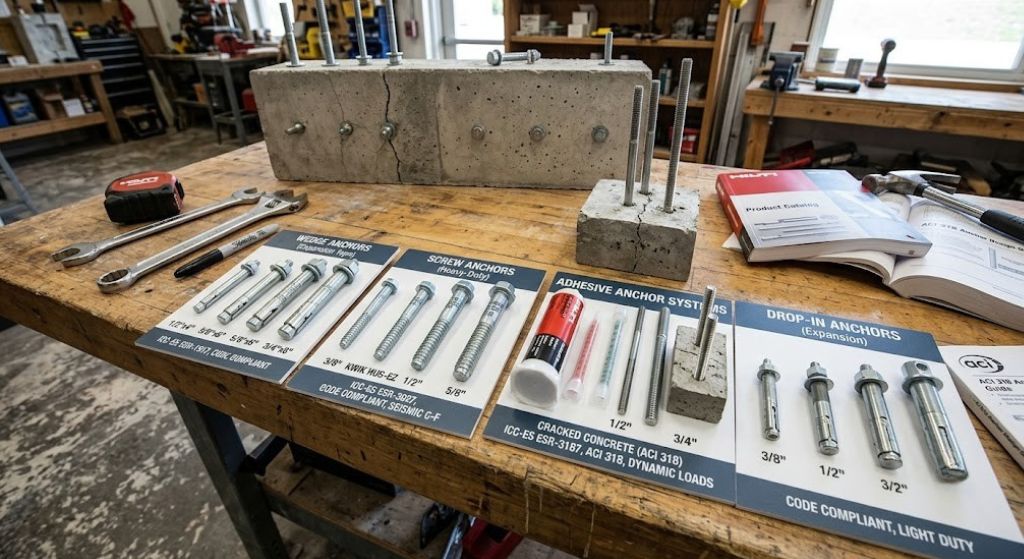
Concrete anchors are not a single product, and that is where most jobsite mistakes start. On commercial work, you choose them by load, concrete condition, exposure, and code requirements, then you install them exactly to spec or you pay for it later in callbacks, failed inspections, and rework.
With over 10,000 products in stock and access to thousands more, Construction & Electrical Products Inc. keeps contractors supplied with the right fastening hardware and the paperwork that backs it up, including MTR compliance documentation on qualifying items. For a clear, field-ready view of concrete anchors, this guide covers the major types, where each one fits, and how to choose the right system for structural and non-structural work.
Concrete Anchors Explained: What They Are and Why Selection Matters
Concrete anchors are fastening systems used to attach steel, equipment, framing, supports, and accessories to concrete, masonry, block, or similar base materials. They are not just bolts with a different name. The anchor, the substrate, and the installation method all work together to create holding power.
That is why selection matters. A light fixture on a wall is one problem. A base plate, pipe support, or equipment skid is another. Load, edge distance, crack risk, concrete strength, and code compliance decide whether the anchor performs as intended.
Concrete Anchors vs. General Fasteners
A bolt connects two pieces of material that already have matching holes. A screw creates its own threads or bites into a substrate. A concrete anchor has to transfer load into concrete itself, which is a different job entirely.
Cast-in hardware is installed before the pour and becomes part of the structure. Post-installed anchors go into cured concrete later, which gives you flexibility on retrofits and field changes. If you treat all of these as interchangeable, you will choose the wrong product and lose capacity where you can least afford it.
Where Concrete Anchors Show Up on the Jobsite
You see concrete anchors everywhere on commercial work. Structural steel base plates, MEP supports, equipment mounts, handrails, racks, signage, guardrails, stair components, and retrofit framing all depend on the right fastener.
They also show up in temporary work, where you need stable support without committing to a permanent embedded system. On renovation jobs, anchors are often the difference between making the existing slab work and stopping the schedule to redesign the attachment. For load questions, it helps to review what different capacities actually mean in practice.
Types of Concrete Anchors You Need to Know
The major anchor families solve different problems. Once you understand how each one carries load, the right choice gets a lot easier.
Mechanical Expansion Anchors
Mechanical expansion anchors create holding power by expanding against the concrete as you tighten or set them. Wedge anchors are the workhorse here. They are widely used for heavy-duty commercial attachments because they deliver strong performance in base plates, machinery anchoring, and structural supports. Heavy-duty anchor selection keeps showing up because these systems dominate serious load-bearing work.
Sleeve anchors are more forgiving in mixed base materials and lighter commercial applications. Drop-in anchors sit flush and are useful when you need threaded attachment points in finished concrete. Wedge anchors usually win on pure strength, but sleeve and drop-in styles solve plenty of real jobsite problems where access, finish, or serviceability matter.
Concrete Screw Anchors
Concrete screw anchors cut threads into the base material as you drive them, which makes installation fast and predictable. You drill the hole, drive the screw, and get a removable connection without expansion stress. That simplicity is why concrete screw anchors keep growing fast in renovation and light commercial work.
They excel when you need speed, frequent adjustments, or clean removal later. Use them for medium-duty fixtures, framing, electrical supports, and other attachments where a one-piece install saves labor. Just do not overrate them for heavy structural duty.
Adhesive Anchors
Adhesive anchors, also called epoxy or chemical anchors, use a resin bond between the rod and the drilled hole. They are the choice when you need deep embedment, high load performance, or better behavior in cracked concrete and retrofit conditions. For that reason, many contractors compare concrete anchors vs epoxy anchors before making a structural decision.
The catch is installation discipline. Hole cleaning, correct mixing, embedment depth, cure time, and temperature all matter. Get those wrong and the anchor loses the very advantage you bought it for.
Cast-In-Place Anchors
Cast-in anchors, including anchor rods, J-bolts, L-bolts, and embedded hardware, go into the formwork before the pour. They outperform post-installed options when the design is known early and the load path needs to be built into the structure from day one.
These are the right move for permanent equipment pads, steel embeds, and other applications where planning is locked in before concrete placement. Once the pour is done, you cannot replicate the same integration with a post-installed product.
Specialty and Light-Duty Anchors
Not every attachment needs a heavy mechanical or adhesive system. Light-duty and specialty anchors cover accessory mounts, masonry-specific attachments, toggle-style applications, and non-structural fixtures. These products keep the job moving when the load is modest and the requirement is simple.
Just remember the line between light-duty and structural is not negotiable. If the attachment supports life safety, equipment, or structural load, step up to a tested anchor system and verify the ratings.
How Concrete Anchor Systems Work
Anchors fail or hold for predictable reasons. Once you understand load transfer, concrete condition, and installation quality, the performance picture gets much clearer.
Load Transfer and Embedment Depth
Concrete anchor load transfer starts at the point where the rod, screw, or sleeve engages the concrete. From there, the force spreads through the surrounding material. Deeper embedment generally increases capacity because more concrete participates in resisting pullout and shear.
Research keeps confirming the same basic point: capacity depends heavily on embedment length, anchor diameter, concrete strength, and alignment. That is why two anchors that look identical on paper can behave very differently in the field.
Cracked vs. Uncracked Concrete
Cracks change everything. Uncracked concrete gives you a more predictable base, while cracked concrete can reduce the usable capacity of post-installed anchors sharply, especially under tension. In testing, 6 mm screw anchors in cracked concrete showed major reductions at 0.8 mm crack width, far below the assumptions used for smaller cracks in standard design methods.
That matters on seismic work, aging slabs, and retrofit projects. If the structure can crack, pick a tested and code-rated system for cracked concrete. No guessing. No commodity shortcut.
The Impact of Installation Quality
Anchor performance lives or dies on installation. Hole diameter, hole depth, dust removal, alignment, and torque all affect the final result. Even a small alignment error can reduce capacity, and misalignment above 5 percent can drag performance down enough to matter.
If you want the practical side of that process, keep proper anchor installation and common field mistakes front and center. The best anchor in the catalog still fails if the hole is wrong.
How to Choose the Right Concrete Anchor
Selection is simple when you break it into jobsite questions instead of product hype.
Step 1: Identify the Load Condition
Start with the load itself. Is it tension, shear, or a combination? Is the load static, vibrating, or subject to impact? A small bracket and a machine base do not belong in the same anchor category.
For heavy structural or equipment work, choose a system with verified load tables and the safety margin your spec requires. For lighter supports, speed and serviceability may matter more than maximum strength.
Step 2: Check the Concrete Condition
Look at age, strength, thickness, cracking, and edge distance before you spec anything. Thin slabs and brittle edges limit anchor choice fast. Old or damaged concrete shifts you toward products with better tolerance for imperfect base material.
If the job sits in a crack-prone or seismic environment, the anchor has to be approved for that use. Standard ratings for ideal concrete do not protect you when the substrate is compromised.
Step 3: Match the Anchor to the Base Material and Environment
Concrete is not the only substrate that gets called “concrete work.” You will also run into block, masonry, and mixed assemblies. Each one changes how the anchor behaves.
Environment matters just as much. Coastal structures, wastewater facilities, marine work, and chemical exposure demand corrosion resistance, and 316 stainless steel anchor hardware is the preferred choice in severe chloride exposure. For exposed jobs, finish and material are not optional details.
Step 4: Verify Code and Approval Requirements
On commercial jobs, the anchor has to satisfy the spec and the inspector. ACI 318, seismic criteria, ICC-ES reports, and manufacturer data all exist for a reason. If the anchor is structural, use tested, certified hardware that matches the design assumptions.
That compliance pressure is pushing the market away from commodity fasteners and toward engineered systems. It is the right direction. Jobs get cleaner when the paperwork and the product actually line up.
Step 5: Balance Speed, Adjustability, and Removal Needs
Some anchors are permanent. Some are serviceable. Some are chosen because the crew needs to keep moving and come back later for adjustment. Concrete screws and select mechanical anchors make sense when removal or repositioning matters.
Adhesive anchors are excellent for performance, but they slow the workflow because cure time and prep are part of the process. Use them when load and substrate demand it, not just because they sound stronger.
Best Uses for Each Concrete Anchor Type
The right anchor depends on the real application, not the catalog description.
Heavy-Duty Structural and Equipment Mounting
For base plates, machinery, guardrails, and high-load supports, wedge anchors and approved adhesive systems lead the pack. These are the products designed for serious structural demand and code-compliant installation. If the attachment carries meaningful load or safety consequences, start here.
Retrofit and Renovation Work
Retrofit jobs favor post-installed anchors because you do not get to plan around a pour. Concrete screws, mechanical anchors, and adhesive systems all have a role here, depending on load and condition. Choosing the right drill bits matters more than most crews admit, because hole quality decides whether the anchor performs as rated.
Outdoor, Coastal, and Corrosive Environments
Outdoor and coastal work punishes weak finishes fast. Use stainless steel, hot-dip galvanized, or adhesive systems matched to the exposure, and do not cut corners on coating selection. One bad fastener in a corrosive environment turns into a maintenance problem that keeps coming back.
Temporary Support and Serviceable Installations
Temporary bracing, maintenance access, and removable assemblies call for anchors that do their job without creating a permanent burden. Concrete screws and certain mechanical anchors are the cleanest answer when future access matters. If you know the component will move or come off later, choose with that in mind from the start.
Common Installation Mistakes That Reduce Anchor Performance
Most anchor failures trace back to a handful of avoidable errors. The product gets blamed, but the install is usually the real issue.
Incorrect Hole Diameter or Depth
Drill too large, and expansion anchors lose grip. Drill too shallow, and embedment suffers. Drill too deep without understanding the spec, and you can compromise bearing or create installation inconsistency.
Poor Hole Cleaning
Dust and slurry kill adhesive performance and weaken mechanical anchor engagement. Blow, brush, and clean exactly to manufacturer instructions. Skipping this step is one of the fastest ways to turn a rated anchor into a weak one.
Misalignment and Edge Issues
Anchors installed too close to edges or at bad angles lose capacity quickly. Alignment is not a cosmetic concern. It affects load path, stress distribution, and the actual strength of the connection.
Over-Torquing or Under-Torquing
Torque expansion anchors properly and stop there. Over-torquing strips out performance and under-torquing leaves expansion incomplete. Tightening by feel is not a quality control method.
Testing, Ratings, and Performance Data You Should Check
Do not buy anchors on appearance. Buy them on data.
Pull-Out Strength and Load Tables
Use manufacturer tables for allowable load, ultimate load, and application limits. The point is not to find the biggest number, it is to find the number that matches your job condition with the proper safety factor.
Crack Performance and Seismic Ratings
Cracked concrete and seismic load paths demand tested anchor systems. Standards such as ACI 318 and ACI 355.2 exist because older assumptions do not hold up under real movement and cracking. If your job has seismic risk, the anchor has to be approved for that environment.
Material, Coating, and Corrosion Ratings
Zinc-plated hardware works in dry, protected conditions. Hot-dip galvanized and stainless steel belong in harsher environments. Match the material to the exposure, or you will trade low purchase cost for early replacement.
Concrete Anchor Selection Checklist for Contractors
Before you order, verify the anchor family, base material, load condition, exposure, and required approvals. Then confirm embedment, edge distance, spacing, and installer requirements against the manufacturer data sheet. That checklist keeps you from buying the wrong box and burning time on the jobsite.
Frequently Asked Questions
What is the strongest type of concrete anchor?
Strength depends on the load, embedment, concrete condition, and approved design values. For heavy commercial work, wedge anchors and adhesive anchor systems usually lead, but only when the substrate and installation match the spec.
Do concrete anchors need pre-drilled holes?
Most concrete anchors do. Mechanical anchors, screws, and adhesive systems all rely on drilled holes for proper installation. The drill size and hole cleaning method have to match the product instructions.
Which anchor works best in cracked concrete?
Use anchors that are specifically tested and rated for cracked concrete. That requirement is non-negotiable on structural and seismic work, because cracking reduces capacity fast.
When should you use cast-in anchors instead of post-installed anchors?
Use cast-in anchors when the structure is still in the formwork stage and the load path is known in advance. They provide excellent integration and are often the best choice for permanent structural attachments.
How do you choose the correct anchor size?
Match diameter, length, and embedment to the load tables and the concrete condition. Bigger is not automatically better if the spacing, edge distance, or substrate cannot support it.
Why does anchor installation quality matter so much?
Because the anchor does not perform in a vacuum. Hole prep, alignment, torque, and concrete quality all affect final capacity, and small mistakes can reduce performance enough to fail inspection or load testing.
Ordering the Right Concrete Anchors for the Job
The fastest way to keep a project on schedule is to order the correct anchor with the correct documentation the first time. Send your supplier the base material, load requirement, embedment target, quantity, coating, and approval needs, and make sure MTR compliance documentation is available where the spec calls for it.
That is where inventory depth matters. With over 10,000 products in stock, Construction & Electrical Products Inc. helps contractors keep moving when the job needs code-compliant anchors, bulk quantities, and dependable delivery. When the project demands exact-spec fastening, that difference shows up in the schedule, the inspection, and the final result.
