
Why bulk concrete supply and slab support go together
When you line up bulk concrete suppliers in Pompano Beach, you are not just buying yards. You are buying risk, schedule certainty, and inspection outcomes. The concrete truck is only half the equation. The other half is whether your steel stays exactly where the engineer drew it when 4,000 psi mix hits the deck.
If your slab bolsters, high chairs, and continuous bar supports collapse or float, you end up with rebar out of tolerance, callbacks, and expensive core samples. In other words, the cheapest part of your pour suddenly becomes the most expensive. That is why you need to think about slab support systems at the same time you are lining up bulk concrete delivery.
In Pompano Beach and across South Florida, suppliers like Adonel Concrete and Hooper & Sons Concrete can keep your trucks moving. Your job is to make sure your rebar support system is built to match that volume and that the entire placement package meets code, climate, and schedule demands.
Understanding the Pompano Beach concrete supply landscape
You have no shortage of bulk concrete suppliers in Pompano Beach. The question is who can actually keep up with your production rate, mix design requirements, and inspection schedule.
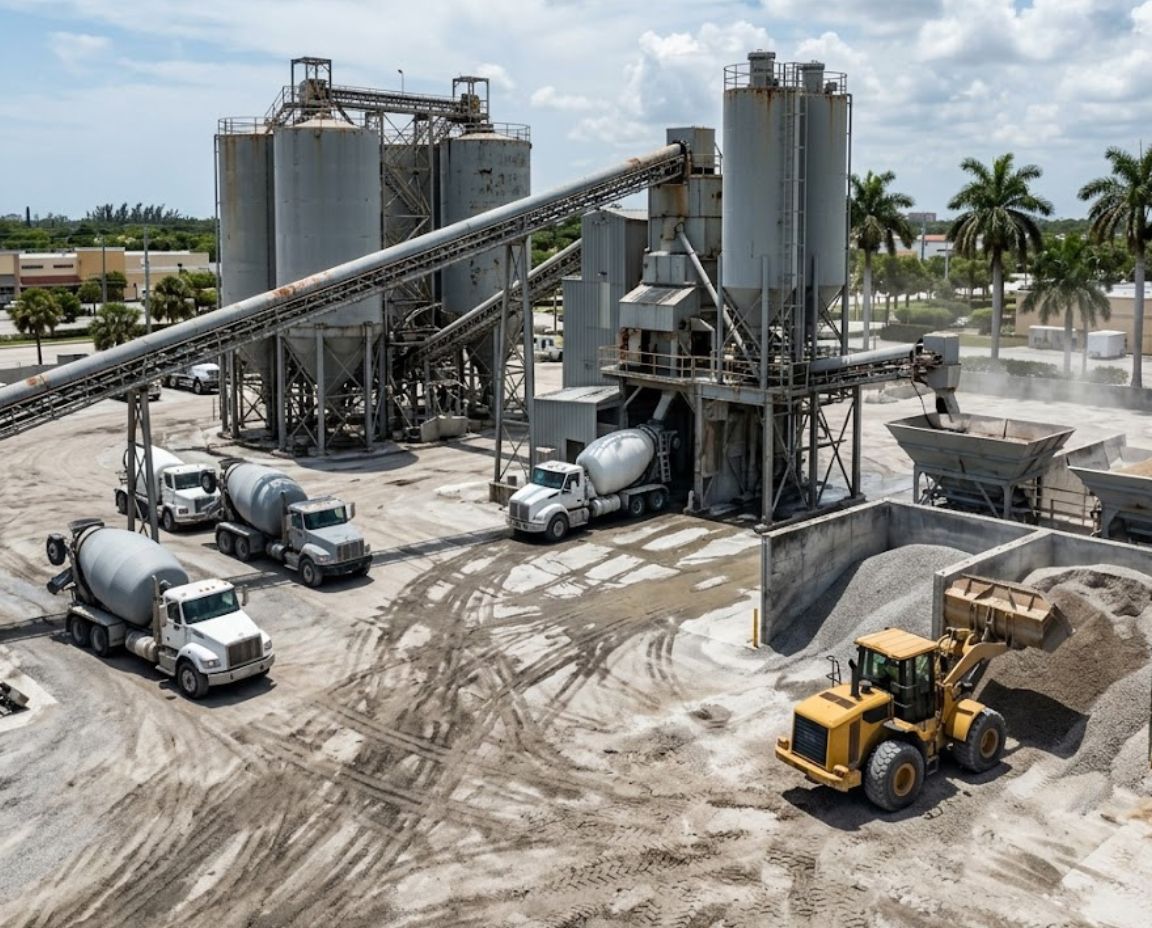
Adonel Concrete operates 12 plants across South Florida and supplies multiple counties, including Broward, which covers Pompano Beach. That footprint and a fleet of 180 trucks, most of which meet EPA low emissions standards, gives you the volume and radius coverage to support large commercial placements and multi phase projects in the area (Adonel Concrete). For you, that translates into fewer production pauses and better control over set times on hot days.
On the commercial slab side, Hooper & Sons has more than 20 years of experience with concrete slab work in Pompano Beach and surrounding communities of over 50,000 residents. They are fully licensed, insured, and Florida certified, and they work every day with the same local codes, soil conditions, and hurricane rated requirements you face on your projects (Hooper & Sons Concrete).
Project budgets in Pompano Beach commonly range from 5,000 dollars to 500,000 dollars just for slab scopes, depending on size and site conditions, so locking in predictable concrete pricing and availability is not a footnote, it is a major line item (Hooper & Sons Concrete). The right supplier helps you tighten that range and keep change orders under control.
Why your slab bolster system is the silent partner to your concrete supplier
You already know that a slab bolster is not just a commodity spacer. It is your primary insurance policy for top mat elevation, cover, and ultimate slab performance. When you start ordering high early strength mixes, self compacting concrete, or fiber reinforced blends from a high output supplier, the load on those supports increases dramatically.
Adonel Concrete, for example, can deliver high early strength concrete, self compacting mixes, water repellant and fiber reinforced options, and DOT certified concrete, as well as more than 200 color options (Adonel Concrete). Those advanced mixes are great for schedule and performance, but they flow, vibrate, and consolidate differently from a basic 3,000 psi mix. If your slab bolsters and continuous chairs are not selected and spaced correctly, the result is simple. The steel moves.
You need to match your support system to:
- Target slab thickness and cover
- Bar size and spacing
- Specific gravity and flow characteristics of the mix
- Placement method, including pump discharge, chute drops, and vibration plan
Ignoring any of these factors turns a well engineered slab into a field experiment. You might get lucky on a small retail pad. You will not get lucky on a 60,000 square foot industrial floor or a post tension transfer slab with inspectors watching every lift.
Selecting bulk concrete suppliers in Pompano Beach that match your structural strategy
When you evaluate bulk concrete suppliers in Pompano Beach, you should treat the slab support system as part of the same conversation. Your supplier choices impact your rebar chair strategy and vice versa.
Here is how to approach it in practice.
Match mix designs to support limitations
Start with what you are trying to build, not what the plant wants to ship. If you are placing a 10 inch heavy duty slab, double mat, with significant live loads, a flowable self compacting mix can save you vibration labor and improve consolidation around congested steel. However, that same self compacting mix can also float under sized bar supports or tip continuous chairs that were spaced for a much stiffer concrete.
In those cases, you tighten the bolster spacing, upgrade to higher capacity chairs, or change your support material selection. Plastic high chairs might make sense for a typical office slab. For dense bar cages and high slump mixes, you may be better off with metal bolsters with plastic tipped feet that bite and stay put.
Coordinate truck spacing with placement teams
Suppliers like Adonel operate with large truck fleets and deliver within a 500 mile radius, including Pompano Beach and the surrounding markets (Adonel Concrete). That capability makes it easy to load your time slot with back to back loads. It is your responsibility to make sure your crew and your support system are actually ready for that tempo.
If you schedule 120 yards in a tight window but your rebar is only 50 percent chaired up, you are asking for stepping, kicking, and last minute rework. The result is inconsistent cover, crushed bolsters, and a pour that looks fine until the inspector starts coring or the slab starts spider cracking under traffic.
Use local expertise on soil and climate
Hooper & Sons has deep experience with Pompano Beach soil and climate, including hurricane rated specs and heat resistant mixes (Hooper & Sons Concrete). That local knowledge matters when you are setting continuous chairs on questionable subgrade or vapor barriers that will see significant thermal movement.
If you are relying on slab bolsters to maintain cover over a base that will settle or pump when wet, you need to select wide footed supports or continuous systems that spread the load. The goal is simple. When the concrete hits the mat, you do not want the steel to sink into a soft spot and compromise your boundary conditions or slab flatness.
Building a reliable rebar support package for heavy pours
Contractors that pour large slabs successfully in Pompano Beach tend to treat rebar supports as a system, not an afterthought. You want a combination of slab bolsters, continuous high chairs, and specialty supports that are matched to your rebar layout and to the behavior of the mixes you are buying from your bulk suppliers.
One practical way to think about it is to break your slab support system into layers:
- Base contact layer
- Primary support layer
- Top mat and specialty supports
Each layer needs to be selected and detailed with your mix characteristics in mind.
Base contact: Protecting vapor barriers and subgrade
On vapor barrier or insulation, sharp edges are your enemy. If your supports punch through, you lose moisture control and invite blistering or delamination issues. Wide foot plastic or plastic tipped bolsters spread the load and protect the membrane. They also resist corrosion in the long term, a non negotiable for exposed or partially exposed slabs in coastal markets.
If you are using metal supports on poly, consider continuous runners instead of point loads. That reduces the chance that a high early mix from a supplier like Adonel will punch your chairs through the barrier during vibration and finishing.
Primary support: Continuous chairs and bolsters
For your lower mat or single layer reinforcement, continuous slab bolsters are typically your workhorse. The key is to select the correct height and then respect the spacing recommended by the manufacturer. Trying to save a few dollars by doubling the spacing usually shows up in the field as mid span sag and inconsistent cover.
On heavy mats or elevated decks, continuous high chairs and combination chairs keep the upper layer of steel in the correct plane. They also take the live load of your crew and equipment, especially in congested reinforcement zones like column strips and shear walls.
Top mat and specialty supports
For top mats, bar supports must deal with both the weight of the rebar and the impact of finishing equipment. In high traffic areas, such as industrial slabs that will see forklifts and rack loads, you cannot afford localized low cover. Upgrading to heavier gauge continuous supports or closer spacing is cheap compared to a structural repair.
For precast or tilt wall operations, where you are tying cages that will be lifted or rotated, you want supports that will not deform or pop loose when the panel comes off the bed. That means locking in support selection early in the design assist phase, not buying whatever the yard happens to have when you are ready to pour.
Integrating bulk concrete logistics with rebar support planning
Once you know what kind of slab you are building and what support system you will use, the next step is to integrate that with the specific capabilities of bulk concrete suppliers in Pompano Beach.
A simple planning sequence looks like this:
- Confirm mix design options and set times with your supplier.
- Coordinate truck intervals with your crew size and equipment.
- Verify that your selected slab bolsters and chairs can hold tolerance for the complete pour duration.
- Lock in delivery windows that give your crew time to chair, tie, and inspect each segment before the first truck backs up.
If your supplier offers high early strength or hot weather mixes, use them to your advantage, but adjust your reinforcing support plan accordingly. Faster setting mixes reduce finishing time, but they also give you less opportunity to correct any support failures.
For example, if you are pouring a large commercial slab that falls into the 100,000 to 300,000 dollar range, which is typical for substantial Pompano Beach projects (Hooper & Sons Concrete), a mid pour adjustment to rebar supports is not an option. You want the system dialed in before the first yard leaves the drum.
Sourcing slab bolsters and masonry supplies for large projects
Bulk concrete is only one side of your supply chain. On the accessory side, you want a dependable source for masonry supplies wholesale as well as slab bolsters and continuous chairs that match your project load.
Ordering slab bolsters in case quantities or pallet loads reduces per piece cost and, more importantly, ensures consistency across multiple placements on the same project. Mixing support types because your supplier ran short is a quick way to end up explaining uneven cover and odd cracking patterns to your engineer or owner.
Treat your slab bolsters, chairs, and bar ties the same way you treat ready mix. Standardize what works, lock in your preferred SKUs, and set reorder points based on your upcoming schedule. The result is fewer surprises in the field and better control over your installed quality.
The cheapest component in your slab is usually the one that costs you the most when it fails. In heavy pours, that component is rarely the concrete. It is almost always the support system underneath your steel.
Five key takeaways for your next Pompano Beach slab
- Bulk concrete suppliers in Pompano Beach like Adonel and Hooper & Sons can handle volume and specialty mixes, but your rebar support system must be designed to match those mixes and placement rates.
- Slab bolsters and continuous chairs are structural tools, not just accessories, and they directly impact cover, load capacity, and inspection outcomes.
- Local expertise on soil, climate, and hurricane rated requirements in Pompano Beach should inform both your mix selection and your support spacing strategy.
- Coordinating truck intervals, crew size, and support capacity is critical to prevent steel movement and bolster failure during long, continuous pours.
- Standardizing on proven slab bolster systems and sourcing through reliable wholesale channels helps you keep quality consistent across large, multi phase projects.
Frequently asked questions
1. How do I choose between plastic and metal slab bolsters for Pompano Beach projects?
You should base the decision on exposure conditions, subgrade type, and mix behavior. Plastic bolsters with wide feet are ideal over vapor barriers, insulation, or corrosive environments because they protect membranes and resist rust. Metal bolsters with plastic tipped feet provide higher load capacity and are often preferred for dense mats or heavy live loads, as long as you control for possible corrosion and point loading.
2. Do high early strength or self compacting mixes require different bolster spacing?
In many cases, yes. High early strength and self compacting concretes flow more aggressively and exert different forces on your rebar cage and supports. You may need closer bolster spacing, higher capacity chairs, or continuous bar supports to keep steel elevation within tolerance during placement and vibration. Always verify spacing against manufacturer recommendations and test on a small pour if you are using a new mix design from your supplier.
3. How does Pompano Beach’s climate affect my slab support choices?
Heat, humidity, and coastal exposure all play a role. In high temperature conditions, set times are shorter and mix workability windows close faster, so your slab supports must be ready and stable before the first truck arrives. In coastal environments, corrosion resistance becomes critical, especially for exposed or partially exposed slabs. Plastic or plastic tipped supports are usually preferred where there is a risk of moisture and salt intrusion.
4. What role do bulk concrete suppliers play in minimizing slab defects?
Your supplier controls mix consistency, delivery timing, and the availability of specialty mixes that can reduce shrinkage or improve durability. For example, a supplier like Adonel can provide water repellant and fiber reinforced concretes that reduce cracking risk (Adonel Concrete). When you coordinate those mix choices with a well designed bolster and chair layout, you significantly reduce the chance of curling, random cracking, or low cover defects.
5. How early should I lock in slab bolster quantities for a large commercial project?
You should finalize bolster counts as soon as your rebar shop drawings are approved and your mix design is confirmed with your bulk supplier. This gives you time to order in bulk, standardize on specific heights and styles, and avoid last minute substitutions. For multi phase work in Pompano Beach, aligning bolster orders with your concrete schedule ensures that every truckload of mix arrives to a deck that is fully chaired up and ready to pass inspection.
