
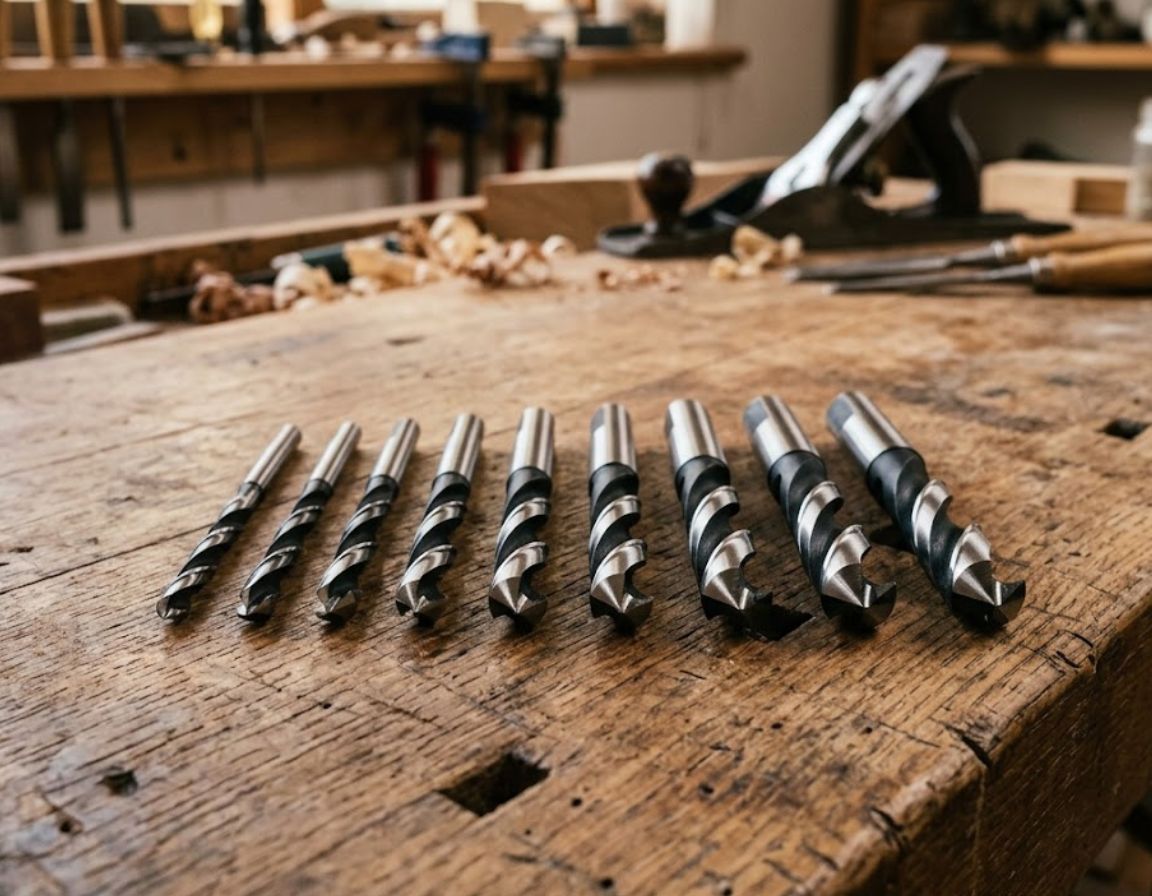
When you work in thin metal, the hole is never “just a hole.” It is clearance for a connector, knockouts for controls, a pass through for MC or EMT. If the edge is ragged or over drilled, you create sharp burrs, loose fittings, and failed inspections. That is where fisch bits and step bits give you control that standard twist drills simply cannot match.
At Construction & Electrical Products, you see this play out every day. The contractors who invest in the right specialty drill bits spend less time filing panels, fixing blowouts, or patching mislocated holes in finished walls. You get cleaner work, fewer callbacks, and a crew that can move faster without cutting corners.
Why standard bits fail in thin metal
A standard twist drill is designed to pull itself into the material and evacuate chips. In thick steel or structural members, that is exactly what you want. In 14 to 22 gauge electrical enclosures or HVAC panels, that self feeding action becomes a liability.
The bit grabs, flexes the sheet, and suddenly you have an out of round hole with a sharp volcano of metal on the back side. You slow the speed, back off the feed, try to baby the cut, and you still end up dressing the hole with a deburring tool or step reamer. On ladder time, that irritation adds up to lost profit.
Fisch bits and step bits are purpose built to solve two very specific problems you deal with constantly. One is getting perfect holes in thin metal without grab or tear. The other is reaching hidden studs and plates behind finished walls without ripping the wall open.
What fisch bits actually are
When electricians talk about “fisch bits,” you are usually talking about flexible bits that pair with your existing fisch tapes and rods. The job is simple on paper. You need to drill through hidden studs, plates, or blocking that you cannot see, then pull cable through without opening up the wall.
In practice, you are pushing a spinning cutting tool through layers of drywall and wood entirely by feel. If the bit is too stiff, it walks and blows out the wall skin. If it is too floppy, it will not track straight enough to find the plate. The geometry and flexibility have to be exactly right.
A quality fisch bit gives you three key advantages:
- A long, flexible shaft that bends inside wall cavities but still transmits torque.
- Aggressive wood cutting flutes that clear chips in deep, blind holes.
- A design that lets you attach a wire or fisch tape to the end so you can pull cable back through on the same pass.
You are not just buying a drill bit. You are buying a way to do “impossible” pulls without demo work.
Step bits vs twist drills in panels
For thin metal panel work, step bits are the other half of the equation. Instead of a single diameter, you get multiple stepped cutting diameters on one cone shaped tool. You start with a pilot point, then gradually enlarge the hole as you advance to each step.
Each step cuts with a short cutting lip and a built in land behind it. That supports the material and minimizes grab. The result is round, accurately sized holes in breaker box knockouts, control panels, and junction box covers.
Compared to standard twist drills, a true electrical grade step bit gives you:
- A nearly burr free edge that needs little to no cleanup.
- Control over the exact size, since each step is clearly marked.
- Less walking on curved or painted surfaces.
- Far fewer panel deformities or “oil can” effect on thin sheets.
This is why many electricians eventually stop bringing a full twist drill index up the ladder for panel work. You grab a couple of step bits, a unibit style tool for larger conduit sizes, and leave the rest in the truck.
How fisch bits solve real world problems
You already know the scenario. You have to run cable from a finished room, up a wall, across a plate, and into an attic or crawl. The ceiling is tight, there is no access from above, and the customer does not want patchwork on freshly painted walls.
With a fisch bit, you drill one precise entry point, usually behind a box or plate location. You insert the flexible bit into the wall, feel for the top plate, and let the bit do the work. Once through, you reverse, tie on your conductor or fisching leader, and pull back. One small access hole, no visible damage, and a clean run.
The time saving is obvious, but the safety and liability angle matters just as much. When you can steer a bit in a controlled arc, you reduce the chance of accidentally punching through opposing walls, trim, or cabinetry. Good fisch bits are engineered to track where you point them, not wander blindly.
Choosing the right step bit for thin metal
Not all step bits are created equal, and if you have ever burned the cutting edges off a cheap import halfway through a service upgrade, you already know the difference.
When you choose step bits for thin metal electrical work, pay attention to:
- Material and coating. Look for quality high speed steel or cobalt blends with a durable coating that resists heat.
- Step progression. Smaller increments give you finer control for connectors and knockout replacements.
- Shank design. A tri flat shank prevents spinning in the chuck when you are cutting larger diameters.
- Markings. Deep, laser etched size markings stay readable after multiple uses, which matters when you are in a panel and moving quickly.
A good step bit becomes a go to tool in your panel bag. Used correctly, it will drill hundreds of clean holes across multiple jobs before you notice any slowdown.
Best practices for drilling clean panel holes
Even with the right fisch bits and step bits, your technique makes or breaks the result. Thin metal is unforgiving, but predictable if you respect its limits.
Start with speed control. Run your drill at moderate RPM and let the cutting edge work. Too fast and you overheat the material, dull the bit, and risk warping painted panels. Too slow and you can chatter, especially on stainless or harder alloys.
Support the panel if possible. On removable covers, clamp the workpiece so it cannot vibrate. On fixed cabinets, use your free hand or a backer block to keep the metal from flexing. This alone dramatically reduces burr formation.
Finally, pay attention to chip evacuation. Clear chips regularly instead of trying to force a single continuous cut through multiple steps. A brief back off between steps keeps the flutes from packing and reduces the chance of the bit grabbing and pulling itself too deep.
How Construction & Electrical Products supports your work
Your crew does not need more tools, it needs the right ones, stocked when you need them. At Construction & Electrical Products, the focus is on supplying specification grade drill bits, step bits, and fisch bits that match the way you actually work in the field.
You get:
- Electrical specialty bits that are built for panel steel, stainless, and drywall to wood transitions.
- Bulk quantities so every van can be properly stocked.
- Consistent specs so you are not guessing if a bit can handle a stainless trough or a heavy gauge NEMA enclosure.
The same approach that keeps you from buying cheap, non rated saw blades for conduit cutting applies here. If the bit fails inside a finished wall or on a rooftop panel, you are the one eating the labor on the return trip.
5 key takeaways
- Standard twist drills tend to grab and deform thin metal, which creates burrs and out of round holes that cost you time and risk inspections.
- Fisch bits are flexible, long reach bits that let you drill hidden studs and plates behind finished walls, then pull cable back through with minimal access damage.
- Step bits give you controlled, burr resistant holes in panels and enclosures, with clearly sized steps that match common connector and conduit diameters.
- Technique still matters. Controlled speed, proper support, and chip management are essential for perfect holes, even with premium specialty bits.
- Construction & Electrical Products stocks electrical grade fisch bits and step bits in depth, so you can standardize across your fleet and avoid the hidden cost of cheap cutting tools.
Frequently asked questions
1. What is the main difference between fisch bits and standard drill bits?
Fisch bits are designed with long, flexible shafts and cutting geometry optimized for drilling through hidden wood members behind drywall, while also allowing you to attach and pull wire or fish tape. Standard drill bits are rigid and intended for direct, visible drilling, so they are not suitable for steering inside wall cavities or for combination drill and pull operations.
2. When should you choose a step bit instead of a twist drill in metal panels?
You should reach for a step bit anytime you are drilling in thin sheet metal like electrical panels, junction box covers, or control cabinets. The stepped cutting action supports the material as it cuts, which reduces grabbing, distortion, and burrs compared to a twist drill that tries to pull itself aggressively through the thin metal.
3. Can one step bit replace an entire drill index for panel work?
For most electrical panel applications, a well chosen step bit will cover the majority of hole sizes you need, from small pilot openings to common connector and conduit sizes. You may still keep a few individual twist drills for specialty tasks or thick structural members, but your day to day panel work can usually be handled with one or two quality step bits.
4. How do you avoid damaging finished walls when using a fisch bit?
Start by planning your entry and exit points so the bit stays within the wall cavity, typically entering at a box location or behind removable trim. Use a flexible fisch bit designed for in wall use, apply steady, controlled pressure, and feel for resistance changes as you approach plates or studs. Avoid forcing the bit and adjust your angle as needed to stay centered in the cavity.
5. Why invest in higher grade fisch bits and step bits from Construction & Electrical Products instead of cheaper imports?
Cheaper bits often use lower quality steel and inconsistent geometries, which leads to faster dulling, more grabbing, and more damaged panels or walls. When you source electrical specialty bits through Construction & Electrical Products, you get consistent, specification grade tools that cut cleanly, hold an edge longer, and reduce the number of trips back to fix avoidable damage, which protects both your labor budget and your reputation.
