
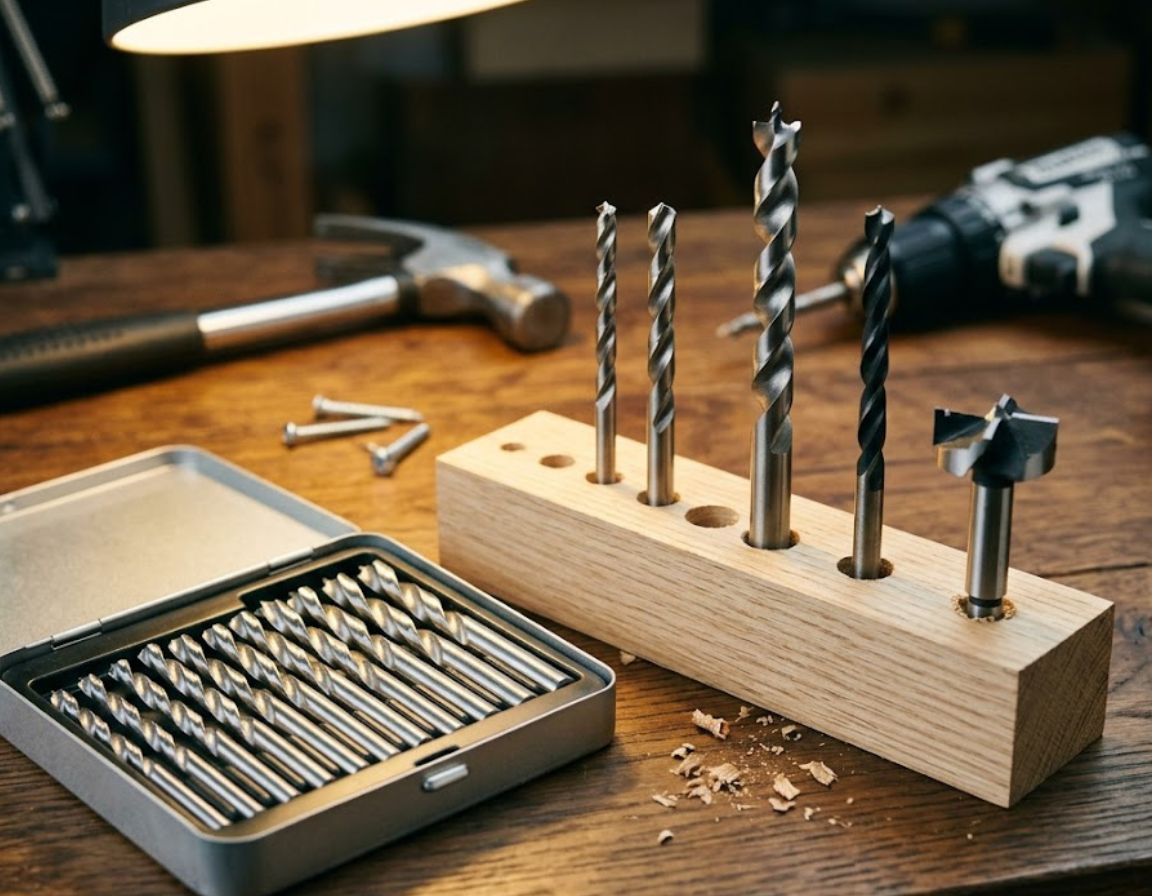
Why the right drill bits matter for electrical work
When you are running pipe, pulling feeders, or trimming a panel, the drill bits you choose can either speed you up or quietly sabotage the job. For most trades, a drill bit is just a commodity. For you, drilling into a live panel can mean metal shavings in the bus, and drilling behind finished drywall can mean one wrong move into a water line or fire block.
Specialty electrical drill bits solve two problems that standard twist bits never will: drilling clean, correctly sized holes in thin metal and reaching hidden studs and cavities behind finished walls. When you match the right bit to the work, your holes stay accurate, your wire paths stay clean, and you avoid the “back for a free repair” call that chews up your profit.
At Construction & Electrical Products, you get specification grade step bits and flexible “fish” bits that are built for the way you actually work, not for weekend DIYers.
Use step bits for clean holes in thin metal
Thin metal is unforgiving. If your bit grabs, the panel oil cans, the hole distorts, and the fitting never seats correctly. That is how you end up filing knockouts by hand and explaining to an inspector why a connector is sitting in a jagged opening.
Step drill bits are the right answer when you need concentric, burr controlled holes in:
- Load centers and panel covers
- Enclosures and NEMA boxes
- Raceway, gutters, and cable trays
- Sheet metal, EMT, and light gauge steel
A step bit uses a conical profile with a series of diameter steps. As you push into the work, each step enlarges the same hole rather than starting a new one. This keeps the bit centered and greatly reduces grabbing and tearing compared with a conventional twist bit or hole saw.
High speed steel step bits are the workhorse choice. Quality HSS can handle elevated temperatures and multiple metals without dulling quickly, which is why it is considered the gold standard for general drilling tasks in 2024 (Drill Bit Warehouse). When you are opening up a panel in a hot mechanical room, that heat resistance is not optional.
For heavy stainless control cabinets or thicker structural steel, cobalt enhanced HSS step bits give you another level of durability under heat and load. Cobalt bits maintain cutting qualities under high temperature and are ideal for hard steel and stainless (Drill Bit Warehouse).
Get the hole size right on the first pass
On site, you rarely have time to look up a chart. You need your step bit marked clearly so you can stop at the right diameter before you overshoot and wreck the panel.
Quality step bits are engraved or laser etched with common trade sizes for:
- Conduit knockouts
- Cord grips and strain reliefs
- Control switches and pilot lights
- Grommets and bushings
If you are working with plastic anchors or screws in sheet metal accessories, the same principles apply as with wood or masonry. A good rule of thumb is to match the bit to the body of the anchor or screw, not the outside of the threads, so the fastener can bite without splitting the material (Apartment Therapy).
When you go too small, you can always step up to the next size and re cut the same hole. When you go too large, you are stuck patching a panel or moving your layout, which costs you far more than the right bit.
Control heat, burrs, and finish
Electrical work lives under covers and behind trim, but inspectors still see your holes. Rough, sharp cutouts tell them the rest of the job might be just as sloppy.
To keep your finish clean:
- Use cutting oil on thicker steel to control heat and extend bit life
- Run at a moderate speed instead of pegging the trigger, HSS bits are heat resistant but not invincible (Red Box Tools)
- Let the bit do the cutting, do not force it, that is how you chip cutting edges and deform panels
If you are already using premium saw blades or diamond blades for your other cuts, your drill bit selection should match that same standard. The panel face is often the only part of your work the client ever sees.
Use flexible “fish” bits behind finished walls
The second problem specialty drill bits solve is routing cable and MC through spaces you cannot see. When you are fishing in an existing home or a finished commercial space, you cannot just open up drywall until you find a stud bay that works. You have to hit the cavity from the right angle on the first attempt.
Flexible “fish” bits are designed to do exactly that. These long, whip like bits give you reach and control so you can drill through hidden studs, sole plates, and fire blocks while keeping the entry hole small enough to patch or cover.
Typical installer bits can be up to 18 inches long, and pro cable installers use them to go through wood, plaster, and even light masonry. Many include a small hole at the tip so you can hook your wire and pull it back through the path you just drilled (The Spruce).
Work smarter in occupied spaces
Where flexible bits pay for themselves is in live, occupied spaces where cutting a large access opening is not acceptable. Think:
- Tenant improvement projects
- Hospitals, labs, and clean spaces
- Finished condos and custom homes
- Retail and hospitality build outs
You can often enter through a baseboard, cabinet, or closet, drill through the hidden framing member, then pull your cable with minimal patch work. That is the difference between a satisfied tenant and a complaint about “the electrician who tore up our walls.”
Because these bits flex, you also need quality material to keep them from permanently deforming or snapping. High grade steel with the right core thickness gives you the necessary bending strength while still allowing the bit to snake through studs. Core thickness greater than 40 percent of the diameter is associated with better bending strength and longer life, especially for deep drilling in hard materials (Smartlathe).
Control your path, not just the hole
Flexible bits are not just about reach, they are about steering. The geometry of the cutting edge and the helix angle affect how the bit tracks once you are inside the wall.
A larger helix angle, around 35 to 40 degrees, improves chip removal and heat dissipation, which is ideal when you are boring through resinous studs and plates (Smartlathe). A modified chisel edge, such as a beveled or curved profile rather than a straight one, reduces cutting resistance at the start of the hole and stabilizes the entrance, which helps prevent walking on the stud face (Smartlathe).
This sort of geometry is not marketing fluff. It is the difference between a bit that tracks on line and one that wanders into a pipe or out the side of a stud.
When you are drilling blind behind finished walls, bit geometry becomes risk management, not just a technical detail.
Match drill bit materials to your work
You do not need every exotic drill bit material on the market, but you do need to understand what you are buying and why. For electrical work, four main materials and treatments show up again and again.
| Material / treatment | Where it shines | Key benefit |
|---|---|---|
| HSS (High Speed Steel) | General metal, panel work, plastic | Handles heat, long life in standard metals (Drill Bit Warehouse) |
| Cobalt HSS | Stainless, hard steel | Maintains cutting edge at high temp, ideal for tough enclosures (Drill Bit Warehouse) |
| Carbide / carbide tipped | Concrete, brick, block | Extreme hardness and durability for masonry anchors (Drill Bit Warehouse) |
| Surface coatings (TiN, TiAlN, etc.) | High volume drilling | Reduce friction and heat, keep bits sharper longer (Smartlathe) |
You probably already rely on carbide tipped masonry bits whenever you set anchors in block or concrete. Masonry bits use a tungsten carbide cutting lip on a steel shaft and are designed to work with hammer action through concrete, brick, and stone (Red Box Tools). The same logic applies when you choose step bits or flexible bits. If you are going to run them hot and hard day after day, look for premium materials and coatings that are built for that duty cycle.
Maintain your drill bits to protect your time
A dull bit is a liability. It runs hot, wanders, and forces you to push harder, which increases the odds of twisting your wrist or damaging the work.
Regular maintenance is not overkill, it is inexpensive insurance:
- Inspect cutting edges for chips, cracks, and rounding before you start. Daily visual checks catch problems before they turn into broken bits in a live panel (O-K Bit).
- Clean bits after use. Removing metal chips, dust, oil, and cutting fluid prevents corrosion and keeps flutes clear for the next job (Drill Bit Warehouse).
- Lubricate during heavy duty drilling. Water or oil based coolants on metal cuts reduce heat buildup and friction, extending bit life (O-K Bit).
- Store bits properly. Cases or organizers protect cutting edges from impact and moisture so your step bits and flexible bits are ready when you need them (Drill Bit Warehouse).
Sharpenable bits like HSS twist or some step bits can be brought back with a grinder if you know what you are doing, but many electrical specialty bits are more economical to replace once they start burning or chattering. The real cost is not the bit. It is the extra 15 minutes on every hole once the edge is gone.
Why buy your drill bits from Construction & Electrical Products
You have enough variables on every job. Your drill bits should not be one of them.
When you buy from Construction & Electrical Products you get:
- Electrical specialty bits chosen for real job site conditions, not big box end caps
- Clear specs for panel work, enclosure drilling, and in wall runs so you know exactly what each bit is built to do
- Consistent quality across HSS, cobalt, and carbide options so every crew member is using the same dependable tooling
- Bulk quantities that match how contractors actually buy and use drill bits
You are not guessing whether a flexible bit will survive a full day of retrofit drilling or whether a step bit will chatter out a control cabinet face. You are using tools that are proven on the same type of work you do every day.
Key takeaways
- Step drill bits give you clean, accurately sized holes in thin metal panels and enclosures with far less grabbing and distortion than standard twist bits.
- Flexible “fish” bits let you drill through hidden studs and plates behind finished walls, then pull cable without opening large access holes.
- Matching bit material to the job, HSS, cobalt, and carbide, protects you from premature dulling and breakage under heat and load.
- Bit geometry, including helix angle, core thickness, and chisel edge shape, directly affects tracking, chip removal, and accuracy in blind drilling.
- Routine inspection, cleaning, lubrication, and proper storage extend drill bit life and protect your productivity on every project.
Frequently asked questions
1. Why should I use a step bit instead of a regular twist bit on panels?
You should use step bits on panels because they enlarge a single pilot hole through a series of steps, which keeps the cut centered and greatly reduces grabbing and oil canning in thin metal. With a quality HSS or cobalt step bit you get concentric, burr controlled holes that fit conduit connectors, strain reliefs, and controls without filing.
2. How long of a flexible “fish” bit do I really need?
For typical residential and light commercial work, a flexible bit in the 18 inch range covers most stud and plate drilling from accessible entry points. If you regularly work in tall walls or complex commercial framing, you may want longer installer style bits that can reach through multiple cavities, but for many electricians a single high quality flexible bit handles the bulk of retrofit runs.
3. Can I use the same drill bits on wood, metal, and masonry?
You can use general purpose HSS or twist drill bits on wood, plastic, and light metal, but masonry requires carbide tipped bits designed for hammer action through brick, block, and concrete (The Spruce). Using a wood or metal bit in masonry will dull it quickly and can snap the bit, so you are better off carrying dedicated masonry bits for anchor work and reserving your specialty electrical bits for panels and framing.
4. How do I choose the right drill bit size for anchors and screws?
Match the bit to the body of the anchor or screw, not the threads or flange. For plastic anchors the bit should be the same size as the body so the anchor can be pushed in by hand without being loose (Apartment Therapy). If a hole ends up slightly undersized, step up to the next bit size and re drill in the same location. If it is oversized, you often have to move the fastener or patch the material.
5. How do Construction & Electrical Products drill bits differ from what I get at a big box store?
Construction & Electrical Products focuses on specification grade tooling for professional electrical and construction work. That means step bits with real HSS or cobalt substrates and accurate size markings, flexible “fish” bits that hold their shape under load, and carbide masonry bits that stand up to anchor work day after day. You also get access to bulk quantities and consistent part numbers, so your whole team is using the same reliable bits instead of a mix of retail grade options.
