
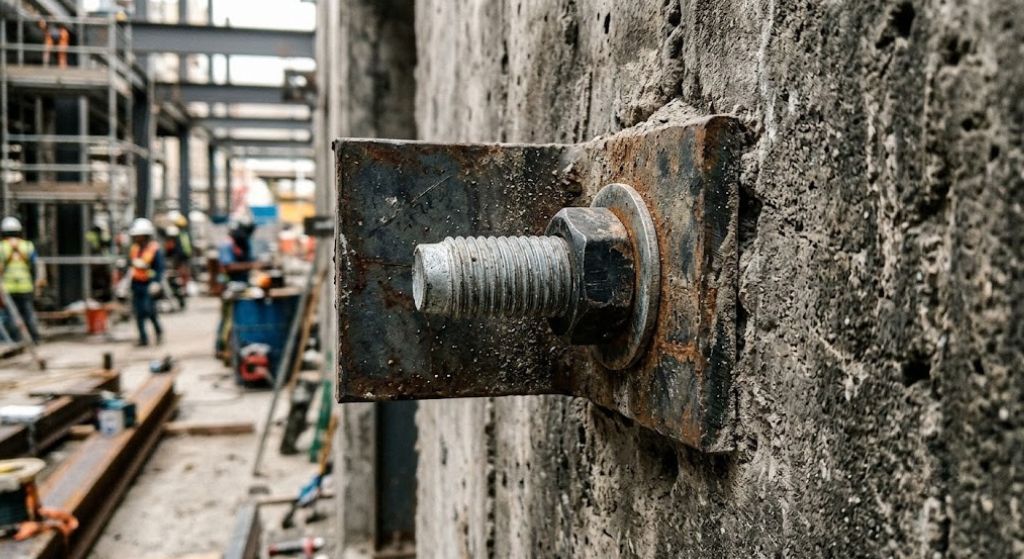
Masonry anchors are one of those hardware categories that looks simple until the job depends on it. The wrong anchor wastes labor, fails inspection, or tears out of the substrate, while the right one gives you clean installation, code support, and predictable performance on concrete, brick, block, and stone.
For procurement officers, estimators, and maintenance leads, the real job is not just buying an anchor. It is matching the fastener to the substrate, the load, the environment, and the documentation package that keeps the project moving. At Construction & Electrical Products Inc., that means stock depth, compliance support, and access to Material Test Reports when the spec calls for them.
Masonry Anchors: What You Need to Know Before You Buy
Masonry anchors are fastening systems used to attach structural and non-structural items to masonry, concrete, stone, and related substrates. The best choice depends on what you are attaching, what you are attaching into, and how the load behaves once the hardware is in place. For commercial buying, that means the anchor is never just a part number. It is a performance decision.
If you need a fast, practical way to think about the category, start here: the substrate controls capacity, the load direction controls anchor family, and the installation method controls whether the published rating still applies. That is why the best commercial masonry anchors are the ones that match the job instead of simply matching the diameter on the drawing.
For buyers, the big mistake is assuming all masonry behaves alike. Solid concrete, CMU, hollow block, and natural stone each react differently under tension and shear, and the anchor that works perfectly in one base material can fail early in another. Once you understand that, your purchasing decisions get sharper fast.
Masonry Anchor Fundamentals
A masonry anchor works by transferring load from the attached fixture into the base material. In plain terms, the fastener turns a concentrated force at the surface into resistance deeper in the masonry. That transfer may happen through expansion, thread engagement, adhesive bond, or a cast-in geometry that locks into the cured concrete.
What Masonry Anchors Do
Pull-out strength is the force required to remove an embedded anchor from the base material, and it is one of the cleanest ways to understand anchor performance. In real-world terms, the anchor must resist tension, shear, or both without crushing the surrounding masonry or losing bond. That is why the failure mode matters as much as the rating on the box.
For permanent installs such as sign poles, lighting poles, and cladding connections, you want a system that holds its value under service loads, not just on the first day after installation. For temporary supports, the same principle applies, but the schedule may favor faster installation over long cure times or more involved inspection requirements.
Masonry Substrates and Why They Behave Differently
Concrete is dense, predictable, and usually the easiest substrate to engineer against. CMU and hollow block introduce voids, which changes how load distributes around the anchor. Clay brick varies by unit strength, mortar condition, and whether you are biting into the brick or the joint. Natural stone is a different animal altogether, because strength can vary by quarry and even within the same bed of stone.
That variability is why exact-spec buying matters. On historic or mixed masonry, you are not just selecting hardware. You are selecting around uncertainty. If your work involves older facades or restoration, review what separates masonry anchors and concrete anchors before you release a purchase order, because the substrate drives the decision more than the fixture does.
Load Types That Drive Anchor Selection
Tension tries to pull the anchor straight out. Shear pushes across the face of the base material. Combined loading does both at once, which is what happens on brackets, rails, equipment supports, and many exterior attachments. Once load direction changes, anchor selection changes with it.
A short, straightforward rule applies here. Tension-heavy applications usually need deeper embedment or bonded systems. Shear-heavy applications often favor robust mechanical anchors with strong bearing in the masonry. Combined loading usually pushes you toward conservative sizing, better edge distance, and a cleaner installation package.
Main Types of Masonry Anchors
Anchor families are worth separating early, because each one solves a different problem. If you buy by habit instead of application, you end up overpaying for capability you do not need or underbuying a fastener that cannot handle the duty cycle.
Mechanical Expansion Anchors
Mechanical expansion anchors create holding power by expanding against the sides of the drilled hole. Wedge anchors, sleeve anchors, and drop-in anchors all fit inside this family, but each behaves differently once installed.
Wedge anchors are a common choice in solid concrete where high holding power and straightforward installation matter. Sleeve anchors are more forgiving in mixed or slightly softer masonry, and drop-ins work well when you need a flush finish or repeated threaded attachment. Mechanical expansion systems are popular because crews understand them, inventory is easy to stage, and installation can move quickly when the hole is clean and the drill size is right.
For exact-spec projects, this is where a supplier with deep inventory earns its keep. You do not want to lose half a day because one diameter, finish, or length is backordered. Construction & Electrical Products Inc. keeps a wide range of sizes and finishes available so you can keep field crews moving without substitutions that create inspection problems.
Screw Anchors and Concrete Screws
Concrete screws and screw anchors cut threads into the base material as they go in. That gives you fast installation, easy removal in many cases, and solid performance for medium-duty attachments in solid concrete or appropriate masonry. They are often the right answer for brackets, conduit supports, light equipment, and general-purpose mounting.
The catch is that these anchors depend on good drilling accuracy and the right bit. If the hole is oversized or the substrate is weak, the fastener loses bite. For jobsite efficiency, pair the anchor with the proper drill bits for masonry anchors, because a strong anchor starts with a clean, correctly sized hole.
Adhesive Anchors
Adhesive anchors rely on bond, not expansion, to transfer load into the substrate. You will also hear them called epoxy anchors, chemical anchors, bonded anchors, or adhesive-bonded anchors. These systems use resins such as epoxies, vinyl esters, polyesters, acrylates, and hybrid mortars.
They shine when you need high load values, flexible embedment options, or better performance in damaged or irregular masonry. They also demand discipline. Hole cleaning, correct mixing, proper cure time, and inspection all matter. If you want a system that performs exactly as designed, adhesive anchors reward good procedure and punish shortcuts.
Cast-In-Place Anchors
Cast-in-place anchors are set before the concrete is poured, which gives you excellent integration with new construction. Embedded anchor rods, headed anchors, and specialty cast-in systems belong here. For heavy-duty structural work, this is often the cleanest answer because the anchor becomes part of the concrete element instead of a post-installed addition.
In UHPC panel testing, deeper embedment and enlarged heads improved pull-out performance significantly, and failure was governed by concrete breakout rather than steel failure, which tells you the base material remains the limiting factor even when the metal is strong. That is why cast-in design still has to be matched to the concrete itself, not just the metal shape (pull-out strength).
Specialty Anchors for Veneer and Stone
Veneer ties, helical systems, and proprietary façade anchors serve brick veneer, natural stone, and cladding applications where conventional expansion hardware is the wrong tool. These products are often specified around the wall assembly, not just the base material.
For façade work, pay attention to corrosion resistance, thermal movement, and the approved system details. On exterior projects, this is also where outdoor masonry anchors deserve separate review, because weather exposure changes the hardware choice as much as load does.
How to Match the Anchor to the Substrate
Start with the base material, not the brand. That rule saves money, prevents callbacks, and keeps submittals cleaner.
Solid Concrete
Solid concrete gives you the broadest range of options. Wedge anchors, concrete screws, and adhesive anchors all work well when the hole is drilled correctly and the base material has the strength to support the load. If the attachment is straightforward and the schedule matters, concrete screws and wedge anchors are often the fastest path.
Embedment depth matters more than most buyers realize. In testing on UHPC panels, doubling embedment depth increased pull-out capacity by about 1.85 times, and a larger diameter also improved strength. That tracks with field reality: deeper bite usually means better holding power, assuming edge distance and spacing remain acceptable (deeper embedment).
Hollow CMU and Grouted Block
Hollow CMU changes the game because voids reduce predictable bearing. In hollow units, expansion anchors can bridge the wrong area, and poor placement can crack the face shell or leave too little material for reliable grip. When the block is grouted, performance improves, but you still need to know where the solid sections are.
Adhesive systems and hollow-wall-rated anchors are often the safer choice here, especially when the load is meaningful or the attachment cannot tolerate movement. For mixed conditions, request exact substrate data before ordering. Guessing costs more than a second round of procurement review.
Brick Masonry
Solid clay brick and hollow brick behave very differently. Solid brick can support respectable loads when the anchor is properly placed, while hollow brick often demands specialty hardware or bonded systems. Mortar joints are another weak point, so attachment into the joint should only happen when the design explicitly allows it.
Historic brick adds another layer of caution. You do not get to assume modern uniformity just because the wall looks straight. Field verification and conservative design values are the right standard, not optimism.
Natural Stone
Natural stone is where experienced engineers stop pretending every substrate is predictable. A 2013 structural study on stone masonry found that engineers were often extremely conservative, sometimes using a 2,000 psi concrete design value even when limestone and sandstone tested much higher. The same study showed that published concrete design values were often conservative for limestone and sandstone, but bedding orientation still changed failure behavior and variability remained real (mechanical anchor strength).
That is the key buying lesson: natural stone can perform well, but only when the anchor type, bedding orientation, and load direction are understood. For sandstone especially, anchor behavior changed depending on whether the bolt was installed parallel or perpendicular to the bedding plane.
Historic or Deteriorated Masonry
Old masonry needs a conservative mindset. Mortar may be weak, stone may be weathered, and previous repairs may hide the actual bearing condition. Published manufacturer data may not fit the substrate you have on site, and that is where bad assumptions create expensive failures.
For these jobs, keep the specification tight and the documentation clean. When you buy through a supplier that understands compliance, MTRs, and project submittals, you reduce the chance of a field delay when the inspector asks for proof instead of promises.
Performance Factors That Control Holding Power
Anchor capacity is not just about the fastener itself. It is a system of geometry, material, and workmanship.
Embedment Depth and Diameter
Deeper embedment usually increases resistance because the load spreads into more material. Bigger diameters help too, but only when the substrate can support the larger hole and the edge conditions allow it. In one UHPC study, a 25 percent deeper embedment raised pull-out strength by about 50 percent, while a 50 percent larger bottom diameter increased strength by about 33 percent.
That is not academic detail. That is procurement guidance. If your spec is tight on space or load, the anchor family and dimensions need to be selected together, not separately.
Edge Distance and Spacing
Edge distance matters because the masonry around the hole has to resist breakout. Put an anchor too close to a corner, and the cone of failure reaches the edge before the anchor reaches full capacity. Spacing matters for the same reason, since anchors installed too close together can overlap failure zones.
This is where clean layout and correct selection work together. A high-capacity anchor installed in the wrong position is still a bad anchor.
Alignment and Drilling Accuracy
Misalignment lowers capacity, and the data is blunt about it. ASCE testing found that anchor misalignment above 5 percent reduced load-carrying capacity. That means sloppy drilling is not a cosmetic issue. It is a structural issue (misalignment above 5%).
Good drilling practices matter just as much as good hardware. If your crew is setting a large volume of fasteners, the quality of the installation method is part of the purchasing decision, not an afterthought.
Concrete and Masonry Strength
Stronger concrete usually gives better pull-out resistance, but the relationship is not linear when failure shifts to breakout or splitting. For concrete anchors, pull-out load capacity depends on embedment length, diameter, concrete strength, and alignment. In one study, pull-out load strength correlated with Schmidt hammer rebound value at more than 90 percent for 8 mm, 10 mm, and 12 mm anchors, which shows how substrate condition drives real capacity.
In practice, that means substrate verification is not optional when the load matters. If the base material is poor, even a premium anchor will underperform.
Environmental Exposure
Moisture, temperature swings, chemical exposure, vibration, and corrosion all change the life of the anchor. Severe environments demand better material selection and closer attention to the design values. In wet or exterior work, corrosion resistance should be decided early, not after the order is placed.
That is also where buying from a supplier with breadth helps. You want plated, galvanized, stainless, and specialty-coated options available without forcing a redesign. For exterior assemblies, review the application against commercial masonry anchors and make the finish decision at the same time as the diameter.
Installation Requirements You Need to Verify
A good anchor installed badly is still a failure waiting to happen.
Drill Size and Hole Cleaning
Hole size has to match the anchor specification exactly. Too small and the anchor binds. Too large and the hold drops. For adhesive anchors, hole cleaning is even more important. The recommended sequence is brushing the hole with a stiff brush and then blowing it out with compressed air, repeated as required by the manufacturer.
For mechanical anchors, the drill bit and the hole geometry still matter. If your team is not matching the right bit to the fastener, you are building in risk before the anchor ever goes in.
Setting Torque and Installation Method
Torque-controlled mechanical anchors need to be set to the manufacturer’s requirement, not guessed. Over-torquing can damage the substrate or the anchor, while under-torquing leaves capacity on the table. Adhesive anchors are different. You need correct mixing, full resin placement, and proper cure before loading.
Under the International Building Code, adhesive anchor installation also requires special inspection. The inspector verifies the approved plans, ESR, anchor location, edge distance, spacing, drill size, hole depth, hole cleaning, embedment, and adhesive expiration date. That is the level of detail that keeps commercial jobs from stalling.
Cure Time and Temperature Windows
Adhesive systems are sensitive to temperature and time. If the cartridge is not purged properly, the first anchors may not perform as intended because the resin and hardener are not fully mixed. If the site is cold or hot beyond the listed window, cure behavior changes and the schedule has to account for it.
This is why adhesive anchors reward planning. If the job cannot wait for cure, choose a mechanical option or stage the work around the cure window instead of forcing the install.
Inspection and Verification
Field verification protects the schedule. Check the substrate, hole depth, anchor condition, torque, and visible embedment before release. On commercial projects, it is also smart to verify that the submittal package matches the delivered hardware, especially when the order includes multiple finishes, lengths, or load ratings.
For recurring work, a supplier that can supply documentation quickly saves you from chasing paperwork after the crew is already on site. That is standard practice at CEP, where inventory depth and paperwork support go together.
Code Compliance and Documentation
Commercial buyers do not just need hardware. You need proof that the hardware matches the specification.
ICC-ES Reports and Evaluation Data
For adhesive anchors and many mechanical systems, ICC-ES reports are the backbone of code acceptance. AC58 established the original framework for adhesive-bonded anchors, and AC308 later became the standard for concrete installations under the International Building Code. That matters because it ties the anchor to tested conditions, approved installation steps, and published design values.
When you are reviewing submittals, ask for the evaluation report, the installation instructions, and the load tables together. Separate documents create gaps. A complete package makes review faster.
AC58 and AC308 for Adhesive Anchors
AC308 matters because it covers cracked and uncracked concrete, which is the reality most commercial jobs face. Adhesive anchors are not just glue in a hole. They are tested systems with specified conditions, and those conditions need to match the project. If the substrate, hole cleaning, or drilling method changes, the listed capacity may no longer apply.
That is why buyers should insist on clear documentation before release. No one wants a field substitution to turn into a code question.
Design Values and Safety Factors
A common factor of safety in concrete anchor design is 4.0 for tension and shear values, which gives you a conservative buffer between working load and failure. In stone masonry, where published data may be limited or variable, engineers often rely on conservative assumptions instead of exact manufacturer design values. That is especially true for historic stone, where quarry variation and bedding orientation can swing performance.
For buyers, the takeaway is simple. Never compare anchors by ultimate strength alone. Compare allowable design values, approved conditions, and the safety factor behind the published rating.
When to Require Engineer Review
You need engineer review when the substrate is unusual, the load is high, the attachment is critical, or the building condition is uncertain. Historic masonry, deteriorated stone, overhead loads, life-safety attachments, and high-vibration equipment all belong in that bucket.
This is not a delay. It is insurance against rework and failed inspections. The cost of review is small compared with the cost of replacing compromised hardware after installation.
Common Commercial and Industrial Applications
Anchors show up everywhere on commercial and industrial projects, often in places nobody notices until something loosens.
Structural and Nonstructural Attachments
You will see masonry anchors on brackets, rails, frames, façade supports, and general mounting points. Some attachments are structural, others are clearly non-structural, but both need proper substrate matching and installation discipline. The difference is usually load severity, not just the size of the fixture.
If you are buying for recurring projects, it helps to standardize around a few approved families. That keeps inventory predictable and reduces the chance of field substitutions.
MEP and Facility Equipment
Pipe supports, conduit supports, cable tray supports, and HVAC accessories often rely on masonry anchors for permanent attachment. These are the kinds of jobs where inventory speed matters because downtime is expensive. A maintenance lead does not want to pause an outage because one anchor length is missing from stock.
For work near moisture, vibration, or exterior exposure, review the finish and corrosion rating before buying. If the environment is harsh, the hardware should match it from the start.
Signage, Lighting, and Exterior Fixtures
Signs, directionals, light poles, and other exterior fixtures are classic anchor applications. These attachments often combine wind load, vibration, and weather exposure, which makes anchor selection more than a simple diameter choice. In exterior work, the wrong finish can age out long before the structure does.
For these jobs, best masonry anchors is a useful review topic because exterior conditions often determine the family you choose.
Retrofit and Repair Work
Retrofit work is where post-installed anchors earn their keep. You often have limited access, tight schedule pressure, and an existing substrate that is not perfectly documented. Mechanical and adhesive systems solve different retrofit problems, and the right one depends on whether speed, capacity, or substrate irregularity matters most.
The best retrofit buys are the ones that reduce surprises. That usually means better documentation, better stock depth, and a supplier who understands the difference between a substitution and a safe equivalent.
Buying Guide: How to Specify the Right Masonry Anchor
A good purchase starts with a good spec. If you get the inputs right, ordering gets easier and the jobsite gets quieter.
Start With the Substrate
Identify the base material first. Concrete, CMU, brick, stone, and grout-filled assemblies each point toward different anchor families. If the substrate is uncertain, stop and verify before ordering. A fast quote is useless if the hardware is wrong.
Define the Load Requirement
Specify tension, shear, or combined loading, and note whether the load is sustained or short-term. Include vibration, wind, or seismic factors when they apply. Those details separate a general-purpose fastener from a code-aligned solution.
Confirm Base Material Condition
Record whether the masonry is sound, cracked, hollow, grouted, aged, or variable. On natural stone and historic masonry, condition can override the nominal design value. That is where conservative procurement protects the project.
Select the Anchor Family
Mechanical expansion anchors work well for many solid masonry applications. Screw anchors add speed. Adhesive systems solve more demanding or irregular conditions. Cast-in systems win on new construction and heavy-duty applications. Specialty veneer anchors belong to façade-specific work.
Verify Corrosion Resistance
Choose finish based on exposure. Interior dry spaces may be fine with standard plated hardware. Exterior and damp environments often demand galvanized or stainless options. If the project lives outdoors, this is not a place to shave pennies.
Review Pack Quantity and Lead Time
Commercial work runs on volume. You need case counts, bulk pricing, and quick replenishment, not just a single box price. CEP’s 10,000 plus product inventory and access to thousands more gives you the speed and quantity needed to keep crews supplied without compromising spec or compliance.
Common Buying Mistakes to Avoid
The same errors show up on repeat, and they are all preventable.
Choosing by Price Alone
Cheap hardware looks good until it fails inspection or forces a return visit. The cheapest anchor is often the most expensive one after labor, downtime, and replacement are counted. Buy for the job, not for the line item alone.
Ignoring Substrate Variability
Do not treat all masonry as interchangeable. Stone varies, brick varies, block varies. Even within a single wall, conditions change enough to matter. If you ignore that, you are gambling with capacity.
Underestimating Embedment Requirements
Shallow embedment is a common cause of weak performance. In testing, deeper embedment consistently improved capacity, and failure usually shifted to the surrounding concrete or masonry before the steel itself gave out. The anchor can only perform to the depth you actually installed.
Overlooking Installation Complexity
A mechanical anchor can be quick. An adhesive anchor demands more: drilling, cleaning, purging, curing, and inspection. If your crew or schedule cannot support that process, do not buy a bonded system just because the catalog rating looks higher.
Procurement Checklist for Exact-Spec Ordering
Good procurement is about reducing uncertainty before the truck leaves the dock.
Information to Collect Before Purchase
Capture the substrate type, thickness, load direction, required embedment, anchor diameter, finish, quantity, exposure, and compliance requirement. Add any special inspection notes, temperature limits, and project-specific submittal needs. That set of details prevents most ordering mistakes.
Questions to Ask Suppliers
Ask for design values, approval documents, available finishes, lead time, and whether MTRs are available for the lot you are buying. A supplier who knows the product line should answer those questions quickly and clearly. If the answers are vague, keep looking.
What to Confirm on the Data Sheet
Check approved substrate, torque or installation steps, embedment range, edge distance, spacing, corrosion rating, temperature limits, and code approvals. For adhesive systems, also confirm cure time and hole-cleaning requirements. If the sheet does not match the job, the order does not either.
When to Request Alternate Products
Request an alternate when the substrate is weaker than expected, the exposure is harsher than planned, the lead time slips, or the installed condition does not match the original spec. The right substitution is one that preserves capacity, compliance, and installability. Anything else creates risk.
Frequently Asked Questions About Masonry Anchors
Which masonry anchor is strongest?
There is no single strongest anchor. Strength depends on the substrate, load direction, embedment depth, edge distance, and installation quality. In solid concrete, adhesive systems and heavy-duty mechanical anchors often lead the pack, but the right answer is always job-specific.
Can you use the same anchor in brick, block, and concrete?
No. Concrete, brick, and block behave differently, and hollow or weak masonry changes the capacity fast. Always match the anchor to the substrate instead of assuming one product covers every base material.
How do you choose between adhesive and mechanical anchors?
Choose adhesive anchors when you need high capacity, irregular substrate accommodation, or a bonded system approved by the spec. Choose mechanical anchors when speed, simplicity, and immediate loading matter more. If the job needs special inspection and cure management, plan for that before ordering.
What documentation should you request for commercial jobs?
Request the manufacturer data sheet, ICC-ES report or equivalent approval document, installation instructions, and Material Test Reports when the project calls for them. For adhesive anchors, include the inspection requirements and cure data. A complete submittal package saves time at review.
When should you upgrade to stainless steel?
Upgrade to stainless steel when the environment includes moisture, salt exposure, corrosive chemicals, or long-term exterior service. If the cost of failure is high, stainless is usually the right call. The cheapest finish is not cheap when it corrodes.
Why does installation quality matter so much?
Because the anchor can only perform as designed if the hole size, alignment, cleaning, torque, and embedment are correct. Testing shows misalignment alone can reduce capacity. Good hardware installed badly is still bad hardware.
Final Selection Checklist
Before you release the purchase order, confirm five things: the substrate is known, the load is defined, the anchor family matches the job, the finish matches the environment, and the documentation package is complete. If any of those pieces are missing, stop and fix the spec first.
That is how you buy masonry anchors with confidence. Not by guessing, but by matching the fastener to the material, the load, and the compliance requirements that govern the project.
