
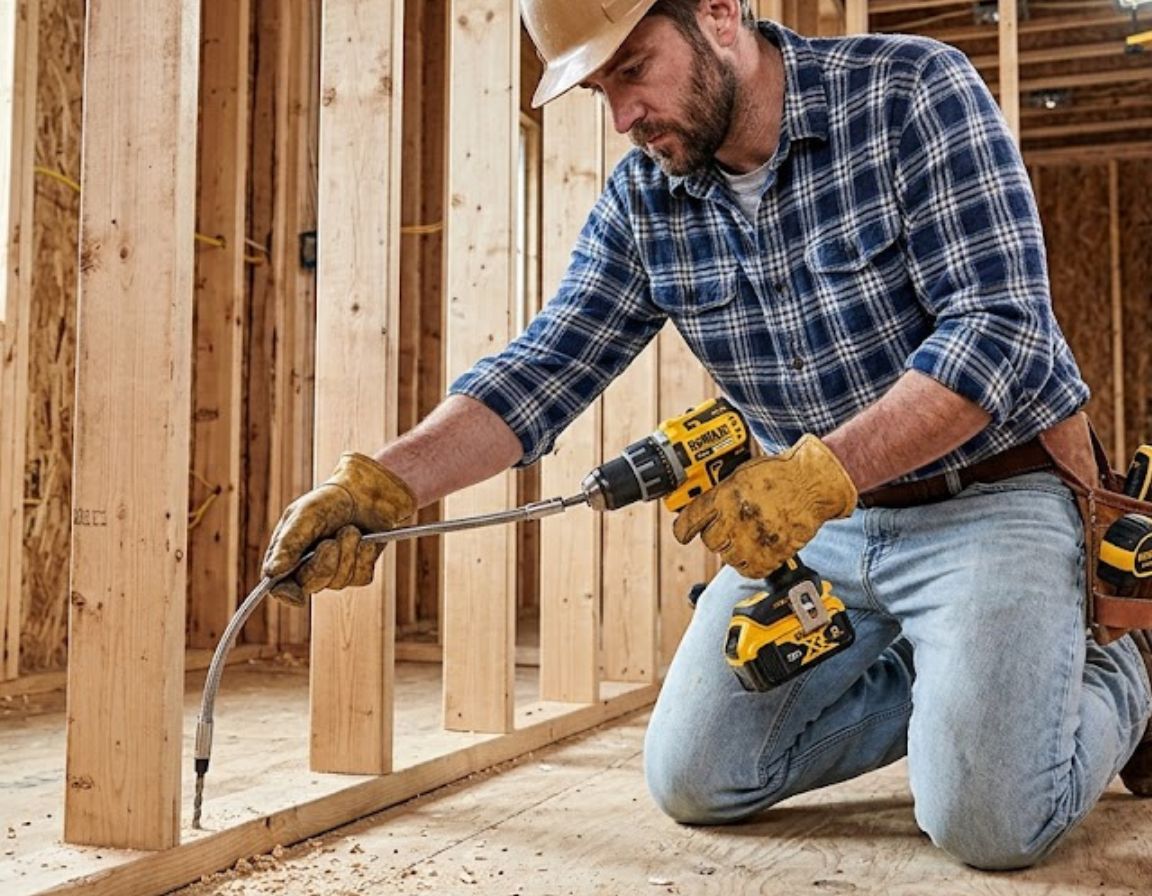
In commercial electrical work, the wrong bit can cost you more than a broken tool. It can mean chewed up panels that fail inspection, holes in the wrong stud bay, or a “simple” retrofit that turns into drywall repair. That is exactly why fish bits for electrical wiring installation exist. They let you drill where you cannot see and pull wire where you cannot reach, without tearing a building apart.
At Construction & Electrical Products, you get fish bits and electrical specialty bits that are spec grade, not gimmicks. If you are drilling thin metal, finished walls, or tight framing, you need to understand what these bits are designed to do and where the cheap versions will burn you.
What fish bits actually do for you
Fish bits for electrical wiring installation are installer style flexible drill bits built for one job. Getting a clean, controlled hole exactly where you want it, then acting as a pull tool for your wire. You are not just drilling, you are drilling and fishing in one motion.
Most flexible fish bits share a few critical design features that separate them from standard twist bits:
- Lengths around 54 inches so you can get from outlet height to header or from basement to first floor plates in a single run
- Aggressive auger style heads that pull the bit through wood with minimal feed pressure
- “Fish eye” or screw point holes at the tip so you can attach cable or pull line once you break through
- A 1/4 inch 3 flat anti slip shank so the bit actually stays locked in the chuck under load (Amazon)
Multiple manufacturers build this style of bit, including Klein Tools, HUAALIUCHE, Greycore Tools, DECKRKAT, IRWIN Tools, and Eagle Tool US (Amazon). The geometry is similar across brands because the mission is the same. Reach, control, and enough durability to survive real framing, not just soft pine in a showroom demo.
When to reach for fish bits instead of standard bits
You do not need a fish bit for every hole. You use one when the path is hidden and access is limited. If you can see the stud, plate, or panel, a normal bit works. If you are guessing where the structure is, you switch to fish bits.
Common use cases include:
- Drilling through top or bottom plates from a finished room to an attic or crawlspace
- Crossing horizontal fire blocks behind drywall without opening the wall
- Adding drops in existing commercial spaces where you only have a device opening or a single ceiling tile to work through
- Pulling cable under floors or behind built in millwork where you cannot swing a standard drill or bit
Flexible fish bits in a 54 inch length and diameters like 1/2 inch, 9/16 inch, 3/4 inch, and 1 inch let you pick the right hole size for your cable bundle (Amazon). You match the bit to the wire count the same way you match diamond blades for cutting concrete to the aggregate and steel content. Oversized holes waste time and fail firestopping, undersized holes shred jackets and fight you on every pull.
How flexible fish bits are built
A good flexible installer bit is not just a long piece of wire with teeth on the end. There is real engineering in the shaft and head that separates professional gear from throwaway kits.
Shaft design and materials
Most fish bits use a spring steel or similar high carbon shaft that balances bend with control. You want the bit to flex, but not whip. That is why quality bits hold a predictable curve rather than folding over on themselves when you push them across a cavity.
Common specs you will see:
- 54 inch length to span typical residential and light commercial framing
- Optional protective storage tubes to keep the shaft straight in your gang box (Amazon)
- Anti slip 1/4 inch shanks to keep the bit from spinning in the chuck under side load
Cheaper shafts kink easily. Once that happens, the bit will wander and you start “walking” your hole into the wrong bay or out the other side of the plate.
Auger head and pull features
At the business end, a flexible fish bit uses an auger style cutter with:
- A screw point that self feeds into studs and plates
- Deep flutes to clear chips on a long run
- A fish eye or pull hole so you can tie on conductor or pull string
A typical “Flexible Drill Bit for Wire Pulling with Guide Ball Kit” has a 3/4 inch diameter, 54 inch length, and an auger head specifically designed for wire pulling, plus a fish bit eye for attaching cable once you break through the target plate (Amazon). Some kits add guide balls that help the bit track where you want it to go with less chance of popping out through the wrong surface.
Fish bits vs fish tape and other fishing tools
Flexible fish bits are one tool in a larger system. On many jobs you will combine bits, fish tape, rods, and magnetic guides to get wire exactly where you need it with minimum damage to finishes.
Where fish tape fits
Fish tape is still the backbone of many wire fishing setups. It is a wound flat steel or non conductive fiberglass tape, commonly about 3/16 inch wide, used to push through walls, concrete blocks, or drop ceilings, then pull conductors back through (Rack A Tiers).
Steel fish tape works in non energized spaces. Fiberglass or polyester tape is the safer choice around energized or unknown conductors (Midland Tool). Manual tapes are affordable and ideal for short runs, while powered systems like the Milwaukee M18 Angler Fish Tape automatically feed and retract, which reduces fatigue on big commercial pulls (Midland Tool).
Flexible fish bits handle the hole. Fish tape handles the horizontal run.
Rods, magnets, and specialty pull tools
On retrofit work, you often combine your bit with other fishing aids:
- Fiberglass glow rods, like 14 foot glow rod kits, help you bridge attics, crawl spaces, and wall cavities, though cheaper threaded rods can snap if you overload them (C&C Technology Group)
- Magnetic pullers, such as the Zezzo Wiremag Puller or Magnepull, use a strong magnetic leader to drag wire or fish tape behind drywall or under floors without cutting extra holes. They do struggle in insulated or metal heavy walls (C&C Technology Group, Rack A Tiers)
- Hybrid tools like the Ferret Cable Pulling & Fishing tool pair rigidity with a guide wheel and hook, giving you a controllable “steerable” fish to meet your drilled hole behind finished walls (Rack A Tiers)
When you put it together, your workflow looks like this. Drill with a flexible fish bit, tie on your fish tape or pull string through the fish eye, back the bit out, then use rods, tapes, or magnets to complete the run without opening up the structure.
In short, the bit creates the pathway, your fish tape and fishing accessories complete the delivery of wire through that pathway.
How to choose the right fish bit
You pick fish bits for electrical wiring installation the same way you pick the best saw blades for construction. By application, material, and lifecycle cost, not by the lowest price.
Diameter and length
Start with the cable and the framing:
- For a single NM cable or a low pair count low voltage line, 1/2 inch or 9/16 inch usually does the job
- For multi conductor bundles or MC, you are typically in 3/4 inch or 1 inch territory
- 54 inch length covers most single story and typical floor to floor spans. Longer custom lengths are useful on tall walls and high ceiling retrofits
Do not oversize “just in case.” Oversized holes in plates and fire blocks can become an inspection issue and require extra fire caulking.
Shank and drill compatibility
Look for a 1/4 inch 3 flat anti slip shank. This small detail matters under real pull loads and odd angles, and it is standard on many better flexible installer bits (Amazon). It reduces the chance of the bit spinning in the chuck, which is a common cause of wandering holes.
Match the bit to a compact drill with good low speed torque. High speed is useless on a 54 inch bit that you are steering by feel through blind framing.
Accessory kits and storage
Some fish bit kits include:
- Guide balls that help you steer and prevent “bit walking”
- Storage tubes that keep the bit straight and protect the shaft from kinks
- Pulling attachments and extensions
These add a little cost up front, but that is cheaper than replacing a bent bit or patching an unplanned exit hole in finished drywall.
Tips to avoid damage and failed pulls
The most expensive part of a bad drilling job is the patch, not the bit. A few habits can prevent that.
Work slowly as the bit nears the anticipated exit point. You are feeling more than you are seeing. When you sense resistance changing, stop and inspect from the other side if possible.
Use guide accessories where you can. Rack A Tiers’ Bumper Balls, for example, are designed to keep flex auger bits from walking off target and punching through the wrong surface when drilling plates and studs (Rack A Tiers). The LB Wire Guide works like a “wire shoehorn” to ease conductors through tight LB fittings without damaging insulation, which is especially handy when you are pulling solo (Rack A Tiers).
Treat the fish eye carefully. Do not over torque when tying on cable or pull string. If you damage that hole, the bit loses half its value as a pull tool.
Why buy your fish bits from Construction & Electrical Products
You can find flexible installer bits everywhere. What you do not always get is traceable quality, consistent performance across batches, and real support when you are planning a specific pull.
At Construction & Electrical Products, you get:
- Electrical specialty bits selected specifically for panel work and hidden framing
- Sourcing from major brands and spec grade manufacturers, not anonymous imports
- A product mix that is built to work with the fish tapes, rods, and magnetic tools you already own
- Inventory depth so you are not waiting a week for a simple bit to ship
The same way we take the guesswork out of cable tie materials, we take the guesswork out of drill and cutting selection. If you are planning a complex retrofit that combines fish bits, fish tape, and core drilling in concrete, we can also help you match the right diamond blades for cutting concrete for the slab work around your conduit runs.
Key takeaways
- Fish bits for electrical wiring installation are long, flexible auger bits that drill through hidden framing and double as pull tools via a built in fish eye.
- Typical specs are around 54 inches in length, with 1/4 inch 3 flat anti slip shanks and diameters from 1/2 inch to 1 inch for different cable bundles.
- You use fish bits when access is restricted, such as finished walls, fire blocks, and plates you cannot see, often in combination with fish tape, rods, or magnetic pullers.
- Quality accessories like guide balls, storage tubes, and compatible fish tape systems reduce bit walking, kinks, and accidental damage to finishes.
- Buying spec grade fish bits from Construction & Electrical Products gives you consistent performance, proper sizing, and tools that integrate into a complete wire pulling system.
Frequently asked questions
1. What is the difference between a fish bit and a regular drill bit?
A fish bit is a flexible installer bit specifically built for electrical work. It is longer, often around 54 inches, and uses a flexible shaft and auger head so you can drill through hidden studs and plates from a small opening. It also has a fish eye or pull hole at the tip so you can attach cable or pull string after drilling, which a standard twist bit does not provide.
2. Can you use fish bits in metal studs or just wood?
Most flexible fish bits are optimized for wood plates and blocking. For light gauge metal studs, some will still perform, but you should verify the manufacturer’s recommendations. If you are drilling a lot of thin metal or panels, a stepped bit or dedicated panel bit is often a better choice. Fish bits shine where the main obstacle is wood framing behind finished walls.
3. How do you attach wire to a fish bit safely?
Once the bit breaks through the target plate or stud, you stop the drill and expose the tip. Feed your pull string or cable through the fish eye hole on the bit, tape or tie it securely, then carefully reverse the drill to back the bit out along the same path. You avoid sharp bends or knots that could jam in the hole, and you never spin the bit under power while the conductor is tied on.
4. Are flexible fish bits compatible with impact drivers?
Most manufacturers recommend using a standard drill rather than an impact driver with long flexible bits. The hammering action of an impact can stress the shaft, increase the risk of kinking, and make the bit harder to control. A compact drill with good low speed torque gives you better feel as you navigate hidden framing.
5. How do you store fish bits to prevent damage?
The best way to store flexible fish bits is in a straight protective tube or dedicated case, which many kits include (Amazon). You avoid tight coils, sharp bends, or stacking heavy tools on top of the shaft. Keeping the bit straight preserves its controlled flex and reduces the chance of kinks, which directly impacts how accurately you can drill behind finished walls.
