
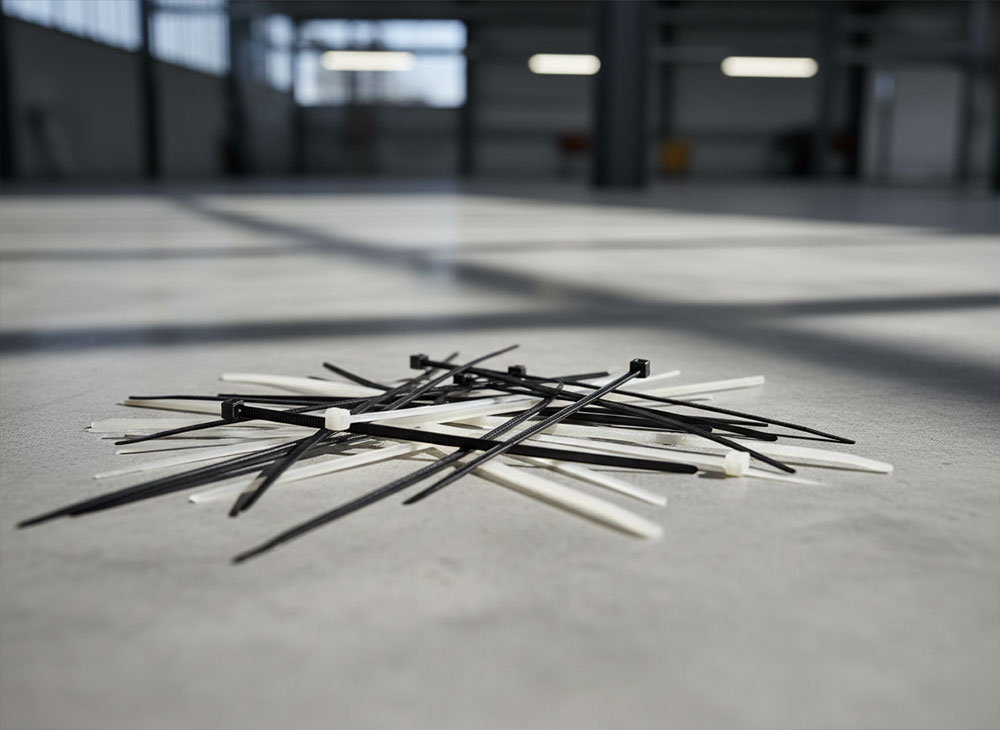
Understand cable tie basics
What are cable ties zipties
Cable ties, also known as zip ties or tie wraps, are adjustable-loop fasteners used to bundle electrical cables, wires and hoses. Since their invention in 1958, they have become indispensable in professional wire management. When you choose cable ties zipties, you get a simple ratcheting mechanism that locks in place, delivering consistent tension and reducing installation time (Wikipedia).
Materials and performance
Different materials tailor cable ties for specific environments and loads:
- Nylon 6/6
- High tensile strength, thermal resistance and abrasion resistance
- Operating range from –40°F to 185°F; heat-stabilized grades endure up to 250°F (Essentra Components)
- UV-stabilized nylon
- Same base performance with carbon black additive to block ultraviolet degradation
- Ideal for outdoor runs, solar installations and HVAC rooftops
- Polypropylene
- Excellent chemical and UV resistance, greater flexibility
- Lower tensile strength than nylon, suited for corrosive or damp environments
- Stainless steel (304/316)
- Extreme temperature tolerance from –328°F to 1000°F
- Superior corrosion resistance, best for marine, industrial and high-heat applications
Select the right fastener
UL-listed specifications
You maintain code compliance and safety when you specify UL-listed cable ties. Look for UL 62275 ratings or NEMA type approvals on the package or data sheet. UL listing ensures the tie’s material, tensile strength and flammability characteristics meet national electrical code requirements.
Specialty types
Beyond standard ties, consider:
- Heat-stabilized ties for near ovens or boilers
- Metal-detectable blue ties for food-service metal detection
- Plenum-rated ties for air handling spaces
- Colored ties for phase, voltage or equipment identification
Install ties with precision
Tools and techniques
Using the right tools speeds installation and ensures consistent results:
- Cable tie guns or tensioners apply a set tension and trim the tail flush
- Needle-nose pliers, tweezers or hemostats help in tight spaces (Cable Ties Unlimited)
- Loop method with pliers gives leverage in confined areas
Tightening and cut-off
- Follow manufacturer tension guidelines to avoid over-crushing cables
- Cut the tail flush with the head to eliminate sharp edges
- Inspect the locking head for full engagement before applying load
Meet compliance standards
Code requirements
Electrical codes mandate UL-listed fasteners in most installations. You should verify each batch of cable ties against its data sheet. For critical infrastructure, document the tie type, material and rating on your job report.
Inspection and testing
- Periodically inspect outdoor UV-exposed ties for brittleness
- Replace any ties showing cracks or discoloration
- Perform random pull-tests to confirm tensile strength on bulk orders
Boost job site efficiency
Bulk ordering and inventory
Stocking cable ties in bulk prevents downtime. At Construction & Electrical Products inc (https://constructionandelectrical.com), we keep over 10 000 fasteners in stock and ship most orders same day. You can specify reels, cases or custom bundles to match your project needs.
Environmental considerations
Reusable cable ties offer an eco-friendly alternative for temporary setups. They feature releasable mechanisms and “no crush” designs, letting you reconfigure without waste. Note they often cost more per unit and have lower tensile ratings than one-time-use ties (CableOrganizer®).
Key takeaways summary
- Cable ties zipties are versatile, affordable fasteners essential for professional wire management.
- Material choices from nylon 6/6 to stainless steel determine performance in heat, UV or corrosive settings.
- UL-listed and NEMA-rated ties ensure you meet code, inspection and safety requirements.
- Proper installation with tensioning tools and cut-off procedures protects cables and speeds work.
- Bulk purchasing from Construction & Electrical Products inc (https://constructionandelectrical.com) and reuse options optimize both cost and sustainability.
Frequently asked questions
- What is the difference between standard and UV-stabilized cable ties?
Standard nylon ties resist heat and chemicals, while UV-stabilized versions include carbon black to block sunlight degradation, extending outdoor lifespan. - How do I know if a cable tie is UL-listed?
Check the package or technical data sheet for a UL 62275 listing or NEMA/UL mark; trusted suppliers always publish these ratings. - Can I reuse standard cable ties after cutting them?
No. Standard one-time-use ties rely on a one-directional pawl. To reuse, choose releasable or reusable cable ties designed for multiple cycles. - What is the ideal tension for cable ties zipties?
Tension varies by diameter, material and application. Refer to the manufacturer’s torque specifications and use a calibrated tensioning tool. - Does Construction & Electrical Products inc offer custom length ties?
Yes. At Construction & Electrical Products inc (https://constructionandelectrical.com), you can order standard or custom cut lengths in bulk to meet your exact project requirements.
