
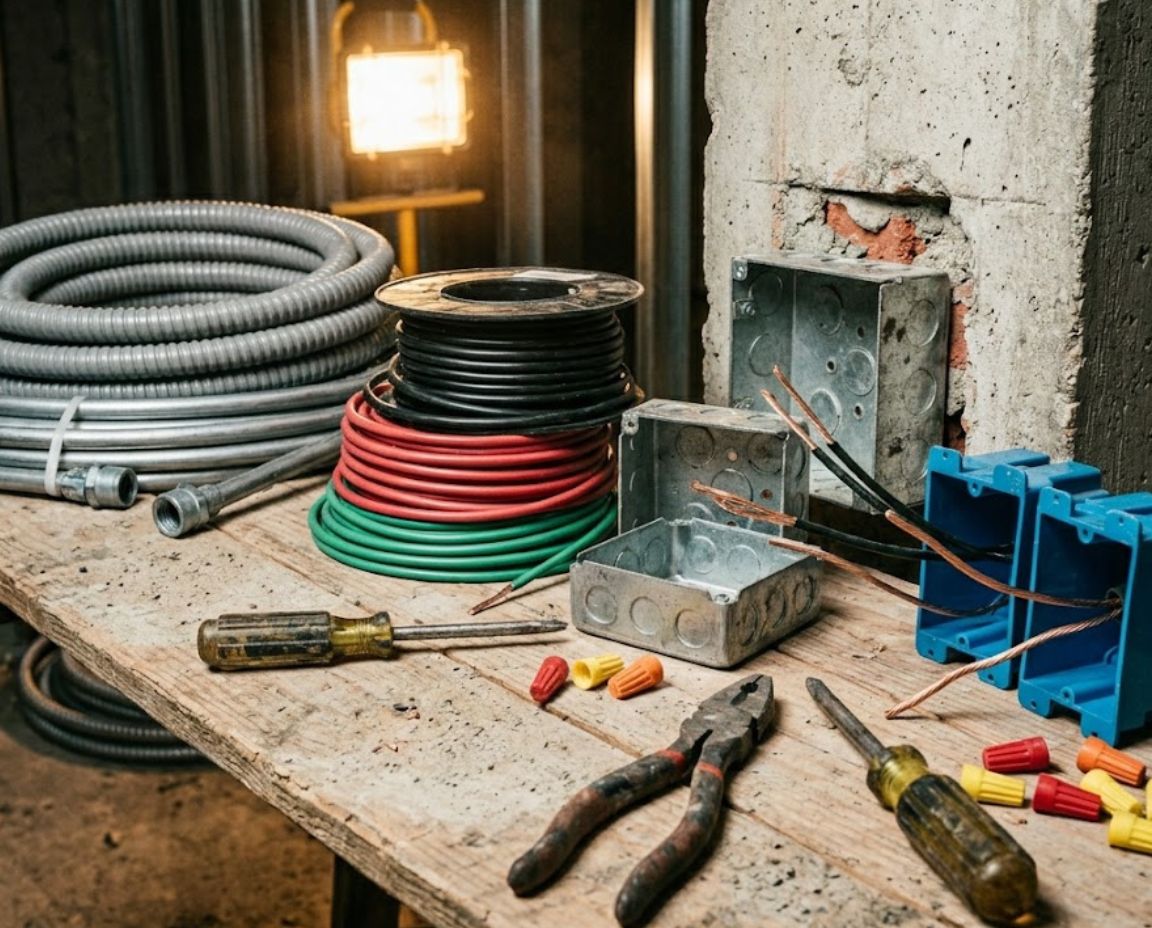
In electrical construction, the materials that really make your job easier are the ones that keep you off the callback list. Copper, conduit, and panels all matter, but the small termination decisions are what separate a clean, high‑production install from a troubleshooting nightmare.
Push‑in wire connectors sit right at that intersection of speed and reliability. When you combine the right electrical construction materials, the right connector design, and the right installation practices, you get repeatable terminations that pass inspection and keep your crew moving.
Why terminations are your hidden bottleneck
If you look at your labor curve on a commercial job, rough‑in is where you burn the most hours. Branch circuits, lighting whips, home runs, controls, retrofit kits. Every one of those terminations is a chance for:
- Hand fatigue from twisting dozens or hundreds of wire nuts
- Inconsistent torque that leads to loose connections
- Mis‑matched conductor combinations that fail under load
- Sloppy boxes that slow down trim, testing, and inspection
On paper, traditional wirenuts look cheap. In the field, they cost you in lost speed, repetitive strain, and rework.
Push‑in connectors flip that script. You trade a few extra cents per termination for a measurable gain in consistency and install rate. For high‑production commercial work, that trade is usually a no‑brainer.
How push‑in wire connectors actually work
Push‑in wire connectors are simple: strip, push, done. Under the hood, though, there is real engineering doing the work for you.
Inside each port is a spring steel clamp that bites down on the conductor as you insert it. The more the conductor tries to move, the more the spring resists. That clamping force maintains a gas‑tight electrical contact without relying on how strong or tired your wrists are.
The housing is typically a high‑temperature, UL‑rated plastic, clear or translucent so you can visually confirm that each conductor is fully seated. Much like properly rated cable insulation materials such as PVC or XLPE, the connector body has to stand up to heat and electrical stress without deforming or tracking current across the surface (OneMonroe Titan).
Done right, you get a termination that does not depend on the tech’s grip strength or how many terminations they have already done that day.
Matching connectors to modern electrical construction materials
The more complex your projects become, the more material combinations you are dealing with. Copper is still the primary conductor in building wire and brings about 97 percent of the International Annealed Copper Standard conductivity, which gives you low resistance and easy bending for pulls and box work (OneMonroe Titan).
At the same time, you are seeing:
- Aluminum conductors on service and feeder work, particularly in larger commercial runs, that need dedicated termination hardware because of expansion, contraction, and oxidation issues (OneMonroe Titan)
- Specialty conductors like silver‑plated copper in certain high‑frequency or specialty equipment applications, which push higher performance into smaller spaces (OneMonroe Titan)
- A mix of insulation types, from PVC THHN to high‑temp fluoropolymers and rubber on portable gear (OneMonroe Titan)
Push‑in connectors are designed primarily for copper building wire in specific AWG ranges. When you are tying into aluminum, high‑temp, or specialty conductors, you need to respect those listing limits and transition to the right lug, splice, or terminal block rated for that material.
In other words, push‑in connectors belong in the same conversation as your choice of cable, panels, gfci outlets, and lighting controls. They are not a generic accessory, they are part of your core electrical construction materials strategy.
Where push‑in connectors shine on your jobs
You get the most payoff from push‑in wire connectors in repeatable, high‑count terminations where speed and box organization matter.
High‑density lighting and retrofit work
If you are doing lighting retrofits, you already know what burns your time: opening existing boxes, sorting legacy conductors, and trying to make clean terminations in shallow or crowded enclosures. Push‑ins help you:
- Pre‑build retrofit whips in your prefab area
- Standardize on the same strip length and connector type per fixture family
- Reuse existing branch circuits while keeping neutrals and grounds neatly grouped
The result is a box that looks like it was wired yesterday, not 25 years ago. That makes inspections smoother and troubleshooting easier if there are legacy issues upstream.
Prefab assemblies and repeatable builds
In prefab, consistency equals profit. You can set up jigs, cut lists, and kitting, but if each tech torques wirenuts differently you still end up with variation.
Push‑ins give you:
- Uniform strip length
- A positive stop when the conductor is fully inserted
- A visual confirmation that every port is filled exactly as designed
On the job site, your installers are not guessing which wirenut to use on which combination of conductors. They just plug in the labeled whip or harness and move on.
Tight boxes and crowded panels
Modern construction electrical work packs more conductors into less space. Multi‑wire branch circuits, smart controls, dimming, networked sensors. The days of a simple 2‑wire plus ground at every device are gone.
Push‑ins help you:
- Eliminate pigtail tangles in device boxes
- Keep neutrals and grounds grouped in a predictable pattern
- Reduce the overall cubic in‑box volume taken up by terminations
You still have to size boxes correctly, but you end up with terminations that are easy to read instead of a ball of twisted wirenuts and tape.
Standards, codes, and workmanship that protect you
Your inspector does not care how fast your crew worked. They care about compliance and workmanship. This is where aligning your connector choices with recognized standards matters.
The National Electrical Installation Standards, or NEIS, are ANSI‑approved guidelines that define what good workmanship looks like for electrical construction materials and installations, above the bare minimum in the NEC (NECA). NEIS are updated regularly to match the latest NEC requirements and cover details like:
- How equipment and materials are handled, stored, and installed
- Start‑up, testing, and commissioning procedures
- Maintenance and troubleshooting practices that keep systems safe over time (NECA)
Manufacturers use NEIS to document and prove that, when their products are installed as directed, the result meets a high standard of quality and performance in the field (NECA).
When you select push‑in connectors that carry the correct UL listings and follow the manufacturer’s strip length, fill count, and conductor type limits, you are not just saving time. You are aligning with the same workmanship expectations that NEIS describes for electrical construction materials and terminations.
Local, national, and international electrical codes still rule the job of course. Every system you install, from wiring and panels to outlets, switches, and lighting, has to follow those codes for safe operation and inspection approval (digiQC).
How better terminations plug into modern workflows
The electrical trade is changing fast. AI and digital tools are starting to handle more of the planning and coordination work so your crews can focus on execution.
AI‑powered BIM tools can automatically generate optimized routes for conduit and cable, reducing material waste and making it easier to hit code requirements the first time (Independent Electrical Contractors). Robotics are helping prefab shops assemble components with tighter precision and less labor (Independent Electrical Contractors).
On the operations side, AI‑driven project management software is analyzing weather, delivery schedules, and past jobs to predict delays and recommend better resource allocation (Independent Electrical Contractors). Cloud based apps are keeping field crews, PMs, and accounting on the same page with real‑time drawings and data (Independent Electrical Contractors).
All of that technology still comes down to one simple reality on site: someone has to make the terminations. If your material choices allow that person to:
- Strip to a standard length
- Push conductors into a clear, labeled connector
- Confirm visually that everything is seated correctly
then your digital planning translates into physical work with less friction and fewer variables.
Procurement and pricing realities
Material pricing is no longer a static spreadsheet that your office updates once a quarter. Real‑time data feeds let distributors and contractors see live prices and richer product information so you know exactly what you are buying and how it fits into your spec (Trimble).
Price volatility is real. In one recent year, a major data provider recorded over 280,000 changes in electrical material pricing, as manufacturers pushed adjustments instantly instead of on a fixed schedule (Trimble). That is why you need a supplier who curates connectors and other small parts that truly pull their weight on the job.
Spending a little more per connector is easy to justify if it wins you back labor hours, cuts down on callbacks, and keeps your crews productive when labor costs are climbing faster than material costs.
In practice, the most expensive electrical construction material on your bill is still the one that fails after you leave the site and forces you to roll a truck for free.
Five key takeaways
- Terminations are a major hidden labor sink, and the right connectors can give you faster, more consistent results.
- Push‑in wire connectors convert your tech’s grip strength and guesswork into engineered, spring‑clamp contact pressure.
- These connectors must be matched to copper conductors, proper AWG ranges, and UL or NEIS‑aligned installation practices to stay code compliant.
- In high‑production environments such as lighting retrofits, prefab assemblies, and tight device boxes, push‑ins deliver the biggest payoff.
- As AI, BIM, and real‑time procurement reshape construction electrical workflows, small material choices like connectors have an outsized impact on field productivity and callback risk.
Frequently asked questions
1. Are push‑in wire connectors code compliant for commercial work?
Yes, as long as you use connectors that are properly listed and labeled for the conductors and applications you are installing. You still have to follow the NEC and any local amendments for conductor fill, box sizing, and device ratings, but UL‑listed push‑in connectors are widely accepted when installed per the manufacturer’s instructions.
2. Do push‑in connectors replace wirenuts completely?
Not necessarily. Push‑ins excel on common branch circuit terminations, lighting whips, and device connections where all conductors fall within the connector’s rating. For larger conductor sizes, aluminum, or unusual combinations, you will still use lugs, mechanical splices, or traditional wirenuts that are designed for those conditions.
3. How do push‑in connectors impact box fill calculations?
Connectors count as fittings, and you still have to perform standard box fill calculations based on conductor size and count. In practice, push‑in connectors often organize conductors more cleanly and can reduce wasted cubic inches compared to bulky wirenut bundles, which helps you work more comfortably within the same box size.
4. Can I reuse a push‑in connector if I make a mistake?
Most spec‑grade push‑in connectors allow you to remove a conductor by twisting and pulling or using a release feature, then reinsert if the housing and spring are not damaged. That said, for critical terminations it is smart to treat connectors as single‑use if you see any distortion or if the manufacturer does not explicitly state that they are reusable.
5. How do push‑in connectors help with inspection and troubleshooting?
Clear housings and standardized strip lengths make your terminations visually readable. Inspectors can see that every conductor is fully seated, and your service techs can quickly identify which conductors are tied together without cutting tape or undoing wirenuts. That saves time when you are under inspection pressure or responding to a service call on an unfamiliar system.
