
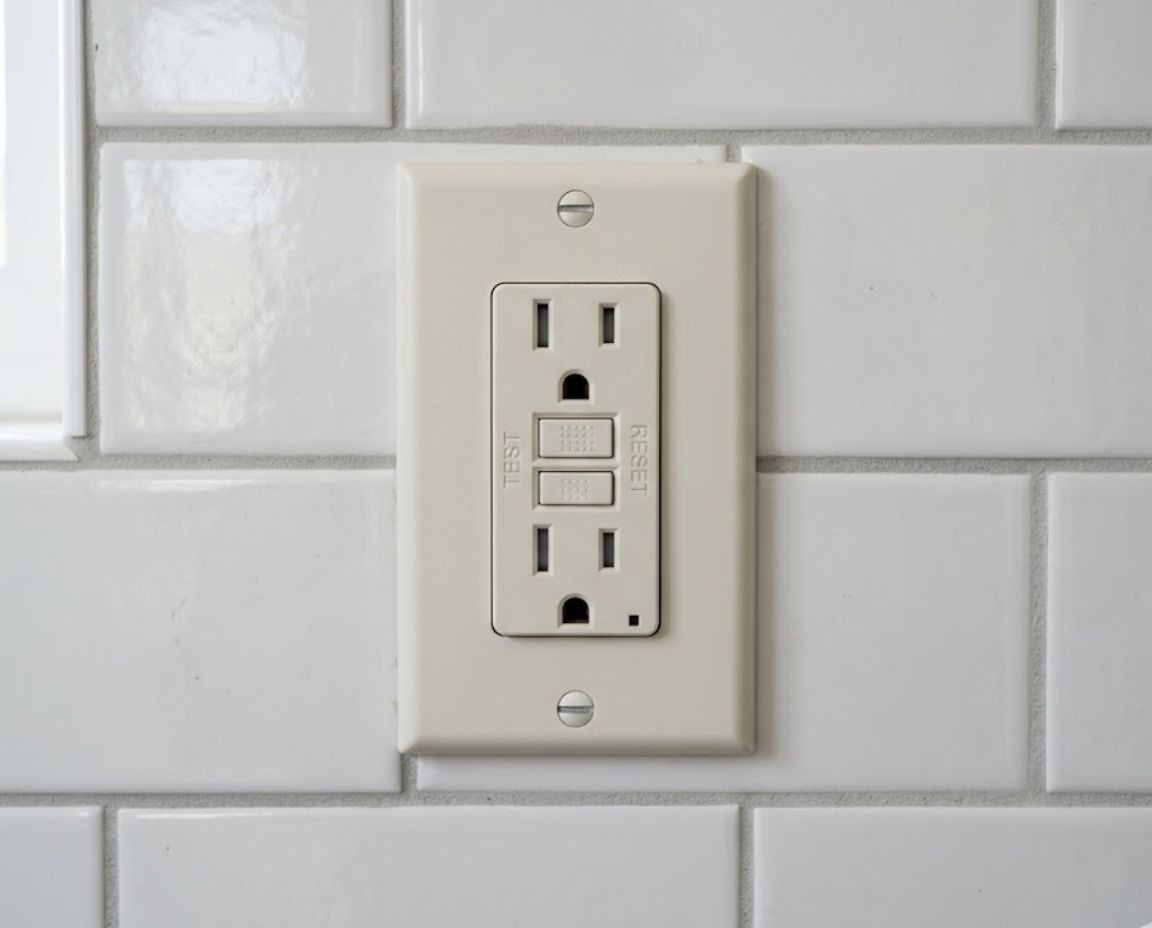
Why gfci outlets are your best problem solver
If you work in high volume projects, you are not paid to chase nuisance trips, callbacks, or failed inspections. You are paid to keep circuits live, safe, and passed on the first visit. Used correctly, GFCI outlets let you do exactly that.
Modern gfci outlets protect people by monitoring the current on hot and neutral and cutting power when they see an imbalance as low as 4 to 6 mA, usually within one‑thirtieth of a second (HowStuffWorks, Legrand). When you combine that level of protection with fast terminations such as push‑in wire connectors, you cut both risk and labor time.
This guide shows you how to use gfci outlets as a troubleshooting tool so you save time, reduce stress, and avoid repeat visits.
Use gfci outlets as a first line diagnostic tool
Most homeowners see a gfci receptacle as a fancy outlet with two buttons. You can use it as a built in meter and switch that tells you a lot about the circuit if you wire and test it correctly.
When a gfci trips unexpectedly, it is reacting to leakage current, not overload. That difference lets you quickly separate bad devices, bad wiring, and bad terminations. GFCI outlets monitor hot versus neutral and trip any time current takes a different path, often through moisture or damaged insulation (HowStuffWorks).
If you are already using push in wire connectors in your boxes, you are starting from a position of strength. A secure, consistent termination means that when a gfci trips you can trust the joint and look elsewhere, instead of wondering which wire nut loosened during drywall.
Map the circuit quickly with one gfci
On retrofit work and older buildings, you do not always know how many receptacles or loads are downstream. Instead of spending an hour ringing circuits, you can let a gfci show you what it is actually protecting.
Start by identifying the first receptacle in the run. Kill power, open the box, and you typically see one feed cable and at least one load cable. Terminate those conductors into push in wire connectors, then land pigtails on the gfci. Use the LINE side for the feed and the LOAD side for downstream.
Once you restore power and hit reset, everything downstream that dies when you trip the gfci is now mapped to that device. If some outlets stay live, they are not on that load circuit and you save yourself from tracing the wrong run through finished walls.
This is also where you can protect multiple locations with a single device instead of installing standalone gfci outlets at every point. That cuts material cost and saves rough‑in time, especially in larger construction electrical projects.
Diagnose nuisance tripping instead of guessing
Random trips are one of the biggest sources of callbacks. A customer blames the gfci, you know it is almost never that simple. A structured approach lets you clear the issue fast.
Moisture is usually the first suspect. Bathrooms, garages, basements, and outdoor spaces are all prone to dampness and condensation, which create leakage paths and ground faults (HowStuffWorks). In these areas, nuisance trips often tell you something is working correctly, not failing. You should be using weather resistant gfci receptacles with proper covers, gasketed enclosures, and moisture resistant cable where required (Bryant Heating, Cooling, Plumbing & Electric).
If you have ruled out moisture, look at the load mix. Shared neutrals in older panels and long multi‑wire branch circuits are common causes of unexplained trips. The gfci sees current returning on the wrong path and opens the circuit, even though the breaker never moves (Bryant Heating, Cooling, Plumbing & Electric).
Stub out questionable spurs into their own junction box, terminate with push in connectors, and temporarily remove segments of the circuit. By energizing one branch at a time you can find the section that is causing the ground fault without pulling apart every box on the job.
Use the reset button as a quick test plan
The reset button that homeowners love to press is your on site test instrument. When it will not stay in, the gfci is telling you something useful.
If the reset will not latch, you know that either the device still sees an imbalance or the internal latch is worn out (Bryant Heating, Cooling, Plumbing & Electric). Disconnect everything on the LOAD side and try again with no downstream conductors. If it now holds, the fault is not the gfci. It is somewhere in the connected wiring or equipment.
At that point you can reconnect one downstream cable at a time, using your push in connectors as a simple plug and play system. No twisting, no tape, no stripped threads. One branch will reintroduce the imbalance and trip the device, and now you know exactly where to open the wall or pull a new run.
If the gfci still will not reset even with nothing on LOAD, replace it and move on. GFCI outlets typically last around ten years before wear makes them unreliable (HowStuffWorks). Swapping the device is faster than wasting time trying to rescue a worn unit.
Prevent downstream “dead outlet” service calls
Another time sink is the “half the room is dead” call where the homeowner has no idea that a single tripped gfci is feeding multiple outlets. You can prevent most of those visits at install.
When a functioning gfci feeds dead downstream outlets, the cause is usually a failed connection or a tripped device at the first gfci in line (Bryant Heating, Cooling, Plumbing & Electric). If you clearly mark the protected receptacles and show the customer where the main gfci lives, half of those calls never reach your dispatch board.
In prefab assemblies and lighting retrofits, you can also standardize your terminations so every load side feed is landed through color coded push in connectors. That visual cue makes it obvious which outlets are protected and which are not when a tech opens the box years later.
Most importantly, solid factory style terminations mean fewer failures. A loose back stab or poor twist on connector is a perfect candidate for arcing and intermittent open circuits. A correctly sized push in connector removes that variable and shortens your troubleshooting path.
Keep your installs compliant with current code
Gfci protection is no longer optional in the majority of wet or potentially damp areas. The NEC requires gfci outlets or equivalent protection in kitchens, bathrooms, laundry rooms, garages, unfinished basements, and outdoor spaces (Legrand). The 2023 NEC introduced updates that further expand where and how you must apply protection, both indoors and outdoors (Legrand).
You cannot afford to rough in a space twice because someone on the crew missed a new requirement. Building gfci checks into your prefab and QA process is one of the fastest ways to avoid rework. For example, you can:
- Standardize label sets on all protected circuits
- Use templates that call out gfci placement in each room type
- Pre‑wire LINE and LOAD harnesses with push in connectors so field crews cannot mix them up
Since gfci outlets have greatly reduced shock related electrocutions in residential settings, dropping annual deaths from about 800 to roughly 200 (HowStuffWorks), inspectors are not lenient when protection is missing. You are better off being conservative and installing gfci protection wherever there is a reasonable chance of moisture or outdoor use.
Upgrade to advanced gfci technology when it makes sense
Not every project needs advanced gfci hardware, but on high value commercial work or smart builds, modern features can reduce your lifetime service load.
Some current gfci outlets ship with built in surge suppression and remote trip monitoring through smartphone apps or building automation systems (Bryant Heating, Cooling, Plumbing & Electric). Combination devices that offer both gfci and AFCI protection safeguard against ground faults and arc faults in a single unit.
When you pair these devices with clean panel terminations and prefabbed whip assemblies using push in connectors, you can:
- Log where trips occur without rolling a truck
- Identify chronic problem loads before they fail hard
- Simplify panel schedules because one device provides multiple protections
These advanced devices need proper load calculations and compatibility checks with the overall system, so you should treat them as part of your total construction electrical design, not as last minute substitutions.
Why push in wire connectors belong in every gfci box
Every minute you spend per box is multiplied across hundreds or thousands of terminations on a large job. You already know that twist on wire nuts slow your crew and create more hand fatigue than they are worth on production work. Gfci circuits are a perfect place to get the benefit of push in connectors.
With multiple pigtails, feed through conductors, and sometimes shared neutrals, gfci boxes can become crowded fast. Push in wire connectors give you consistent, compact terminations that reduce the chance of a stray strand shorting to the yoke or box.
They also make future troubleshooting far easier. Instead of cutting back taped bundles and rebuilding a joint every time you open a box, you can pull conductors out of a push in connector, test, and reinsert them. Your tech is in and out faster, and your customer sees a clean, professional interior.
In a high production environment, you do not get bonus points for heroic troubleshooting. You get paid for circuits that pass inspection and stay online without callbacks. GFCI outlets combined with fast, repeatable terminations are one of the simplest ways to get there.
Key takeaways
- Use gfci outlets as a diagnostic tool, not just a safety device, by watching how and when they trip.
- Map downstream circuits from a single gfci to cut troubleshooting time and reduce material counts.
- Treat nuisance tripping as useful data about moisture, shared neutrals, or failing loads, not random behavior.
- Standardize push in wire connectors on gfci circuits to improve reliability, speed, and future serviceability.
- Stay ahead of NEC updates and leverage advanced gfci technology where remote monitoring and combined protection save long term labor.
Frequently asked questions
1. How often should you test gfci outlets on your projects?
You should test every gfci at final walk‑through and encourage clients to test monthly using the built in Test and Reset buttons. Regular testing is important because older gfci designs can fail in a way that still passes current, while newer units are designed to fail open and stop working altogether (HowStuffWorks).
2. When should you replace a gfci outlet instead of troubleshooting further?
If the reset button will not latch even with all LOAD conductors removed, or if the device trips immediately under a known good test load, replace it. Gfci outlets typically have a service life of about ten years, so on older renovations, proactive replacement is usually faster and safer than extended diagnosis (HowStuffWorks).
3. Why do some customers complain that their exterior gfci trips during bad weather?
Exterior and damp location gfci outlets are vulnerable to moisture intrusion that creates leakage paths to ground. That is exactly what gfci technology is designed to detect. Using weather resistant gfci receptacles with gasketed, in‑use covers and moisture resistant cable can significantly reduce nuisance tripping in these conditions (Bryant Heating, Cooling, Plumbing & Electric).
4. Can a shared neutral circuit ever be reliably protected by a gfci outlet?
Yes, but only if the shared neutral and both hots are protected together so that the device sees all current paths. A single gfci on one leg of a multi wire branch circuit will often trip unexpectedly because return current is flowing on a conductor the device is not monitoring. In older buildings, correcting shared neutrals can be one of your most effective time savers (Bryant Heating, Cooling, Plumbing & Electric).
5. Where are gfci outlets absolutely required by current code?
Under the NEC, you must provide gfci protection anywhere there is a reasonable chance of water or dampness, including kitchens, bathrooms, laundry areas, garages, unfinished basements, and outdoor spaces (Legrand). Local amendments can be even stricter, so you should always verify with the authority having jurisdiction for each project.
