
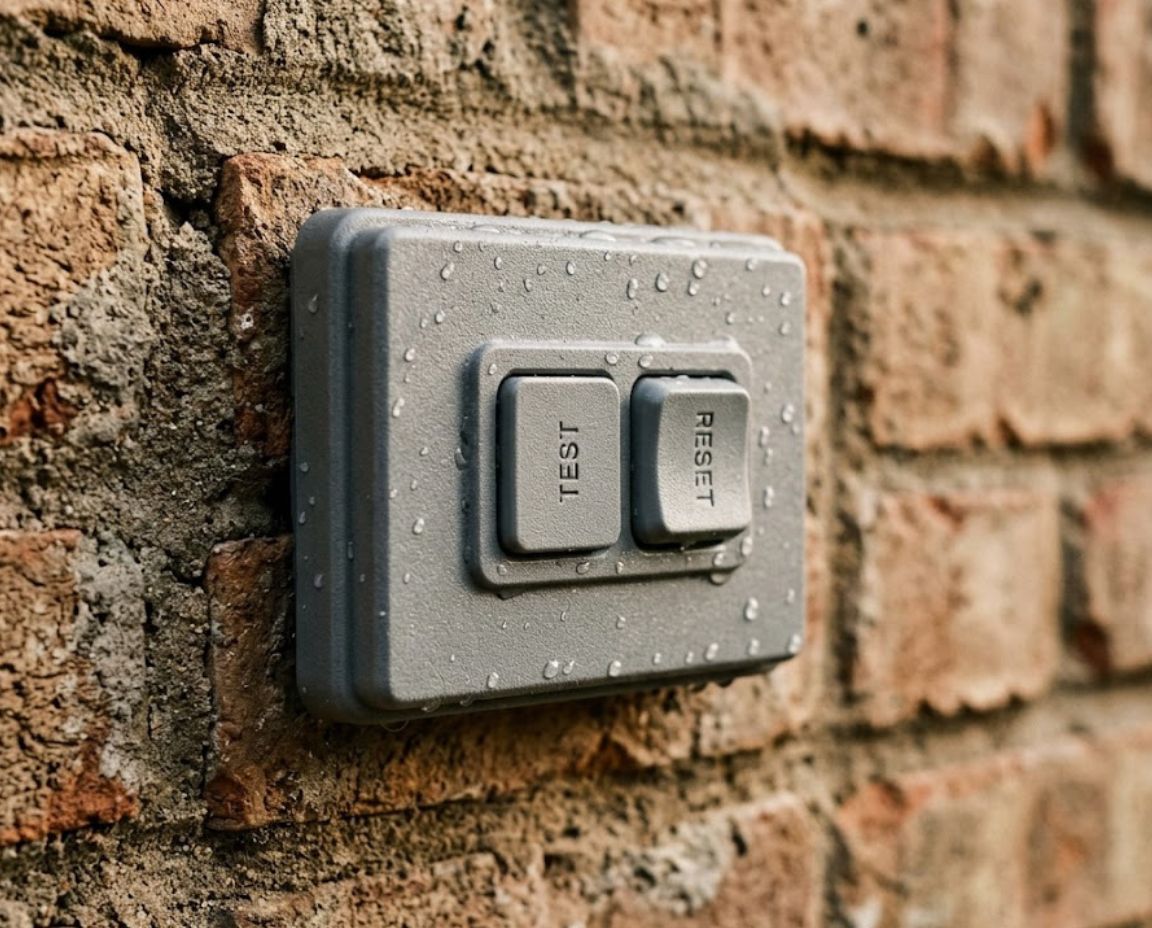
Weather resistant GFCI receptacles are one of those small line items that either save you callbacks for the next decade or have you chasing nuisance trips and failed inspections all summer.
If you are running circuits across patios, rooftops, parking lots, or wet exterior walls, you cannot treat outdoor protection like an afterthought. You need weather resistant GFCI devices that survive rain, humidity, pressure washing, and temperature swings, while still doing the one job that matters: tripping fast when there is a ground fault.
This guide walks you through how to choose the best weather resistant GFCI receptacles for your work, what features matter in the field, and which options make the most sense for high‑volume installs.
Why weather resistant GFCIs are non‑negotiable outdoors
Weather resistant GFCI receptacles are engineered specifically for moisture prone environments where standard indoor receptacles will eventually fail. They use more rugged materials, better seals, and construction that stands up to UV exposure, wind driven rain, and thermal cycling.
Manufacturers like Leviton design their weather resistant GFCI outlets to provide dependable ground fault protection in outdoor and damp locations such as patios, garages, and decks, where normal devices may not survive the elements long term (Leviton). They are part of how you meet code for exterior residential applications, and they should already be your default choice anywhere the receptacle will see regular moisture exposure.
When you combine a weather resistant GFCI with a proper in use cover and an extra duty weatherproof enclosure, you are building a system that protects people and equipment, reduces your liability, and cuts down on repeat truck rolls for failed devices.
Key features to look for in weather resistant GFCI receptacles
When you spec weather resistant GFCI receptacles for production work, you are balancing three things: safety, speed, and durability. You are not just trying to satisfy the electrical inspector. You are trying to standardize on devices your crew can install quickly and that you will not be replacing under warranty.
1. Amperage rating that matches the circuit
In the residential and light commercial world, you are typically choosing between 15 amp and 20 amp GFCI receptacles. Weather resistant GFCIs are widely available in both ratings, specifically for outdoor use and harsh conditions (Amazon).
Match the device to the breaker and conductor size, keep your spec sheet simple, and avoid introducing nonstandard ratings that confuse your crew in the field.
2. Verified weather resistant construction
“Weather resistant” is not a marketing term. It is a specific design and material requirement. True weather resistant GFCI receptacles use UV resistant plastics, corrosion resistant screws and contacts, and construction that is tested for rain, humidity, and temperature variations (Leviton).
Visually, a WR device can look like a standard interior GFCI. Do not guess off of color or finish. You want the WR marking and clear labeling that the device is rated for outdoor and damp location use.
3. Self‑test technology and LED indicators
Most current generation weather resistant GFCIs include automatic self‑testing and an LED status indicator. Many of the weather resistant devices listed on Amazon feature self test capabilities that continuously verify functionality and signal status via an LED, so the user can see at a glance if the receptacle is working or needs attention (Amazon).
For you, the benefit is simple: fewer dead devices that sit unnoticed for years. A quick look at the indicator during a service call tells you if the device passed its last self test or locked out for safety.
4. Tamper resistant protection where required
Most jurisdictions now require tamper resistant receptacles in residential settings, including outdoors. Many weather resistant GFCI receptacles ship with tamper resistant designs that prevent foreign objects from being inserted, which is especially important around children and in areas like exterior bathrooms or pool decks (Amazon).
Standardizing on WR + TR devices reduces your ordering complexity and keeps your crews from accidentally installing a non compliant device where tamper resistance is mandated.
5. Enclosures, covers, and wallplates that survive abuse
Your GFCI is only as good as the box and cover you put around it. Many weather resistant GFCI offerings include screwless wallplates, lockable in use covers, and extra duty weatherproof enclosures, all designed to maintain long term protection and meet UL or ETL listings in wet environments (Amazon).
If you are doing high volume exterior work, you want a standardized kit: WR GFCI, extra duty in use cover, and box rated for the environment. Your team should not be guessing which cover to grab each time they hit an outdoor outlet.
Top weather resistant GFCI options for high‑volume work
You do not need 15 different GFCI SKUs on your shelf. You need a small, well chosen lineup that covers 90 percent of your exterior work and keeps inventory management simple.
Below is a summary of the most useful feature sets you should be standardizing around.
| Type / Feature Set | Best for | Key advantages |
|---|---|---|
| 15 A WR GFCI, TR, self test | General exterior receptacles | Code compliant in most residential settings, LED indicator reduces guesswork during service (Leviton) |
| 20 A WR GFCI, TR, self test | Dedicated 20 A outdoor circuits, garages, workshops | Handles heavier loads while still providing weather resistance and tamper protection (Amazon) |
| WR GFCI with screwless wallplate | Finished exteriors, visible locations | Clean look, faster plate install, less chance of cracking plates with over‑tightened screws (Amazon) |
| WR GFCI in extra duty in use cover kit | Open exposure, hose down areas | Keeps receptacle protected while in use, meets current code requirements for in use covers (Amazon) |
| Bulk pack WR GFCIs (10+, 20+, 48‑pack) | Subdivision work, large exterior projects | Lower unit cost, consistent spec across the entire project, simplifies prefab pulls (Amazon) |
The specific brand you choose is less important than making sure every device on that list is actually marked weather resistant and listed for the application. Do not let lookalike standard GFCIs sneak into your outdoor bins.
How to match GFCI specs to real‑world applications
Choosing the right weather resistant GFCI receptacle is about understanding the environment and the load, then selecting a device that will survive both.
Outdoor living spaces and patios
For typical decks, balconies, and outdoor living areas, a 15 A WR, tamper resistant, self‑test GFCI will usually cover you. Pair it with an extra duty in use cover wherever the receptacle will power holiday lights, grills, or plug‑in heaters.
These are the circuits that homeowners abuse the most. You want rugged construction that can deal with seasonal plug and unplug cycles, weather exposure, and the occasional power washer hit.
Garages, workshops, and outbuildings
In garages and small workshops, you will often be on 20 A circuits feeding tools, compressors, or small heaters. This is where a 20 A weather resistant GFCI, preferably tamper resistant and self testing, makes sense (Amazon).
Where humidity is high or the space is partially open to the exterior, treat it like an outdoor application. Use WR rated devices, not just standard indoor GFCIs.
Exposed exterior walls and service locations
On true exterior walls that see wind driven rain, snow, or direct sun, you want the full stack: WR GFCI, corrosion resistant hardware, and an extra duty in use cover and weatherproof box. This is where Leviton emphasizes long term safety and durability in their exterior GFCI designs (Leviton).
Think about hose bibb locations, pool and spa equipment, exterior sump pits, and rooftop mechanical units. These are high risk spots for water ingress. Your device choice should reflect that.
High‑volume and prefab workflows
If you are running a prefab shop or high‑production crew, you will see gains from standardizing a small set of WR GFCI SKUs and buying them in multi packs. Many weather resistant GFCI receptacles are sold in 10‑pack, 12‑pack, or even 48‑pack quantities, which makes them suitable for large projects and keeps your per‑device cost under control (Amazon).
Prefab assemblies can ship with the GFCI already installed in the box and cover, so your field crew only has to land the conductors and mount the assembly. This is where you see the real labor savings.
Installation details that prevent callbacks
You already know how to wire a GFCI. Where many projects fail is not the wiring, it is the small details that wreck long term performance outdoors.
Make sure your crew is doing the following every time:
- Use the WR rated device, not a standard interior GFCI that looks similar.
- Verify line vs load terminations and torque terminals to the manufacturer’s spec.
- Use an appropriately rated gasket or in use cover and check that the cover closes with cords plugged in.
- Seal the top and sides of the box to the wall surface where required, so water does not track into the box.
- Test the device on completion and make sure the LED shows a normal status where applicable.
If you are already investing in better connectors, faster terminations, and prefab assemblies to speed up your rough‑in work, it makes no sense to cut corners on a $20 device that sits on the exterior wall and carries your name.
5 key takeaways
- Weather resistant GFCI receptacles are purpose built for outdoor and damp environments and are required to meet exterior code requirements in many applications (Leviton).
- Look for WR marking, self test functionality, LED status indicators, and tamper resistant features to reduce nuisance issues and improve safety (Amazon).
- Standardize on a small set of 15 A and 20 A WR GFCIs with matching covers and enclosures to simplify inventory and speed up installs.
- Use extra duty in use covers and weatherproof boxes anywhere the receptacle will see direct exposure or be used while wet.
- Buy WR GFCIs in bulk packs for large projects and prefab workflows to control cost and maintain consistent specifications across every install (Amazon).
Frequently asked questions
1. What is the difference between a weather resistant GFCI and a standard GFCI?
A weather resistant GFCI uses materials and construction designed to withstand outdoor conditions like rain, humidity, UV exposure, and temperature swings. Standard GFCIs are intended for dry, indoor environments and may corrode or fail prematurely outdoors. WR devices are tested and listed specifically for damp and wet locations (Leviton).
2. Do I still need a weatherproof cover if I use a weather resistant GFCI?
Yes. The weather resistant rating applies to the device itself, not to its installation environment. Code typically requires an in use weatherproof cover for outdoor receptacles, especially where they will be used while cords are plugged in. Using a WR GFCI plus an extra duty in use cover provides layered protection.
3. Are tamper resistant features required on outdoor GFCIs?
In most residential applications, tamper resistant receptacles are required in all areas accessible to occupants, including outdoors. Many weather resistant GFCIs are also tamper resistant, which helps you stay compliant without needing a separate SKU for exterior locations (Amazon).
4. How often should I test a weather resistant GFCI receptacle?
You should instruct the end user to follow the manufacturer’s guidelines, typically monthly testing using the built in test button. Self test GFCIs perform automatic checks, but a manual test at turnover and during routine maintenance is still good practice.
5. When should I choose a 20 amp weather resistant GFCI instead of 15 amp?
Use a 20 A WR GFCI when the branch circuit is 20 A with 12 AWG conductors and the expected load includes higher current equipment such as tools, heaters, or larger appliances, like those often found in garages or workshops. Matching the receptacle rating to the circuit and load helps you avoid nuisance tripping and keeps the installation compliant (Amazon).
