
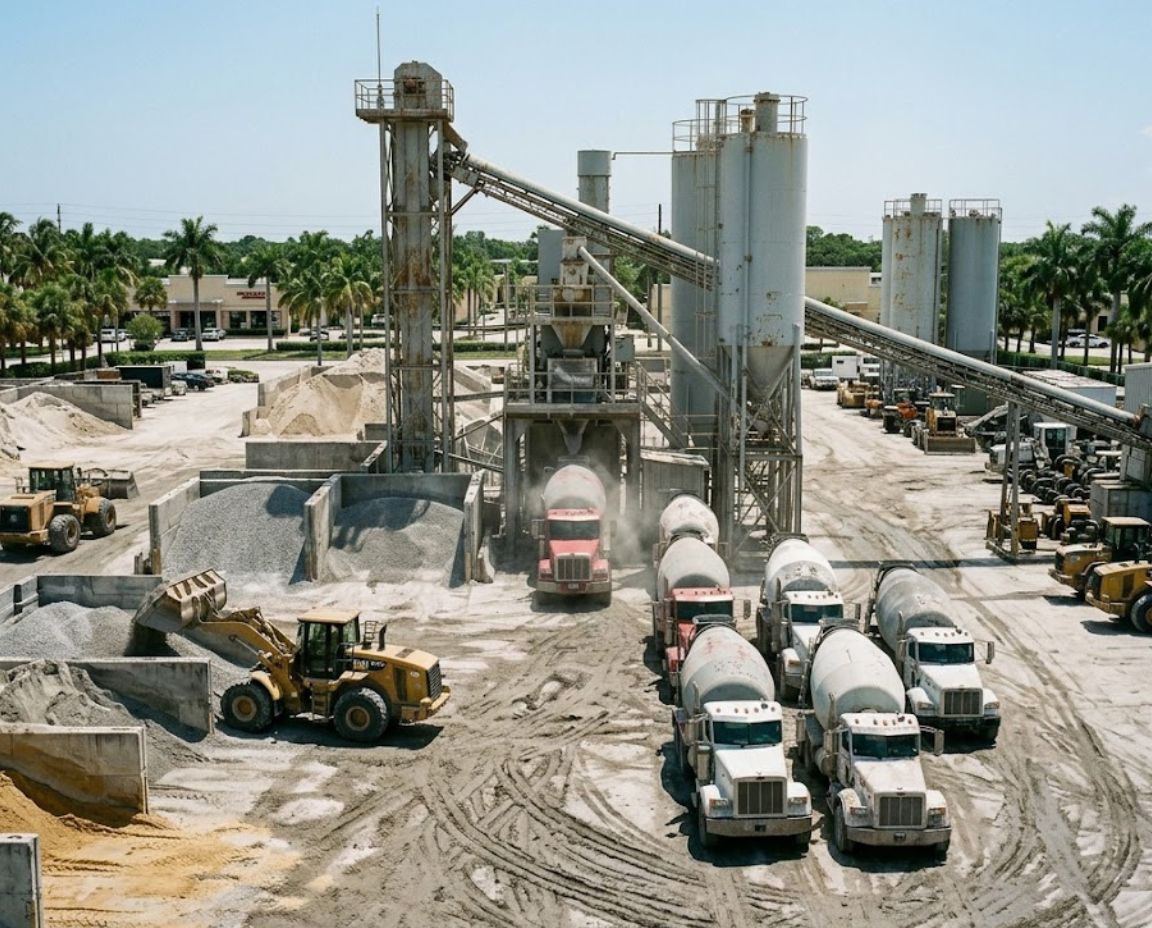
Why wholesale concrete problems start before the pour
If you are fighting slab failures, random cracking, or call backs on big floor pours, the problem usually does not start with your mix. It starts with how your steel is supported inside that wholesale concrete.
You can buy the best ready mix at $160 to $195 per yard in your region, but if the rebar sags to the subbase or floats to the surface because your slab bolsters and continuous chairs failed, you just turned premium concrete into a liability instead of a structural asset (Concrete Network).
This guide walks you through how to diagnose and fix the rebar support issues that quietly kill your margins, and how to protect your investment in wholesale concrete on every slab you place.
Symptom 1: Random cracking across the slab
When you see uncontrolled cracking that does not follow joints or expected stress lines, your first instinct might be to blame the mix or finishing. Often the real problem is that your reinforcement is not where the engineer detailed it.
Likely causes
- Rebar sitting on the subbase
Without the correct slab bolsters or continuous chairs, bar mats and mesh settle under foot traffic and during the pour. That leaves steel at the bottom third of the section instead of at mid‑depth, which dramatically reduces crack control. - Chairs punching into the vapor barrier or subgrade
If you use sharp metal chairs without proper base plates or high point loads in soft subgrade, the supports can sink. As they sink, so does your steel. - Improvised supports instead of spec hardware
Brick, broken block, scrap wood, or leftover PVC are not substitutes for continuous chairs. They create point supports and let the rest of the mat drape in between.
How to fix it
Focus on keeping your rebar elevation locked in place from layout to final set.
- Use continuous slab bolsters under bar mats in both directions for interior slabs. This spreads load and prevents sagging between support points.
- On heavier mats and industrial floors, use continuous high chairs paired with slab bolsters so the load is distributed and the bar stays at design cover.
- On vapor barrier applications, use plastic tipped or all plastic chairs so you do not puncture the membrane.
Your goal is simple: once the steel is set on chairs and bolsters, you should be able to walk the mat with minimum deflection and no direct contact with subbase.
Symptom 2: Failed inspections over cover and spacing
When inspectors start rejecting work for inadequate cover or bar spacing, you do not just lose time. You lose credibility and schedule.
Likely causes
- Wrong bolster height for slab thickness
Using a 1.5 inch slab bolster under steel in a 6 inch slab that is designed for 2.5 inches of bottom cover will fail inspection immediately. - Mixed hardware heights on the same pour
Crews grab what is on the pallet, not what is on the spec. That means you can end up with 1 inch chairs on one side of a panel and 2 inch chairs on the other. - Inconsistent bar chairs at edges and blockouts
Perimeter beams and depressed slabs often need different cover. If you do not adjust chair type and height, your edge conditions will be out of tolerance.
How to fix it
Lock your cover and spacing before concrete ever arrives.
- Match bolster size to design cover for each slab thickness
If you are placing a 6 inch slab with steel designed at mid‑depth, you need to be in the 2.5 to 3 inch support range. Work straight from your structural drawings. - Standardize SKUs for your crews
Limit the number of chair and bolster heights in your yard. Clearly label pallets so your team can identify 1 inch, 2 inch, 3 inch supports at a glance. - Use continuous chairs on repetitive work
Continuous high chairs and slab bolsters make it harder for crews to place steel incorrectly because the elevation is controlled along the whole run, not at random points.
If you are pouring regularly in one market, partnering with a dependable regional supplier simplifies this even further. For example, a local concrete supplier pompano beach can help you match mix designs and support hardware to your recurring project types and inspection trends.
Symptom 3: Rebar visible at the surface
Nothing kills owner confidence like seeing steel print through a new slab. Once that happens, you have two options, both expensive: patch and hope, or demo and replace.
Likely causes
- Over finishing thin cover areas
Aggressive bull floating and troweling on thin slabs can drag steel toward the top if rebar laps are not properly supported. - No top bar chairs in two‑mat systems
On heavily reinforced industrial floors or transfer slabs with top and bottom mats, lack of upper continuous chairs allows the top steel to sag and then float as the slab is worked. - Insufficient chair density under lapped bars
When you add splices or lap zones and do not increase support frequency, that additional weight can punch through the paste during vibration and finishing.
How to fix it
Think in terms of top steel as a separate system that needs its own continuous support.
- Use continuous top chairs for upper mats. Do not rely on wire ties alone.
- Increase chair spacing in lap zones and at corners where multiple bars converge.
- Coordinate with finishers so they understand where the top steel is and can watch for movement during early finishing passes.
If you are placing ready mix concrete that costs $120 to $150 per yard including delivery in 2026, a few cents per square foot in extra chairs is cheap insurance against ever seeing bar at the surface (LawnStarter).
Symptom 4: Budget overruns on material and labor
You know what your wholesale concrete should cost. You also know that your slabs are coming in over budget. Often the culprit is not the per yard price, it is the way you are buying and placing materials around that concrete.
Likely causes
- Under ordering then paying short load premiums
Many producers charge about $43 per yard extra when you order less than a full truck, usually under 10 yards (LawnStarter). If your support layout is inefficient, you end up with inconsistent thickness and surprise overages. - Slow unloading and overtime fees
If you are fighting sagging mats and last minute re‑shoring of steel during the pour, trucks sit and wait. Many concrete suppliers allow only 7 to 8 minutes per yard before overtime charges that can approach $70 per hour kick in (LawnStarter). - Too much manual rework during the pour
When slab bolsters are spaced too far apart or are tipping under load, your crew spends valuable time lifting bars, kicking chairs back into position, and trying to maintain cover under pressure.
How to fix it
Treat your support system as productivity equipment, not an afterthought.
- Design bolster and chair layouts that allow your crew to place and tie steel once. If you can walk the mat without significant bounce, you are close.
- Use continuous chairs to reduce the number of pieces handled. A single 5 foot chair that stays put is faster than placing 10 individual “pucks” that move.
- Coordinate pour rates with your supplier based on expected placement speed. Ready mix plants can typically deliver enough concrete to support 15 to 20 cubic meters per hour, but only if your crew is ready to receive it (GFP Mobile Mix Supply).
The more disciplined your reinforcement support system, the easier it is to order full trucks, unload them quickly, and avoid the nickels and dimes that eat your gross margin.
Symptom 5: Schedule delays from concrete logistics
You can have perfect rebar support and still get burned if your concrete supply cannot keep up with your pour sequence. Wholesale concrete is a volume business, and your schedule lives or dies based on how well you manage the supply chain.
Likely causes
- Long haul distances to the plant
Delivery fees often jump once you move beyond a 15 to 20 mile radius from the mixing site, with averages around $9.75 per mile beyond that range in some markets (LawnStarter). Long hauls also risk setting times before discharge. - Inflexible scheduling and no backup trucks
When the plant is far or overloaded, you end up with cold joints, partial placements, and re‑mobilizations. - Seasonal surcharges and slow winter curing
Cold weather mixes can add $5 to $7 per yard for heating and additives, and if you do not tighten up your pour and finish windows, you lose days waiting for strength gain (LawnStarter).
How to fix it
The same way you choose spec grade slab bolsters instead of random scraps, you should choose your concrete source with intention.
- Work with a local ready mix supplier to shorten haul distances. Local partners reduce transport costs, allow more flexible scheduling, and help you adapt mix designs to your real world placement rates (Callahan Concrete).
- Coordinate slab sizes with plant capacity. Your goal is steady truck cycles that match your placing and finishing crews, not big surges and dead zones.
- In winter, plan tighter pours and use quality support hardware so you can place steel quickly and get concrete on it without delays that drive up additive usage and labor.
A disciplined approach to both concrete supply and reinforcement support keeps your slabs on schedule and your equipment moving on to the next project.
Symptom 6: Inconsistent quality between projects
One week you pass inspection with compliments, the next week you are cutting out panels and arguing over who pays. That inconsistency almost always comes back to your standards for both concrete and reinforcement support.
Likely causes
- Changing suppliers and hardware every job
When you chase the lowest per yard price or cheapest chairs, you import variability into your process. - No standard details for chairs and bolsters
If every foreman has a different method, quality lives or dies with individual preferences instead of repeatable procedures. - Minimal coordination between engineer, supplier, and field
When your concrete producer, rebar fabricator, and field team are not aligned on cover and support strategy, each one assumes the others will make it work.
How to fix it
Move from job‑by‑job improvisation to a standard system.
- Create a simple support schedule
For each slab type you place regularly, document the required chair and bolster height, spacing, and configuration. Treat it like any other shop drawing. - Lock in trusted suppliers
Use reputable wholesale concrete producers and hardware vendors who maintain consistent quality control. Ready mix concrete is a massive global market worth hundreds of billions of dollars, and professional plants operate under strict standards like EN 206 and BS 8500 to deliver predictable mixes (Wikipedia). You want that same mindset in your rebar support partners. - Train your crews once, then repeat
Make slab bolsters and continuous chairs part of your standard toolbox, not a special item. When everyone understands why support matters, they stop cutting corners that cost you money.
Consistency is what turns wholesale concrete from a line item expense into a reliable profit center.
Field rule: if you are not fully confident in where your steel is sitting after the first truck leaves, you are taking a gamble on every yard that follows.
Key takeaways
- Wholesale concrete only performs to its design strength if your rebar is locked at the correct elevation using slab bolsters and continuous chairs.
- Most “mystery cracking” and inspection failures in slabs come from sagging or floating steel, not just mix or finishing issues.
- Continuous supports reduce labor, speed up pours, and help you avoid short load fees, overtime, and rework.
- Partnering with nearby ready mix suppliers stabilizes your cost per yard and protects you from schedule killing delivery problems.
- Standardizing your reinforcement support details across projects is the fastest way to gain consistent, inspectable results on every slab you place.
Frequently asked questions
1. How do I choose the right height slab bolster for my slab?
Start from the structural drawings, not from what you have in the yard. Determine the required cover from the bottom of the slab to the center of the bar or mat. Subtract half the bar diameter from that cover dimension, and that is the bolster height you need. For example, if you need 2.5 inches of cover to bar center and you are using No. 4 bar, you are looking at roughly a 2.25 to 2.5 inch bolster.
2. Are plastic chairs strong enough for heavy commercial slabs?
Quality plastic chairs and bolsters are engineered to handle the same loads as metal versions when used within their rated spacing. They are preferred over vapor barriers and in corrosive environments because they reduce the risk of membrane puncture and rust staining. For particularly heavy mats or high load areas, you can combine plastic chairs with continuous bolsters to spread the load further.
3. How far apart should I space continuous chairs and slab bolsters?
As a field rule, keep chairs and bolsters close enough that the mat does not deflect more than about 1/4 inch when you walk it. In practice, that often means 3 to 4 feet on center for lighter mats and tighter spacing under lap zones and heavily loaded areas. Always defer to project specifications if they require closer spacing.
4. Does investing in better chairs and bolsters really save money on wholesale concrete jobs?
Yes. While the unit cost of spec grade supports is higher than improvised solutions, they lower your total installed cost. You reduce rework, speed up placement, minimize inspection failures, and avoid cost hits like short load premiums, delivery overtime, and partial panel replacements. For context, even small changes in material handling can produce five figure savings annually in operations that handle bulk cement and concrete (Ready Mixer).
5. How important is it to use a local ready mix supplier for slab work?
Using a local producer is one of the easiest ways to stabilize your quality and your schedule. Shorter haul distances lower freight costs and reduce risks related to transit times and early setting. Local suppliers also provide more flexible scheduling, faster response to problems, and mix designs tuned to your climate and placement practices (Callahan Concrete). Combined with proper rebar supports, that is how you secure strong foundations with every yard of wholesale concrete you place.
