
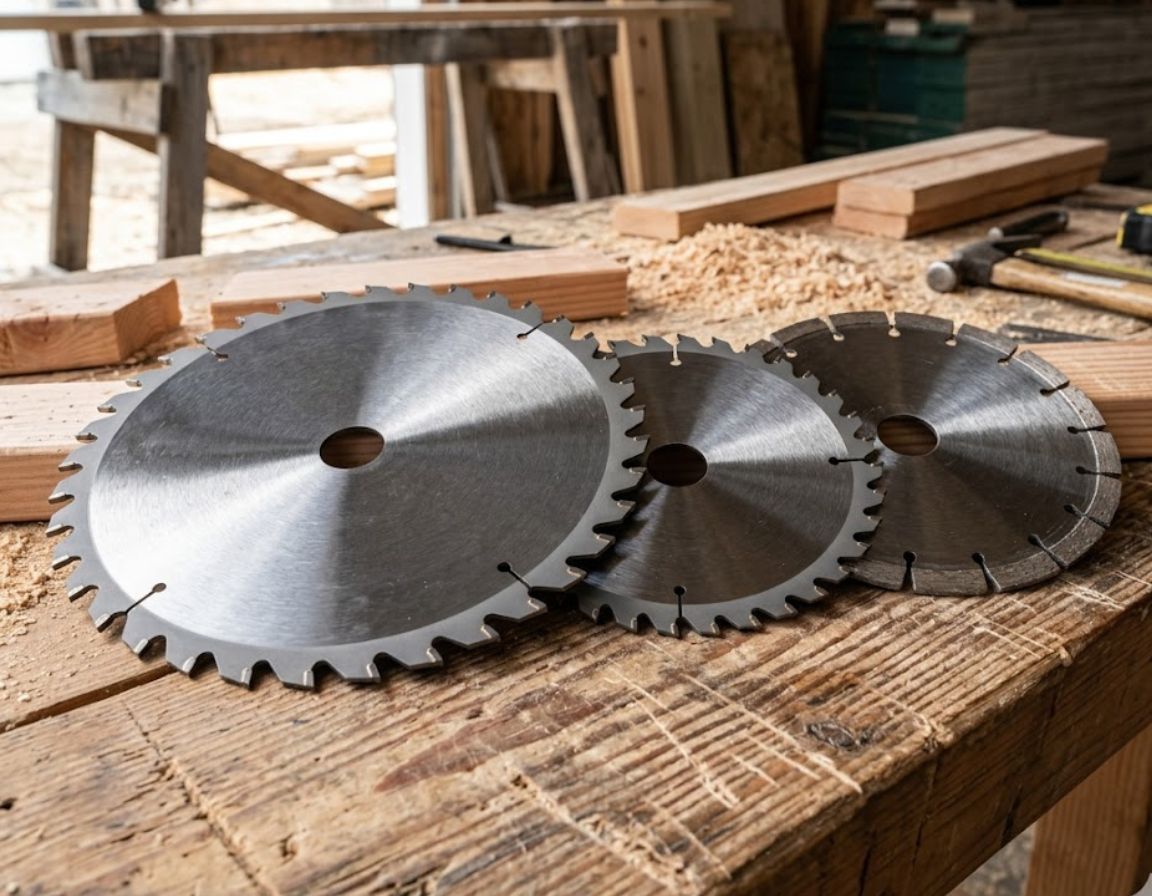
In construction, the best saw blades for construction are not the ones that look the most aggressive, they are the ones that let you walk away from a cut with no rework, no callbacks, and no inspector questions. Material, tooth design, and blade type decide whether you get a clean, square edge or a burned, chipped mess that eats labor and profits.
At Construction & Electrical Products, we see the same pattern again and again. Crews invest in good saws, then bolt on whatever blade the big box had on sale. The result is slower cutting, premature blade failure, and finish work that has to be “fixed” in the field. If you match the blade to the material and the cut type, your saw starts working for you instead of against you.
Match blade to material first
Before you think about tooth count or brand, you need to pair the blade material to the work material. This one decision eliminates most of the problems you see on job sites.
Carbide blades for wood and softer materials
For framing lumber, sheet goods, plastics, and many non ferrous metals, you want carbide tipped blades. Tungsten carbide ranks around 9 on the Mohs hardness scale and holds an edge far longer than plain steel, which is why quality construction blades are almost always carbide tipped (Sundi Cutting Tools).
You will reach for carbide blades when you are cutting:
- Dimensional lumber and studs
- Plywood, OSB, MDF, and particle board
- PVC trim and general plastics
- Aluminum, brass, and bronze in light gauge profiles
Carbide gives you clean, predictable cuts and can be resharpened multiple times if you start with a spec grade blade. It is the practical choice for most of your daily wood and plastic work (Guess Tools).
Diamond blades for concrete, masonry, and stone
Once you move into concrete, block, brick, tile, and stone, carbide is the wrong tool. Here you need a diamond blade. These blades embed synthetic diamond particles, which rate 10 on the Mohs scale, into the rim or segments so the blade grinds through hard, abrasive materials without chipping (Sundi Cutting Tools).
Diamond blades excel on:
- Concrete slabs and precast
- CMU block and pavers
- Ceramic and porcelain tile
- Granite, marble, and natural stone
- Reinforced concrete with rebar
They cost more up front, typically 10 to 12 times more than a comparable carbide blade, but you get 5,000 to 7,000 cuts or more versus 500 to 1,000 from carbide in these hard materials (Sundi Cutting Tools). Over time, that lifespan makes the diamond option cheaper per cut, especially if concrete and masonry are a core part of your work (Guess Tools).
Abrasive and metal cutting blades
For steel, iron, and aluminum in structural or demolition work, abrasive blades and carbide metal cutting blades are your go to. Abrasive wheels literally grind through the material and are ideal for rebar, pipe, and general demolition. Carbide tipped metal blades provide a cleaner, cooler cut with fewer sparks and less burr cleanup, which pays off when you need accuracy and speed on structural metal (Blades Direct).
Choose the right blade style for the job
Once you have the blade material matched to the workpiece, the next decision is style. The wrong style will cut, but it will not cut well, and it will shorten tool life.
Circular saw blades for straight line work
Circular saw blades are your everyday workhorse for straight cuts in wood and metals. A typical construction setup might use a 10 inch, 24 tooth ripping blade on a table saw for fast long grain cuts (IMS Bolt).
For jobsite circular and table saws, you will typically rotate between:
- Ripping blades with 24 to 30 teeth and large gullets for fast cuts along the grain
- Crosscut blades with 60 to 80 teeth and Alternate Top Bevel (ATB) grind for clean cuts across the grain
- Combination blades that group four ATB teeth and one flat top tooth when you want one blade to handle both tasks without constant changes (Rockler)
Thin kerf options, with a cutting width under 1/8 inch, are especially smart on portable or jobsite saws under 3 horsepower. They remove less material, which keeps the motor from bogging down and makes long rips in framing lumber much more manageable (Rockler).
Reciprocating saw blades for demolition and access
Reciprocating saw blades use a back and forth stroke that shines in demolition, rough cuts, and tight access. You will use these for cutting:
- Studs, subfloor cutouts, and roof decking
- PVC and ABS drain lines
- Nailing and fasteners during tear outs
They are not about polished edges. They are about getting material out of the way quickly so you can get to the real work, whether that is running new conduit or opening a chase for low voltage.
Tile, band, and specialty blades
Tile saw blades are specialized diamond blades designed for ceramic, porcelain, and stone tile. They are optimized to prevent chipping on glazed faces and factory edges. Band saw blades, on the other hand, are the go to for irregular shapes and curves in wood, metal, and plastics (IMS Bolt).
For many electrical and low voltage contractors, your “specialty cutter” is not a saw at all but a drill accessory. Step bits for clean holes in thin metal and fisch bits for chasing through hidden studs solve the same problem as the right saw blade. They let you work inside finished spaces without destroying surrounding materials.
Understand tooth count and geometry
Tooth count is one of the most misunderstood specs on a blade. More teeth is not always better. The right count depends on the type of cut.
Ripping vs crosscutting vs combination
On a 10 inch table saw, you can use as few as 24 flat top teeth for ripping. The large gullets between teeth clear chips fast and let the blade remove material along the grain quickly while keeping the cut relatively clean (Rockler).
For crosscutting construction lumber or trim, you want 60 to 80 teeth in an ATB configuration. The alternating bevel slices across the fibers, which reduces tear out and leaves a much smoother, almost polished edge that is ready for finish or paint (Rockler).
Combination blades group four ATB teeth with a fifth flat top tooth. This pattern lets you rip and crosscut acceptably without swapping blades every time you change direction, which is useful on a fast moving framing layout or in a small shop (Rockler).
Blade quality and tooth construction
For construction grade use, do not overlook tooth quality. Look for features like:
- C3 grade micro grain carbide tips on each tooth
- Tri metal brazing that holds those tips in place under heat and vibration
- A body that can handle multiple sharpenings without warping
Blades built this way stay sharp longer and survive repeated sharpening cycles, which means you spend more time cutting and less time fighting burning, tear out, and wandering cuts (Rockler).
A cheap blade can easily cost you more in labor and callbacks than a premium blade ever will.
Go deeper on diamond blades for construction
If your work includes flatwork, block, tile, or stone, diamond blades belong in your core kit. They are not accessories. They are consumable tools that protect your crew and your schedule.
Segment types and applications
Diamond blades come in several rim and segment styles:
- Segmented blades with slots between segments for air cooling and fast cutting in concrete and masonry
- Continuous rim blades for tile and stone where chip free edges are critical
- Segmented turbo blades that blend speed and smoothness, ideal when you move between tile, stone, concrete, and masonry on the same job (Blades Direct)
Segmented turbo blades, in particular, are a strong choice for contractors. They give you fast, smooth cutting with minimal chipping across mixed materials, so you do not need a different blade for every task.
Wet vs dry and dust control
Wet diamond blades use water to control dust and heat, which is crucial on intensive cutting days or indoor work where dust becomes a health and compliance issue. Wet cutting reduces airborne silica and extends blade life by keeping segments cool (Blades Direct).
Dry cutting diamond blades are useful for quick, small cuts in the field where water is not practical. They should still be used in controlled intervals to prevent overheating.
If you work under strict dust regulations or on indoor build outs, IQ blades paired with IQ saws create a largely dust free system. These setups capture the dust at the source and are designed to meet OSHA dust control requirements while drastically reducing cleanup time (Blades Direct).
For more on matching diamond blade to the specific concrete or masonry you are cutting, you can dive deeper into diamond blades for cutting concrete.
Balance cost, performance, and tool compatibility
You do not choose blades in a vacuum. You have budget requirements, existing saws, and crew habits. You need a setup that works in the real world, not on paper.
Cost per cut, not sticker price
Diamond blades often cost 10 to 12 times more than carbide blades, in the range of 200 to 400 dollars versus 20 to 40 dollars. The key is that diamond can last 25 to 100 times longer in hard materials like concrete, tile, and stone (Guess Tools). That means fewer blade changes, fewer trips to the supplier, and less downtime on the saw.
Carbide blades, on the other hand, dull faster and produce more waste when forced into abrasive materials they were never designed for. Their sharp teeth simply wear down, so your cut quality degrades long before the blade fails outright (Sundi Cutting Tools).
When you calculate cost per cut and the labor attached to each cut, you will see why professionals match blade type to the material instead of trying to “make do” with one cheap option (Guess Tools).
Tool compatibility and safety
Carbide blades run on standard circular saws, miter saws, and table saws, which you already have on every truck. Diamond blades usually require angle grinders, tile saws, and masonry saws that can handle the rim speed and often integrate water cooling systems for extended use (Sundi Cutting Tools).
Trying to improvise by putting the wrong blade on the wrong tool is how crews damage gear and injure operators. Always match arbor size, RPM rating, and blade diameter to the saw manufacturer’s specs.
At Construction & Electrical Products, our technical team spends a lot of time helping contractors spec the correct blade for both the material and the saw. That support is often the difference between a clean cut and a burned up motor.
5 key takeaways
- Match the blade material to the work material. Carbide for wood, plastics, and softer metals, diamond for concrete, masonry, tile, and stone.
- Choose blade style for the cut. Use ripping, crosscut, combination, tile, and reciprocating blades where each excels instead of forcing one blade to do everything.
- Pay attention to tooth count and geometry. Flat top, low tooth count for fast rips, high tooth count ATB for clean crosscuts and finish edges.
- Calculate cost per cut, not just purchase price. Diamond blades cost more up front but deliver far more cuts with better quality in hard materials.
- Respect tool compatibility and dust control. Use the right saw for the blade, and consider wet or dust collecting systems like IQ setups for indoor and high compliance work.
Frequently asked questions
1. What is the single best saw blade for general construction?
If you want one blade to leave on a 10 inch table saw for mixed use in framing and general carpentry, a thin kerf, 40 to 50 tooth combination carbide blade is your best all around option. It will rip studs efficiently and still give you acceptable crosscuts on framing lumber and sheet goods without constant changes. For specialty work like concrete cutting or finish trim, you should still switch to dedicated blades.
2. Do I really need diamond blades if I only cut concrete occasionally?
If you cut concrete, block, or pavers even a few times per month, a midgrade segmented diamond blade is worth the investment. Forcing a carbide or abrasive blade through concrete increases dust, heat, and wear on both blade and saw. A correctly specified diamond blade cuts faster, runs cooler, and will be ready the next time you need it instead of being a one and done consumable.
3. How do I know when a carbide saw blade is dull?
You can feel it in the cut. A dull blade will require more feed pressure, leave burn marks, and start to tear fibers instead of slice them. On site, watch for the motor working noticeably harder on the same material and the edge quality dropping. At that point, you are wasting time and risking kickback. Either sharpen or replace the blade before it becomes a safety issue.
4. Are thin kerf blades strong enough for jobsite use?
Yes, as long as you buy a construction grade thin kerf blade designed for portable and jobsite saws. The reduced kerf is there to remove less material and prevent bogging on low horsepower motors. If you avoid pinching the blade in warped stock and keep your fence aligned, a quality thin kerf blade will hold up just as well and will actually make the saw feel more powerful.
5. Can one supplier really cover all my blade needs?
If you choose the right supplier, yes. At Construction & Electrical Products, for example, we support both your cutting tools and drilling solutions. That ranges from carbide and diamond blades for structural work to electrical specialty solutions like step bits and fish bits that let you drill through panels and hidden studs without damaging finished surfaces. Working with a single, specification focused supplier keeps your crews on one standard and your results consistent across every job.
