
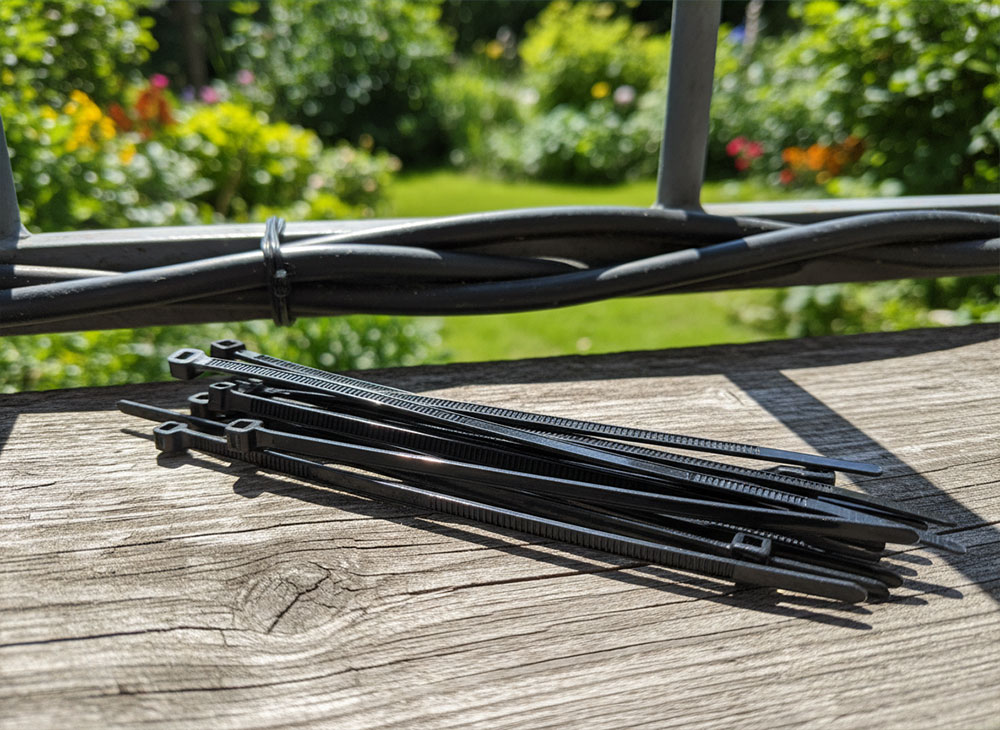
UV resistance overview
When you need uv resistant zip ties for outdoor use, you face threats from sunlight, heat, and moisture. At Construction & Electrical Products inc, we know that UV radiation breaks down standard nylon 6/6, making fasteners brittle and unreliable. You can avoid costly callbacks by choosing ties tested for UV stability and weather resistance.
How UV degrades ties
Standard nylon 6/6 offers high tensile strength indoors, but ultraviolet light attacks its molecular bonds. In direct sun, you may see discoloration, cracking, and eventual failure within months. Prolonged UV exposure causes the polymer chains to break down, compromising the locking mechanism and tensile rating.
UV testing standards
Manufacturers evaluate outdoor durability through accelerated UV resistance testing. This process simulates years of sun exposure in a matter of days, confirming that true UV stabilized ties maintain strength and flexibility. For reliable performance, look for test data or ratings on “weather resistant” or “UV stabilized” packaging (Cable Ties Unlimited).
Material options comparison
Choosing the right material ensures you don’t overspend or risk failure on critical outdoor projects. Here’s how common options stack up:
Nylon 6/6 vs nylon 12
- Nylon 6/6 (carbon black)
- UV stabilized with carbon black additive
- Operates from –40°F to 185°F
- Typical lifespan 3–5 years outdoors
- Ideal for solar arrays, HVAC rooftops
- Nylon 12 (premium grade)
- Infused with high-grade carbon black
- Enhanced UV, chemical and temperature resistance
- Lifespan 5+ years in direct sun (Secure Cable Ties)
- Preferred for permanent outdoor installations
Stainless steel alternatives
Stainless steel zip ties are impervious to UV degradation and excel in aggressive environments—high humidity, saltwater, chemical exposure. You get a lifespan of 5–10 years or more, though at a higher cost per unit. Use stainless steel when corrosion resistance and extreme temperature tolerance are paramount (ZipTiesZone).
Pros and cons table
| Material | UV resistance | Temperature range | Lifespan | Best applications |
|---|---|---|---|---|
| Standard nylon 6/6 | Low | –40°F to 185°F | 6 months–2 years | Indoor panels, climate-controlled |
| UV stabilized nylon 6/6 | High | –40°F to 185°F | 3–5 years | Solar, HVAC, outdoor lighting |
| Premium nylon 12 | Very high | –40°F to 200°F+ | 5+ years | Rooftop runs, solar installations |
| Stainless steel | N/A | –50°F to 1000°F | 5–10 years+ | Saline, chemical, harsh conditions |
Certification and compliance
You need zip ties that satisfy industry benchmarks and pass inspections on every job site.
UL, ISO, ANSI standards
Certified zip ties meet standards set by UL, ISO or ANSI, confirming they resist UV, temperature swings and moisture. UL Listing ensures code compliance in commercial and industrial applications. Check for file numbers, listing logos or specification references like ASTM-D4066 PA181 and MIL-S-23190E.
Reading package specs
Visually, dyed black ties may look UV resistant, but only specification sheets tell the truth. Confirm “UV stabilized” or “weather resistant” ratings, and review tensile strength and temperature data. When you buy from Construction & Electrical Products inc, you get clear specs and UL-listed products that match your project needs.
Installation and maintenance
Even the best UV resistant zip ties need correct installation and upkeep to reach their full service life.
Proper tensioning
- Avoid over-tightening, which stresses the locking pawl and accelerates failure
- Ensure a snug fit without crushing cables or conduits
- Use a calibrated tension tool for consistent results
Inspection best practices
- Check outdoor fasteners every 6–12 months for cracking or brittleness
- Replace any ties showing discoloration or loss of flexibility
- Document inspections to support warranty and liability requirements
Ordering and sourcing
Keeping your crew moving means stocking the right ties in the right quantities, at the right time.
Bulk purchasing and inventory
You can get UL-listed, UV stabilized zip ties in bulk to maintain inventory levels across multiple sites. Whether you need 100-pack boxes or bulk cases, ordering in volume reduces unit cost and prevents downtime.
Partnering with a supplier
Work with a supplier who offers same-day shipping cut-off, easy returns and knowledgeable technical support. If you want to find where to buy cable ties in Pompano Beach, or need heavy duty cable ties for construction, trust a partner that understands your deadlines and code requirements.
Key takeaways
- Always verify “UV stabilized” labeling, not just black coloring
- Compare material options—nylon 6/6, nylon 12 and stainless steel—based on lifespan and environment
- Choose UL, ISO or ANSI certified ties for code compliance and reliability
- Install with proper tension and inspect regularly to extend service life
- Partner with a supplier who provides clear specs, bulk options and same-day shipping
FAQs
- How long do UV resistant zip ties last outdoors?
UV resistant ties typically last 3–5 years, while premium nylon 12 and stainless steel options can exceed 5 years (ZipTiesZone). - Can I use UV stabilized ties indoors?
Yes, they perform identically indoors, though you may save by using standard nylon where UV isn’t a factor. - How do I tell if a zip tie is UL listed?
Look for the UL mark or file number on packaging, data sheets, or your supplier’s website. - What temperature range do UV resistant ties handle?
Most UV stabilized nylon 6/6 ties cover –40°F to 185°F, with premium grades extending above 200°F. - Do you offer custom lengths or colors?
Many suppliers, including Construction & Electrical Products inc, offer specialty lengths, flag markers and color-coded UV stabilized ties for identification.
